Dear Reader,
This is Dylan Jovine with Behind the Markets.
Happy Monday. Today is Monday, May 11th.
Today I’ve got something special to share with you.
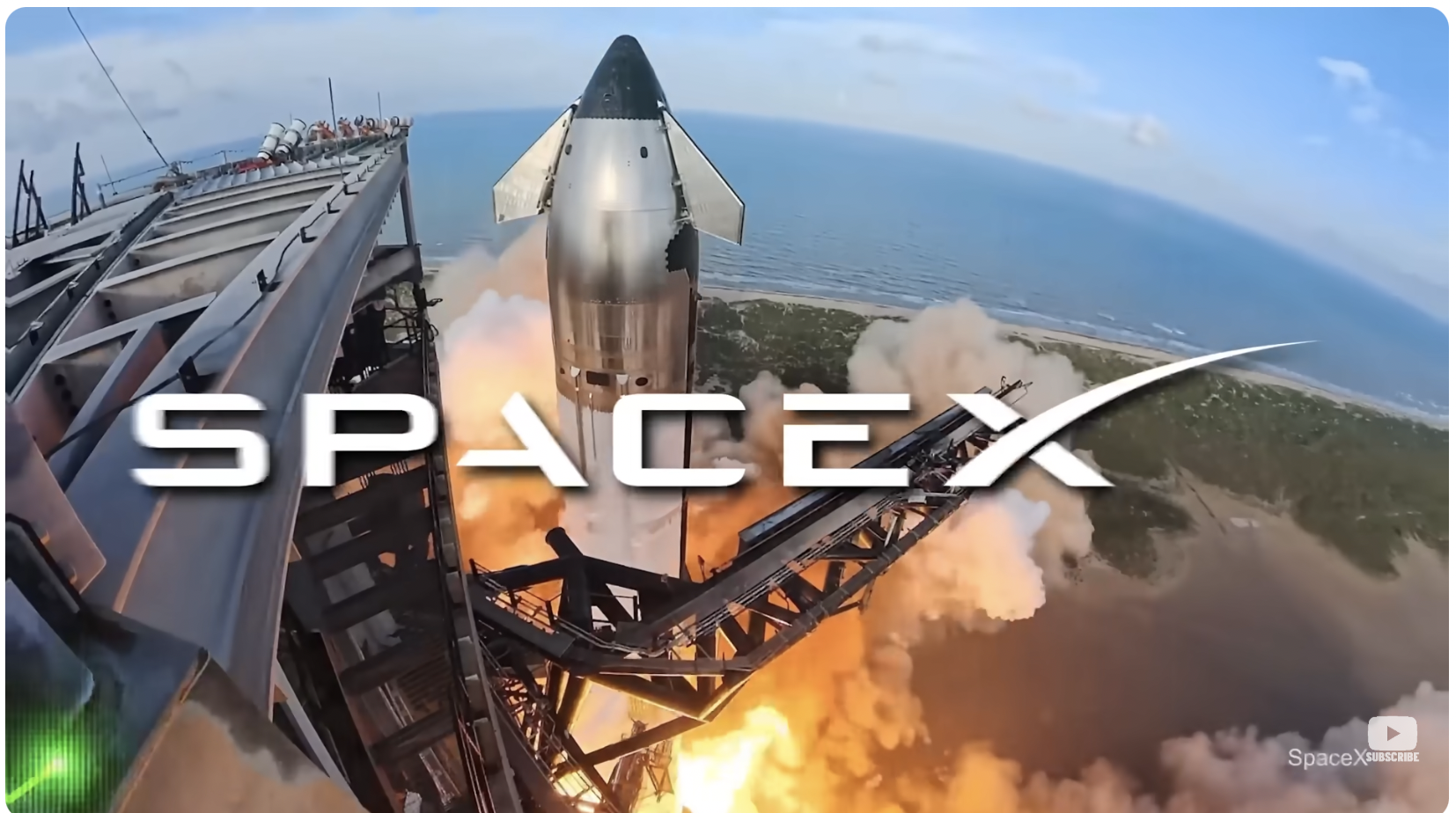
I just did an exclusive interview with Marketbeat where I went over the Space-X IPO and where the REAL money is to be made.
Because none of it — the rockets, the satellites, the full self-driving technology, the Optimus robots — happens without chips.
And that is where the most interesting investment story actually lives.
What SpaceX Actually Is
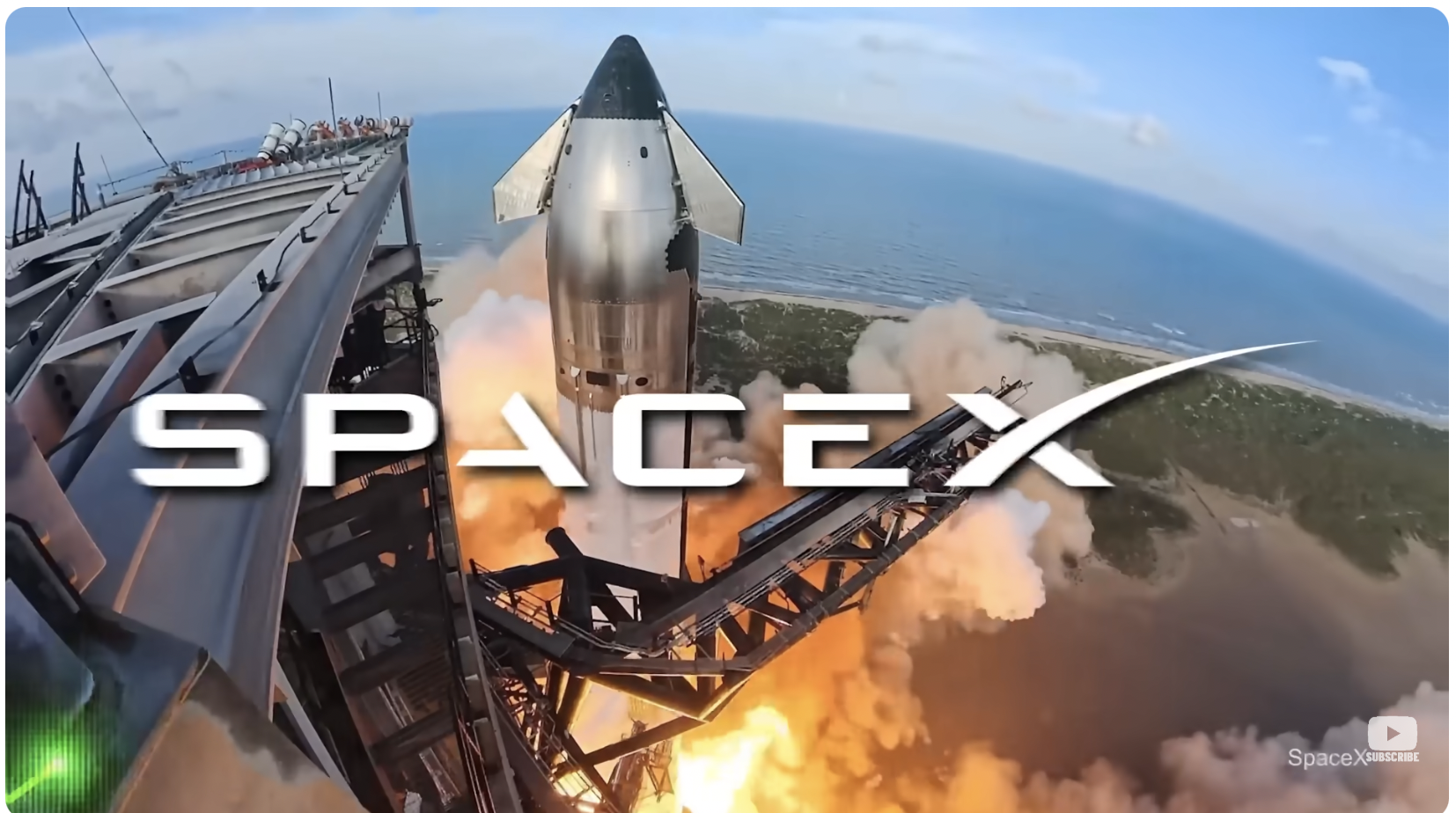
For most of its 24-year history, SpaceX made money launching things into space.
But in the past few years, the business has shifted dramatically.
The biggest growth driver now is Starlink — beaming internet to subscribers around the world.
Before the XAI merger, SpaceX was generating $16 billion in revenue and $8 billion in EBITDA.
Those are remarkable numbers.
50% EBITDA margins tell you one thing: they can charge whatever they want.
There's no other game in town.
The caveat is that XAI — acquired at a $250 billion valuation — did $210 million in revenue and lost $9.5 billion.
So the post-merger picture is a lot messier.
But Musk always has a plan.
The AI5 Chip
Musk just announced $25 billion in capital expenditures for Tesla and SpaceX combined.
A major piece of that is the AI5 — his own proprietary chip he plans to use across all of his companies.
Cars. Rockets. Robots.
He can't get enough chips from Nvidia, so he's building his own.
This chip is central to everything — full self-driving robo taxis, Optimus robots, and SpaceX's rocket guidance systems.
And that is exactly what is driving the stocks I want to talk about today.
The Three Phases of Making a Chip
Before I get into the five stocks, you need to understand one thing.
Making a chip is a three-step process.
Step one is design.
Nvidia, AMD, Intel, and Musk's AI5 team — none of them actually manufacture chips.
They design them, like an architect designing a house.
Step two is manufacturing.
The designs get sent to Taiwan Semiconductor — TSMC — which turns them into actual chips using equipment so precise you can't even see the results with a microscope.
Of 59 total rocket launches into orbit so far this year, 35 have been on SpaceX's Falcon 9.
TSMC has an even more dominant position in chip manufacturing than SpaceX has in rockets.
Step three is packaging.
This is the step most people don't know about.
And it is where I think the biggest overlooked opportunity is right now.
If you’ve been reading my Diaries, you know I’ve spoken many times about the massive power demands of AI hyperscalers.
Well a new government initiative is driving demand towards a unique energy source that could power the whole thing.
And no. It’s not another speculative nuclear stock.
Now let’s get into the 5 stocks.
Stock #1: TSMC
No matter who wins the chip design race — Nvidia, AMD, Intel, or Musk — they all send their chips to Taiwan Semiconductor to be made.
TSMC wins everywhere.
It doesn't matter who's ahead.
They manufacture for all of them.
That is a dominant position unlike almost anything I've ever seen in business.
Stock #2: Intel
Intel is the Empire Strikes Back.
The world moved to GPUs, and Intel got left behind.
But as we shift to agentic AI — AI that actually does things for you, rather than just answering questions — CPUs are asserting themselves as the critical control layer.
The GPU to CPU ratio used to be 8 to 1.
Now it's 4 to 1.
Intel's CEO expects it to reach parity.
For every GPU sold, one CPU sold alongside it.
90% of Fortune 500 companies are now using or actively exploring agentic AI tools.
That demand flows directly to Intel.
Intel is up over 130% in the last month.
Things don't go straight up, so short-term volatility is normal.
But the mega trend here is real and it is only getting started.
Stocks #3 and #4: AMD and Nvidia
AMD benefits from both sides of this story.
The CPU wave AND the GPU story.
Their data center revenue is exploding.
The stock is up nearly 75% in the last month and I think it's heading toward the trillion-dollar club.
Nvidia looks cheap right now on a valuation basis.
The GPU narrative sold off while everyone rotated to CPUs, but Nvidia is about to rejoin the party.
As long as the Mag 7 is spending a combined trillion dollars a year on AI buildout — and they are — the demand for GPUs, CPUs, storage, and data doesn't stop.
This is not a bubble that pops because of sentiment.
It pops when Microsoft stops spending $200 billion, when Amazon stops spending $200 billion, when Google stops spending $200 billion.
Until then, you want to be here.
Stock #5: Amkor (AMKR)
This is the one most people aren't talking about.
And it might be the most interesting of them all.
Packaging used to be a low-margin, commoditized business.
You take a finished chip, put a plastic shell around it, and ship it.
Two to four percent margins.
Not exciting.
But something has changed.
TSMC is no longer sending packagers finished chips.
They're sending chiplets — tiny pieces of the chip, like Legos.
And the packager now has to assemble them.
That is a completely different business.
Moving up the value chain means higher returns on capital.
It means pricing power.
It means becoming essential rather than interchangeable.
Amkor is the dominant player in this space.
And here's the detail I love most.
When TSMC built their massive new chip manufacturing facility in Arizona, Amkor built their factory seven miles down the road.
The better TSMC does, the better Amkor does.
That is what we call a value chain.
Every link in that chain is seeing explosive demand right now.
And Amkor is the last link that nobody has noticed yet.
Anyway, that's all I have for you today.
Have a wonderful day.
I'll see you tomorrow.
“The Buck Stops Here,”

Found this helpful? Share it with others.
Written by Dylan Jovine