Dear Fellow Investor,
Beijing published its July report card Monday morning, and I want to walk you through it, because almost everyone is going to read it wrong.
They'll see a soft month in China, shrug, and go back to watching Nvidia.
What actually landed on the tape this week is one of the cleanest pictures of a cornered economy I have seen in 35 years of doing this, and it has very little to do with whether China is growing or shrinking.
Here are the numbers:
Industrial output dropped to 4.5% growth, below forecast and down from 5.3% in June.
Retail sales — the entire spending power of 1.4 billion people — rose six-tenths of one percent.
Fixed asset investment, which is the money a country spends building its own future, didn't just slow; it fell 6.7% over the first seven months of the year, a deeper decline than the 5.7% drop they reported in June.
And last month Beijing admitted second-quarter growth of 4.3%, below its own official target band and, setting aside the Covid years, the lowest print since China started publishing GDP at all in the early 1990s.
Now here's the line nobody put in a headline.
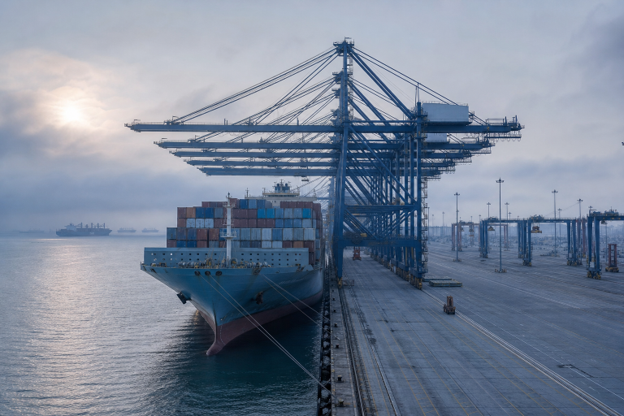
Exports rose 23.9%.
The contrast here is staggering.
Every part of China's economy that Beijing controls — its factories' own momentum, its consumers, its investment budget — is flat or falling.
The only engine still running at full power is the one that depends entirely on foreigners choosing to buy.
Their own statistics bureau spokesman said it in the release, in the careful language these things are always written in: the imbalance between strong supply and weak demand is relatively prominent.
Translated out of bureaucracy, that means we can still make things, but the people who live here won't buy them.
I learned what that means the hard way, long before I ever wrote a research letter.
In my broker days I watched a firm across the hall book a monster year on the back of one enormous client — everyone envied them — and then the client's mandate changed at a meeting they weren't invited to, and the firm was gone inside a quarter.
The lesson has made me more money than any chart ever has: a business with one customer isn't a business, it's an arrangement.
And the customer knows it long before the seller admits it.
China's economy is now, mechanically, that firm.
Their domestic demand is a years-long property slump that hasn't found a bottom.
Goldman's economists think retail sales limp along at 1.5% for the rest of this year as the government's trade-in subsidies fade out — the stimulus didn't create demand, it borrowed it from later, and later has arrived.
Which leaves exports, running at nearly 24% growth, as the load-bearing wall of the second-largest economy on earth.
And the buyers on the other end of that wall are the same governments now writing rules about what they'll allow in.
That is not decline.
Decline is a slow story that takes decades and gives everyone time to adjust.
This is dependence, and dependence is a position — it can be squeezed on a specific date by a specific person.
Which brings me to why I keep pointing you at American energy infrastructure instead of at anything Chinese.
Look at what China had to do last month just to keep those factories humming.
Their coal imports jumped 23% from a year ago to 43.7 million tons, the highest of the year, while their own domestic coal production fell.
Meanwhile their rare-earth exports — the leverage chip everyone assumes they hold over us — dropped 29.5% from last July to the lowest level since March.
An export-only economy has to buy fuel from other people's oceans to make the things it sells to other people's customers, and every ton of it crosses water somebody else patrols.
There's a reason Beijing spent the first week of August sanctioning American firms and tightening drone export controls ahead of Xi's expected visit to Washington next month.
That's not the behavior of a country with options.
That's a country stocking up on bargaining chips before a meeting it can't skip.
Here at home the mirror image is happening, and August 12th gave us a strange, revealing piece of evidence about it.
The federal government auctioned off more than 80 million acres of the Gulf for drilling — an enormous offering — and it drew $82.7 million in high bids across 59 blocks.
That's the second-weakest Gulf auction since at least 2013, and well under the $279 million the December sale brought in.
I know how that sounds against everything I've been telling you about American energy, but I think it says the opposite of what the headline says.
Nobody in this business is worried about whether the molecules exist — we are swimming in them.
The scarce thing, the thing you cannot conjure with a checkbook or an auction, is the steel that moves gas from where it is to where the electricity has to be made.
Pipelines take a decade and a fortune in lawyers; one well-known project, all of 303 miles, burned years and billions in legal fees just to get finished.
So when a hyperscaler decides it needs round-the-clock power for an AI data center and can't wait five to seven years for a utility to run new wire, it doesn't go buy an offshore lease.
It signs a contract with whoever already owns the pipe running past the site.
That's the company I've been writing about, and it's why I call it the Iron Artery: roughly 140,000 miles of steel across 44 states, with more than 90% of its earnings locked into long-term fixed contracts.
It doesn't care what a barrel or an Mcf trades for on any given Monday — in April 2020, when oil went to negative thirty-seven dollars and drillers were filing for bankruptcy, that steel still collected.
It has about $25 billion in firm fees already booked from data center customers who signed because they had no faster option.
And it still trades at a discount to the market, because Wall Street files it under boring pipelines instead of under AI.
Here's the full story — the name, the ticker, and the entry strategy
Let me be clear about what I am and am not saying, because I don't want you to buy an opinion about China.
I don't need Beijing to collapse, and I don't need a war or a headline; the argument works even if China muddles through for another decade.
It was never really about China.
It's about where the money goes when the world's manufacturing hub has to buy its energy and the world's AI buildout has to generate its own — and both of those roads run through infrastructure somebody already owns and is renting out today, at prices that don't ask permission from the news cycle.
The numbers out of Beijing this week simply told us the clock is running faster than most people think.
When a country's only functioning engine is the one its rivals control the throttle on, the negotiation isn't about whether. It's about when, and how much.
Get the full report before Monday's open.
"The Buck Stops Here,"

P.S. — One last number to keep in your pocket. Beijing's investment in its own future fell 6.7% this year, and the drop got worse, not better, as the year went on. A country cutting its own construction budget while leaning harder on foreign customers is telling you exactly where it thinks the next decade gets decided — and it isn't at home.
Found this helpful? Share it with others.
Written by Dylan Jovine