
Get Paid Weekly from the Magnificent 7
If you’ve ever wanted to collect steady income from the world’s most powerful tech companies — without needing to trade options or time the market — there’s finally an easy way to do it.
Meet the Roundhill Magnificent Seven Covered Call ETF (SYM: MAGY), a fund designed to give investors exposure to the market’s most dominant companies and weekly income along the way.
For investors seeking passive income, portfolio stability, and diversified access to the Magnificent 7, MAGY could be one of the most compelling ETFs available right now.
A Simple Way to Earn Weekly IncomeThe MAGY ETF gives investors access to the Magnificent 7 — Alphabet, Amazon, Apple, Meta Platforms, Microsoft, Nvidia, and Tesla — through a covered call strategy that generates consistent cash flow. What makes it unique is its structure: while the underlying holdings mirror the performance of the top tech names, the fund managers actively sell call options on those stocks to generate weekly income for shareholders. In plain English — you don’t have to trade options yourself. MAGY does all the heavy lifting. You simply buy the ETF, collect distributions, and potentially benefit from appreciation in the underlying stocks. Currently, MAGY boasts:
That’s right — investors in MAGY get paid every week. The fund’s most recent distributions highlight just how consistent the income can be. It paid a $0.372 dividend on November 3, following a $0.366 payout on October 27. These payments are derived from the option premiums the fund collects from writing covered calls, a strategy designed to monetize short-term volatility in the underlying Magnificent 7 stocks. |
Altimetry
Wall Street raising Tesla price targets before Nov. 6
Wall Street is watching Tesla.
The stock is up as much as 10% over the past week, but that may only be the beginning.
Bank of America just raised its target price for TSLA by 38%.
Cantor Fitzgerald followed, raising its forecast from $355 to a whopping $510.
But the most shocking call? A $2,600 price target from one of Silicon Valley's most influential investors.
Why is everyone suddenly so bullish?
I believe they're tracking the same November 6 story as I am.
It has to do with a breakthrough that could not only send Tesla soaring... but also send the shares of smaller companies up 10x.
In my view, this will be one of the defining investment stories of the next few years.
Even Elon admits things are about to go ballistic.
To see what's unfolding, click here now.
Strong Recent PerformanceSince hitting a low of about $54 earlier this month, MAGY has already climbed to $57.07, reflecting renewed investor confidence and strength in its underlying holdings. From here, there’s reason to believe MAGY could push toward $70, particularly if the Magnificent 7 stocks continue their strong performance. With the broader market stabilizing after recent volatility, high-quality, income-generating funds like MAGY are drawing increased attention from investors seeking yield without excessive risk. And with the continued momentum in technology — particularly artificial intelligence — the companies that make up the Magnificent 7 remain at the forefront of growth and innovation. Inside the MAGY ETF: How It WorksTo understand how MAGY operates, it helps to first look at its underlying fund, the Roundhill Magnificent 7 ETF (SYM: MAGS). The MAGS ETF holds concentrated positions in the seven market leaders that have been driving U.S. stock performance for much of the past two years. Here’s how the holdings break down:
The MAGY ETF, in turn, sells covered call options on each of these underlying stocks. In return for writing those calls, the ETF collects option premiums, which it distributes to investors as weekly income. This approach allows investors to:
In essence, MAGY combines the strength of the Magnificent 7 with the cash flow of an income-focused strategy — all wrapped into one simple ETF. |
Priority Gold
TRUMP TO CLEAR WAY FOR
MUSK'S SILVER PLAY?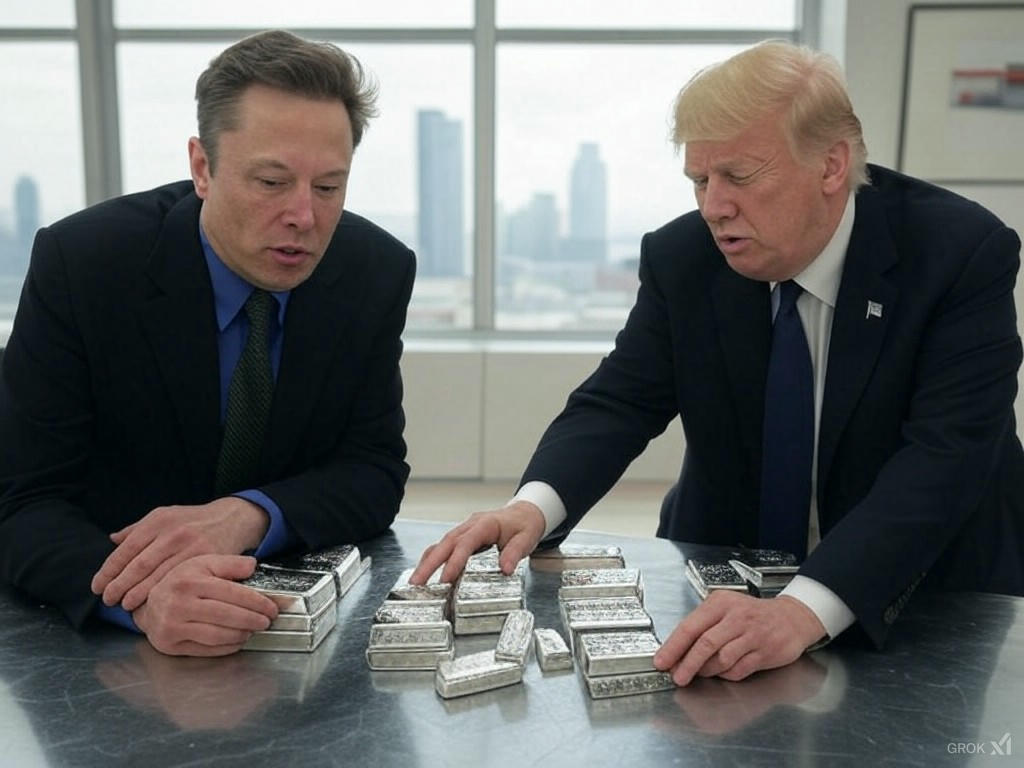
Elon Musk and Donald Trump might be the ultimate power duo for 2025's next market revolution: silver.
In 2022, Musk hinted Tesla might enter mining to secure critical materials. Now Trump's back with pro-business deregulation that could make this reality.
Just imagine: Musk Buys Silver Mine to Power Tesla's Future.
Why it matters:
-Silver is Tesla's lifeblood — no silver, no EVs
-Trump's policies clear the path for supply chain control
-Even whispers of Musk entering silver could send prices skyrocketing
Nothing is confirmed—yet. But silver surged 23% in 2024. If Musk moves into silver, those waiting on the sidelines will be left scrambling.
That's why we created the 2025 Silver Forecast Guide.

Why the Magnificent 7 Still MatterIt’s hard to overstate how influential the Magnificent 7 have become in the global economy. Collectively, they represent trillions in market capitalization and drive much of the innovation shaping modern life — from AI and cloud computing to electric vehicles and digital advertising. Here’s a look at their recent performance:
Collectively, these companies are not just growing — they’re redefining the boundaries of technology, and their innovations continue to fuel global economic expansion. For income investors, that’s key. Because the stronger these companies perform, the greater the potential option income MAGY can generate. Why Investors Are Paying AttentionMAGY appeals to several types of investors:
It’s also a potential inflation hedge — as rising prices often drive volatility, which in turn boosts the premiums MAGY collects through its covered calls. In addition, MAGY’s weekly payout schedule is especially attractive. Instead of waiting months between dividends, investors receive cash flow every single week — a structure typically found only in specialized income products. And because the fund is tied to the Magnificent 7 — companies that continue to outperform the broader S&P 500 — the potential for both income and appreciation makes it a rare dual-benefit play in today’s market. |
Found this helpful? Share it with others.
Written by Ian Cooper