Dear Reader,
Happy Thursday. Today is Thursday, June 11th.
I know this is not the SpaceX channel.
But tomorrow is the day SpaceX goes public — symbol SPCX, coming out at $135 a share — and the order book closes tonight.
So today I want to give you the research on how to actually trade an IPO.
After this, I promise we get back to normal programming.
Because there are things that genuinely need our attention — the Iran war heating up, a sudden flood of new stock hitting the market from Mag 7 companies, and Supermicro just announcing a $7 billion offering.
We will get to all of that.
But first — here is what the research actually says about IPOs.
What 80 Years of Research Shows
A lot of this comes from The Lifecycle Trade: How to Win at Trading IPOs and from Mike Webster at Investor's Business Daily, who compiled decades of research on this specific topic.
Fact number one: 90% of IPOs eventually trade below their first day low.
Even if a stock eventually recovers, that process can take a long time.
And if you're looking at SpaceX at $135 a share and $1.77 trillion valuation and thinking — that's a lot to pay for a company that's still losing money — I understand completely.
But here's the thing.
The people who will make life-changing money on SpaceX aren’t buying it at the IPO.
They got in years ago, when it was still private.
And right now there is a tiny private industrial manufacturing company we think has massive potential like SpaceX.
It's the same kind of deal SpaceX was before it became a household name.
So if SpaceX opens tomorrow at $135, pops to $170, and you feel like you missed your chance — history says you almost certainly did not.
What the IPO Base Is
Here is how the pattern typically plays out.
The stock pops on the first day.
Then it comes back down.
Then it stabilizes — what the research calls the IPO base.
That stabilization period usually takes two to five weeks, though it can form in as little as seven days.
The pullback is typically around 20%, but in periods of extreme volatility — which this appears to be — you can see it crack 50%.
The IPO base is actually when the market starts to independently value the company away from all the hype and promotion.
Buyers and sellers in aggregate agree on what it is worth.
That is a very important thing.
When Do You Buy?
If you want to trade around SpaceX using this strategy, here is what the research says.
You wait for the base to form.
You do not chase the opening pop.
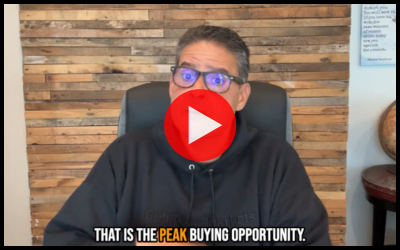
And when the stock begins to break out of that base on heavy volume — that is the peak buying opportunity.
Mike Webster at IBD identified two key traits of the most successful IPO base breakouts: a major single-day price surge and heavy volume.
That combination tells you there is real demand at that level and the stock is ready to move higher.
The old technical analysis term for this pattern is a cup and handle.
Stock pops, comes down, forms the cup, breaks out of the handle on volume.
That is your entry.
The Takeaway
Should you buy SpaceX?
I have no idea if you should buy SpaceX.
That is a decision only you can make based on your own situation.
But if you did not get shares in the IPO and you are watching it pop tomorrow thinking you missed your chance — history says you almost certainly have not.
90% odds say it will eventually trade below its first day low.
Keep that number in your head.
Watch where it opens tomorrow.
That first day low is a very important number if this is something you want to own.
Anyway, that's all I have for you today.
Have a wonderful day.
I will see you tomorrow.
“The Buck Stops Here,”

Found this helpful? Share it with others.
Written by Dylan Jovine