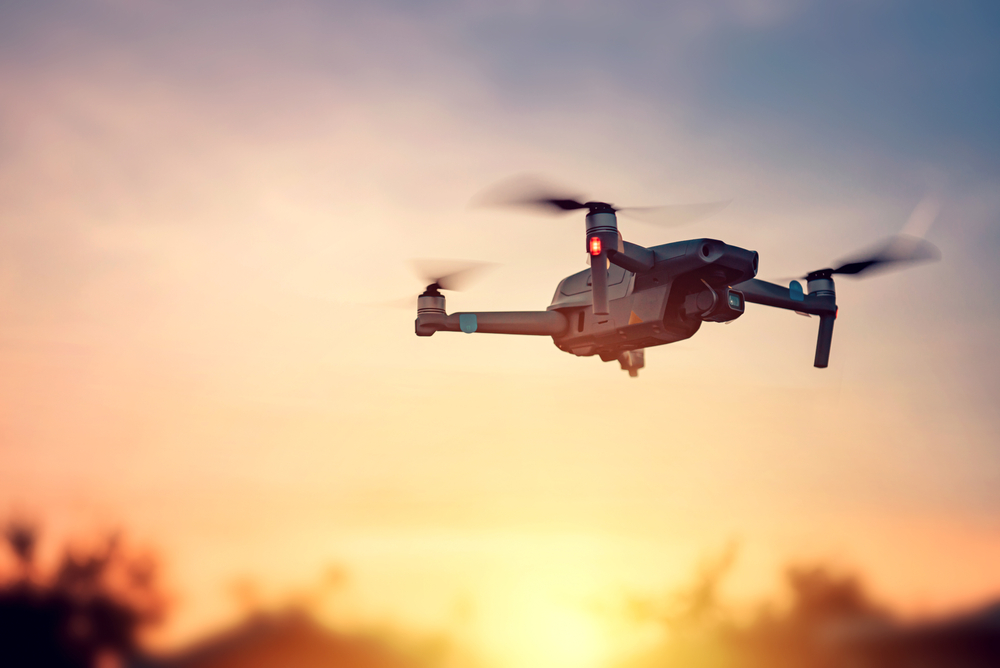
A Boring, But Extremely Profitable Investment Idea
The idea of investing in drones may sound boring.
But when the hood gets popped on the trend, it becomes clear why the “boring” label can be misleading. Drones are quietly becoming critical infrastructure for modern defense, public safety, logistics, agriculture, energy, and industrial inspection. In other words, drones are increasingly shifting from “cool gadgets” into “must-have tools.”
That shift matters for investors because it changes the demand profile. Consumer cycles can be fickle. Industrial and government procurement—once adoption hits a tipping point—can be steady, repeatable, and scalable.
The market is growing—and adoption is broadeningAcross commercial applications, the runway is substantial. One widely cited industry forecast projects the global commercial drone market growing from about $13.9 billion in 2024 to roughly $65 billion by 2032. That growth is being driven by use-cases that are far less “optional” than many investors assume:
This is exactly why drone exposure can be “boring” in the best way: it is tied to recurring operational needs, not one-off excitement. |
AD1
The China-dominance backdrop is starting to crackOne of the biggest underappreciated drivers is geopolitics and supply-chain security. For years, Chinese manufacturers have dominated the drone ecosystem. Industry groups and researchers frequently cite Chinese control of the consumer drone market and significant share in enterprise/public safety categories. For example, AUVSI argues China-based, subsidized companies control the vast majority of the consumer drone market and a large share of enterprise and first responder markets. Separate reporting and research have also described DJI’s very large share of the global civilian/consumer market. But “dominant” doesn’t mean “permanent.” The U.S. and its allies have been steadily tightening restrictions on foreign-made drones and components—particularly those tied to national security concerns. Most notably, the FCC has taken steps aimed at preventing authorization of new foreign-made drone models and related critical components, citing national security risk. Even at the state level, restrictions have been expanding. The thrust is consistent: reduce reliance on foreign adversary systems in government and sensitive-use environments. For investors, this matters because it can create a powerful “substitution tailwind.” When policy shifts the purchasing mandate toward trusted supply chains, spending does not disappear—it tends to move. That can benefit domestic aerospace/defense primes, U.S.-aligned drone suppliers, and robotics/autonomy ecosystems positioned for procurement and commercialization. |
AD2
Two practical, diversified ways to invest in the themeSingle drone stocks can be explosive—but they can also be fragile, especially when contract timing, certification delays, and budget cycles come into play. A more “boring but effective” approach is to use ETFs for broad exposure. ETF: iShares U.S. Aerospace & Defense ETF (SYM: ITA) |
Found this helpful? Share it with others.
Written by Ian Cooper