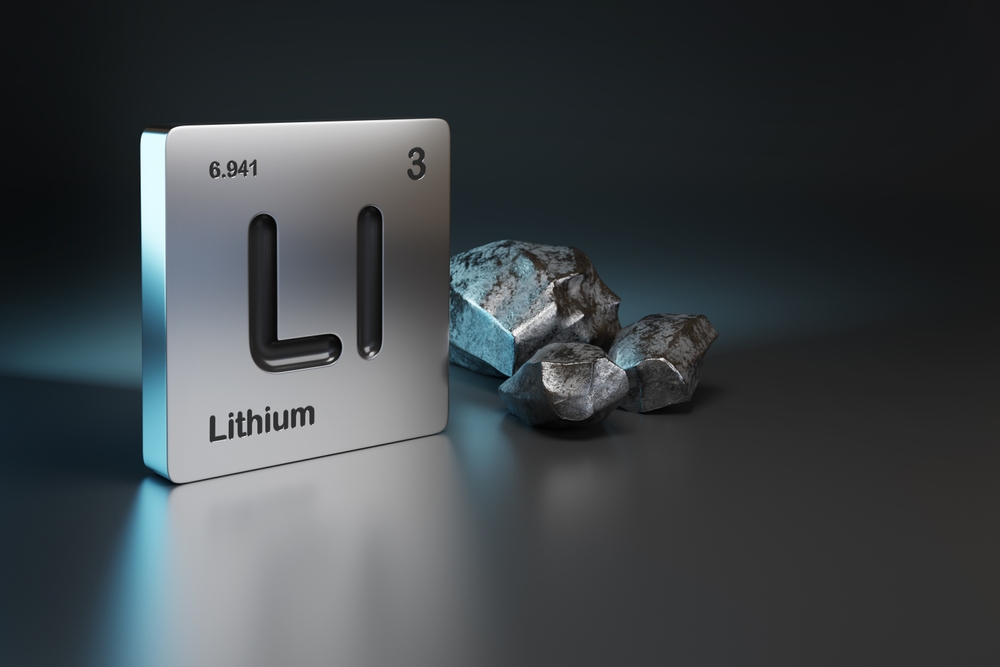
Lithium’s Supply Crunch Is Coming — Investors Should Pay Attention
Lithium remains one of the most strategically important commodities in the global economy. It sits at the center of electrification—powering electric vehicles, enabling grid-scale battery storage, and supporting the broader buildout of renewable energy infrastructure. When lithium is abundant and cheap, the market tends to forget how critical it is. When supply tightens, the story can shift quickly.
That’s why the current setup is worth watching.
After a period of oversupply and depressed pricing, the lithium market is increasingly being framed around a return to tighter conditions. Mine expansions have been delayed, higher-cost operations have been curtailed, and capital discipline has crept back into the sector—at the same time that demand catalysts beyond EVs are becoming more visible.
The demand story is broadening beyond EVsElectric vehicles remain the marquee growth engine, but the demand mix is evolving. One of the most important incremental drivers heading into 2026 is stationary energy storage—utility-scale and commercial battery systems that help stabilize grids, store renewable power, and support increasingly stressed electricity networks. A Reuters report published in early January highlighted that the boom in battery storage is strengthening the lithium demand outlook for 2026, after the industry struggled through oversupply. The same reporting flagged how structural drivers (including grid needs and data-center growth) are contributing to improved demand expectations. Benchmark Mineral Intelligence commentary (as summarized by Nasdaq) also emphasized that energy storage is emerging as a fast-growing pillar of battery demand and is a key theme shaping the lithium market going into 2026. This matters because energy storage demand can scale quickly. Projects can be deployed in large blocks, and the economics increasingly work in regions trying to harden grids and integrate renewables. When storage becomes a major driver alongside EVs, the market’s prior “oversupply” assumptions can break down faster than expected. Supply discipline is becoming a bigger variableOn the supply side, the industry has been moving in the opposite direction: slower growth. Lower prices over the last cycle discouraged new projects and slowed expansions. At the same time, lithium projects tend to have long development timelines, and many require significant capital. When pricing softens, marginal producers pull back first—reducing future supply growth. That combination—demand improving while supply becomes more cautious—is why more analysts are discussing a potential surplus-to-deficit transition beginning in 2026. The core claim in the draft (that 2026 could be an inflection year where demand outpaces new supply) aligns with the type of outlook being discussed in market commentary. None of this guarantees a straight line higher. Commodity markets rarely move that way. But when the cycle turns, the “repricing” can happen quickly—especially in a commodity as central to electrification as lithium. |
RAD Intel
The Next AI Boom Won’t Be Chips. It’ll Be Software—And This Startup Is Leading It.
The AI 1.0 boom made chip companies like Nvidia and Super Micro explode in value. AI 2.0 is all about software—and RAD Intel is leading the charge. Their platform uses AI to help brands identify the perfect audience and the exact content to drive action.
Already trusted by a who’s-who of Fortune 1000 brands and leading global agencies — with recurring seven-figure partnerships in place. With Adobe and multiple Fidelity funds backing them, RAD Intel is solving a $1.3T problem at the center of marketing inefficiency.
Even better? They're offering shares at just $0.85 through a Reg A+ round. The next AI breakout company won’t be a chipmaker. It’ll be the company that powers how AI is applied at scale—and that’s RAD Intel.
Want in before the rest of the market sees it? Get in now while it's still early.
👉 Invest Today at $0.85/Share.
*DISCLOSURE: This is a paid advertisement for RAD Intel's Reg A+ offering and involves risk, including the possible loss of principal. Please read the offering circular and related risks at invest.radintel.ai.
Three ways to gain exposureCompany: Albemarle Corporation (SYM: ALB) |
ETF: Amplify Lithium & Battery Technology ETF (SYM: BATT) |
We are issuing this disclosure in compliance with Section 17(b) of the Securities Act, which requires us to disclose any compensation received or expected to be received in cash or in kind in connection with the purchase or sale of any security.
We would like to inform you that this is a paid advertisement for RAD Intel's Reg A offering and we have received or expect to receive compensation in connection with the disbursing this communication for RAD Intel . The compensation consists of up to $500 and was received/will be received from Investing Media Solutions.
This communication should not be considered as an endorsement of the securities of RAD Intel and we are not responsible for any errors or omissions in any information provided about the securities of RAD Intel.
We encourage you to conduct your own due diligence and research before making any investment decisions. You should also consult with a financial advisor before making any investment decisions.
This disclosure is made as of 02/10/26.
Found this helpful? Share it with others.
Written by Ian Cooper