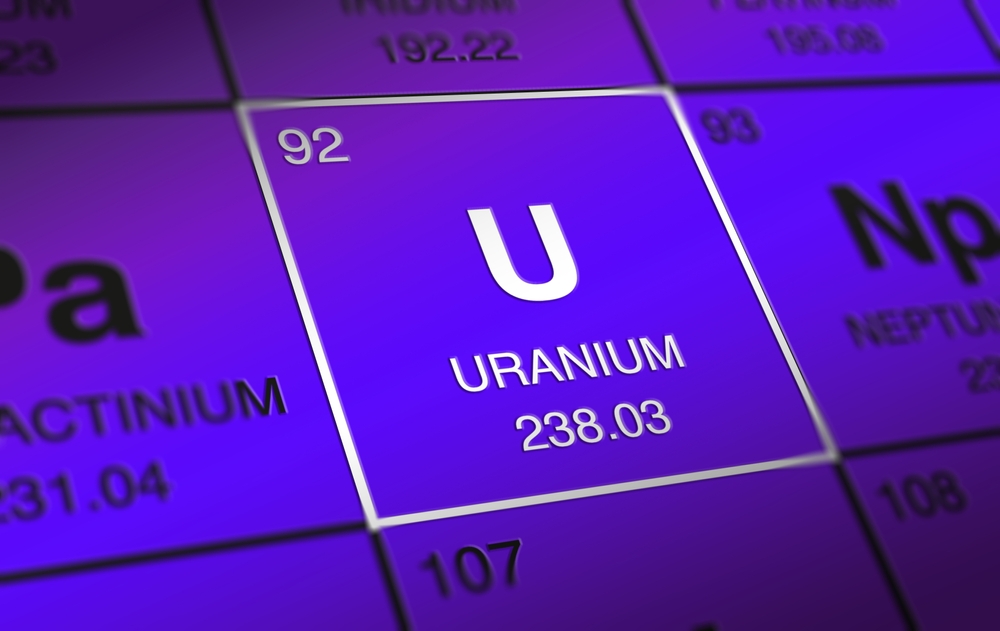
Goldman Says Uranium Is "the Next Gold." The Supply Deficit Is 1.9 Billion Pounds. And the Market Is Still Priced for $86.
A quick note from Behind the Markets
The stock market loves clean narratives. "Nuclear is back." "AI needs power." "The energy transition is inevitable."
Fine. But markets don't pay you for repeating slogans. They pay you for understanding the chokepoint.
In nuclear, the chokepoint is fuel. Specifically: uranium supply.
1) Uranium Is Quietly Telling You the Next Energy Squeeze Is Structural
Uranium futures are trading above $86.50 per pound — near a two-month high. The spot price ended April at $86.35. The long-term contract price hit $90 per pound at the end of Q1 2026 — its highest level since 2008.
That's not a meme spike. It's a market re-pricing a problem that takes a decade to solve.
Goldman Sachs published what might be the most consequential commodity call of 2026: uranium is "the next gold." Their updated supply-demand model projects spot prices reaching $91 per pound by year-end and identifies a cumulative net deficit of 1.914 billion pounds through 2045 — expanded by 211 million pounds from their prior estimate after incorporating accelerated global reactor construction plans.
The demand tailwinds are stacking: Meta signed agreements for 7.8 gigawatts of nuclear capacity for AI data centers. Microsoft committed to 800 megawatts from restarted reactors. Trump signed an executive order to quadruple U.S. nuclear energy by 2050 — which, Goldman calculates, would require doubling global uranium production just for the United States. The U.S. plans to build 20 new reactors and restart 3 existing ones through 2045. Russia plans to double its nuclear capacity. China, South Korea, and the UAE are all building.
And the IEA forecasts annual nuclear investment rising from more than $70 billion today to approximately $210 billion by 2035.
But here's the line from uranium analyst Justin Huhn that should make you sit up: to incentivize enough supply — 250 to 300 million pounds per year in about a decade — prices may need to reach $125 to $150 and stay there for a sustained period.
That's the entire trade. Not "nuclear is cool again." The trade is: supply requires a much higher price deck than people assume. And at $86, we're in transition — not at the destination.
One company positioned at the center of the uranium supply constraint:
Company: Cameco Corporation (SYM: CCJ)
The world's second-largest uranium producer, with the highest-grade deposits on earth (McArthur River), long-term contracts locked in above spot, and a Westinghouse joint venture providing full fuel-cycle exposure.
Cameco is currently trading around $111.93. The stock has been up roughly 40% on the year while spot uranium has been relatively flat — the equity market pricing in what the commodity market hasn't yet. Long-term contracts at $90/lb (highest since 2008) are the real signal: utilities are locking in supply at elevated prices because they see the deficit building. Cameco's McArthur River mine produces the highest-grade uranium on the planet. Its contract book provides revenue visibility. And the Westinghouse partnership gives exposure to fuel fabrication, enrichment, and reactor services. When the incentive price is $125–$150 and the spot is $86, Cameco is the producer with the most to gain as the gap closes.
Bottom line: If the world is serious about nuclear, why is uranium still priced like we're not? That disconnect is where contrarians get paid.
2) The Supply Side Is the Real Bull Case — and It's Not Fixable on a Quarterly Timeline
Demand gets the headlines. Supply is the trade.
Here's the fundamental reality: global uranium production met only 90% of demand in 2024. The remaining gap was filled from stockpiles that are now at strategic lows. And even with better prices, mining supply doesn't snap back quickly — project timelines run 10 to 15 years from discovery to production, and deficits could persist well into the 2030s.
The near-term supply picture is getting worse, not better:
Kazatomprom — the world's largest producer — signaled a reduction in its 2026 production level. Niger's SOMAÏR mine produced zero pounds under junta control in 2025. U.S. in-situ recovery restarts have ramped more slowly than planned — domestic production fell 44% in Q3 2025 to just 329,623 pounds from only six operating facilities. Canada's McArthur River lowered 2025 output due to development delays. And sanctions on Russian nuclear fuel have constrained the enrichment and conversion supply chain.
Sprott's CEO put it bluntly: the market is shifting from "inventory-driven to production-driven" — and prices remain below prior cycle peaks, leaving room to run. He added that the stalemate between producers and utilities "will eventually break" — with utilities likely to "blink first."
The forward curve and long-term contract prices confirm the thesis. Three- and five-year forward prices sit well above spot. Contract pricing ranges from producers like Cameco show market-linked floors at $70 and ceilings at $130, with a midpoint around $100. When the contract market is pricing $90–$100 and the spot market is at $86, the gap is narrow but directional.
One ETF that captures the full uranium mining ecosystem:
ETF: Sprott Uranium Miners ETF (SYM: URNM)
Broad exposure to uranium miners, developers, and the Sprott Physical Uranium Trust — the vehicle that has been actively removing supply from the spot market.
URNM gives you the fleet. It holds Cameco, Kazatomprom, NexGen, Paladin, and the Sprott Physical Trust — which purchased more than 5 million pounds year-to-date in early 2026. When the contracting cycle reaccelerates and utilities start covering their uncovered requirements, the entire mining ecosystem reprices. URNM captured the 40% average equity rally this year even as spot was flat — because equities are forward-looking and the supply deficit is structural.
Bottom line: If the market needs $125–$150 uranium to build enough supply, then $86 isn't "expensive." It's a transition phase.
3) How Retail Investors Should Think About It (Without Getting Wrecked)
Uranium stocks will rip your face off both ways. So don't treat it like a day trade.
Treat it like a cycle. The commodity price sets the incentive. Long-term contracts drive project economics. Project timelines create multi-year lag. And the gap between where the price is and where it needs to be to incentivize sufficient supply is the entire investment thesis.
If you want exposure, focus on the parts of the chain where contracts matter, balance sheets can survive volatility, and management isn't constantly issuing shares into every pop.
Here's the filter we applied two weeks ago: does this company have actual uranium in the ground, a realistic path to production, a capital structure that doesn't require constant dilution, and counterparties or customers that are creditworthy? If it checks all four, it's worth researching. If it checks two, it's a speculative bet dressed up as a thesis.
The producers (Cameco, Kazatomprom) offer the cleanest exposure with the most revenue visibility. The developers (NexGen, Paladin) offer optionality but carry dilution risk. The physical trusts (Sprott) remove supply from the market and provide a floor under spot. And the royalty models are emerging but still young compared to gold royalties.
One developer that bridges optionality and scale:
Company: NexGen Energy (SYM: NXE)
Developer of the Rook I project in Saskatchewan's Athabasca Basin — one of the highest-grade, largest undeveloped uranium deposits in the world, with projected production of 30+ million pounds annually.
NexGen is currently trading around $11.91. Rook I received its federal environmental assessment approval and is advancing toward construction. Unlike most developers, NexGen has significant institutional backing, a clean balance sheet, and a deposit large enough to matter at the global supply level. When uranium needs to reach $125–$150 to incentivize the 250–300 million pounds of annual production the world will need in a decade, Rook I's scale and grade make it one of the few greenfield projects that can meaningfully contribute. That's the optionality that gets repriced when the contracting cycle turns.
Bottom line: Nuclear's comeback story is real — but the money is made by owning the fuel cycle before the crowd realizes the supply math.
Before You Go
Weekend question: if the world is serious about nuclear, why is uranium still priced like we're not?
That disconnect is where contrarians get paid.
Found this helpful? Share it with others.
Written by Behind the Markets