Morning Watchlist: Friday Edition
A quick note from Behind the Markets
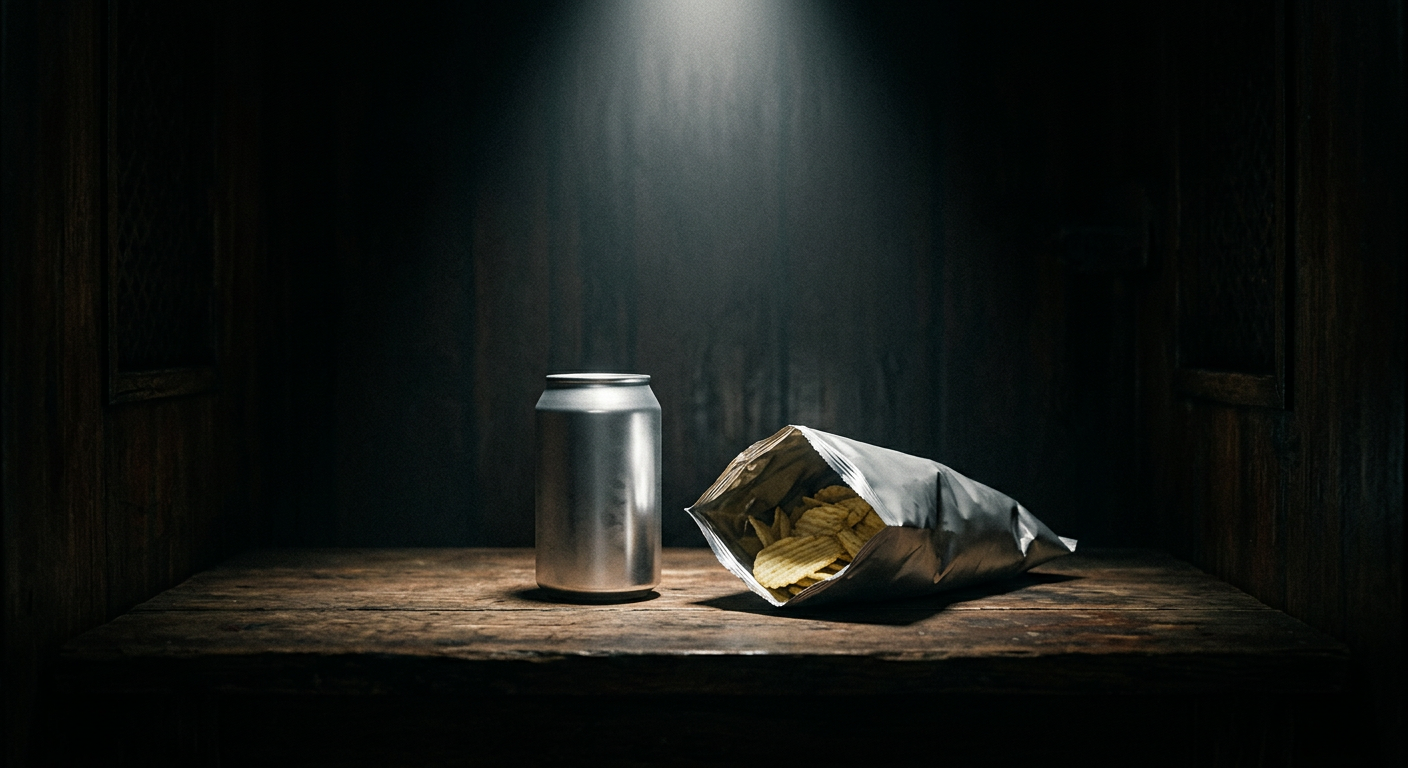
This week's loudest confession was whispered over a bag of chips.
On Thursday morning, PepsiCo beat its quarter and cut its year. The stock barely flinched — it actually rose. When a guidance cut can't move a stock already sitting at a 12-month low, the market is telling you the bad news got there first.
Meanwhile, Google bought electricity for the second time in one week. And the war in the Gulf quietly repriced every ship on the water. Three stories this morning. Three pairings. Let's get into it.
1) The Snack Aisle Confessed
Here's what PepsiCo reported Thursday. Core earnings of $2.34 a share against the $2.30 expected. Revenue of $25.27 billion, up 5.6% — also a beat. Then the forecast: full-year core profit growth cut to the low single digits, with the culprit named in plain English — North America.
Rewind to February. Pepsi cut prices by as much as 15% on Lay's and Doritos after five years of hikes finally sent shoppers walking. The cuts worked — snack volumes and market share improved last quarter. The bill also arrived: North American food profit fell 12%. CEO Ramon Laguarta promised he's "acting with urgency," with more cost cuts coming and Elliott Management in the register pressing for a shake-up.
Put it together and you get the plainest statement yet of where the American shopper stands: the brands can have the customer back, or the margin back. Not both.
We set our table for this confession on Monday with Ingredion — the ingredient seller gets paid whether the winning recipe is name-brand or store-brand — and Pepsi's reception Thursday (up, from a 12-month low, at 14 times forward earnings, its cheapest in five years) says the aisle's markdown came early. Still Buy. Today's pairing is about where the walking shopper actually lands.
When the name-brand bakery raises prices, the customer doesn't leave the store. They take one step down the shelf. Somebody owns the step.
The pairing: Post Holdings (POST) — Buy
Post owns the bottom shelf of breakfast: Malt-O-Meal bagged cereal — the familiar recipes at a fraction of the boxed price — plus private-label cereal and pet food made for the retailers' own labels, Weetabix, Michael Foods eggs, and Bob Evans sides. It's a $3.2 billion company, squarely in our wheelhouse, trading near $73 — a few dollars off its 52-week low, down some 37% from its high.
The price: about 10.5 times next year's expected earnings. The S&P 500: 21. There's no dividend, because the buyback is the payout: Post generated $553 million of free cash flow over the past year — roughly 17 cents of cash for every dollar of market value — and shrank its share count 12.5% in twelve months. A company quietly buying back an eighth of itself a year, near the bottom of its range, while seven analysts rate it a Buy with an average target of $105 — 43% above the price.
The honest reasons it's cheap: revenue missed last quarter, cereal is a slowly shrinking category, and management guided next fiscal year's profit roughly flat — growth is not the thesis here; cash and a shrinking share count are. The bigger flag: $7.6 billion of debt, nearly five times cash earnings, a serial acquirer's mortgage in a 5% world. The kill: free cash flow faltering while that debt rolls over at today's rates.
2) Google Went Power Shopping. Again.
On Wednesday, Google's power shoppers turned up somewhere nobody was looking: Cheyenne, Wyoming.
Black Hills Corporation — a regulated utility serving parts of eight states from Rapid City, South Dakota — jumped 7% Wednesday after signing definitive agreements to serve Google's planned Cheyenne data center, with terms running to 2048, plus $1.8 billion of new generation investment from 2027 through 2029. For scale: Black Hills' entire annual revenue is about $2.3 billion. A regulated utility grows by investing in its rate base, and this is the growth spurt of a corporate lifetime. Bank of America raised its target from $87 to $97.
And this is no story stock. Black Hills has raised its dividend for more than half a century straight — one of the longest streaks in the entire market — and yields 3.7%. It's the small-town diner that just signed a 22-year catering contract with the richest company on Earth.
The pairing: Black Hills (BKH) — Watch
So why Watch and not Buy? Because Wednesday's pop carried the stock to about $76, within 4% of its 52-week high, and we don't chase a crowd that has already found the diner. Because a 3.7% dividend has to argue with a 5.3% Treasury. And because that $1.8 billion must be borrowed in a 5% world — utilities are borrowing businesses, the same flag we carry at GATX and ONEOK. One more wrinkle: Black Hills' all-stock merger with NorthWestern Energy is still waiting on Montana's regulator.
The entrance: a yields-driven utility markdown back toward $70, or the November 4th report putting hard numbers on what the Google deal adds to earnings. The kill: financing costs quietly eating the growth spurt. The AI power bid has reached the smallest doors on the street — we just want a fair ticket in.
3) The War Repriced the Ocean
Quietly this week, the Gulf war wrote a new price tag on shipping itself. Attacks on tankers in the Strait of Hormuz hit the highest weekly count since the war began. Tanker traffic through the strait fell to a two-month low. And Thursday morning, crude jumped more than 4% back above $92 — even as the IEA accelerates the hundred-million-barrel reserve release we covered Tuesday. Borrowed barrels, it turns out, still have to sail past a shooting gallery.
Here's the mechanism the headlines skip: war doesn't just raise the price of what's in the ship. It raises the price of the ship. Routes get longer, insurance gets dearer, and every rerouted voyage soaks up vessel supply. On Wednesday, container line ZIM raised its full-year guidance on strong demand and freight rates.
In August we watched tanker owner International Seaways and refused to buy at what looked like a cycle peak. The peak never broke — rates and risks kept spiking together, which is exactly why we stayed out of the spot market. So this time we'd rather not bet on any single voyage at all. We'd rather own the landlord.
The pairing: Global Ship Lease (GSL) — Buy
Global Ship Lease owns dozens of mid-sized containerships and rents them to the big liner companies — ZIM among them — on multi-year charters. It's the U-Haul lot of the high seas: the trucks rent by the year, not by the trip. When war rates spike, GSL doesn't gamble on the next voyage. It signs the next lease at war prices — and that lease keeps paying long after the headline moves on.
The numbers: at about $45, the stock trades at 4.4 times trailing earnings and under 5 times next year's. The S&P 500: 21. The dividend yields 5.5%. Second-quarter revenue and earnings both beat, Jefferies and B. Riley just raised their targets to $50 and $52, and Moody's moved its outlook to positive.
The honest flags: the stock sits pennies from its 52-week high after a 65% run off the low — we are not early. Only three analysts cover it, which is part of why it still costs 4 times earnings. And in June, management ordered more than $2 billion of new ships — against a $1.6 billion market cap. That's a bet that the boom outlasts the build. The kill: peace. A reopened Red Sea and Hormuz would pour capacity back onto the market and take rates with it — the shipping version of the "cheerful loss" we carry at Magnolia and Darling. The multi-year charters are the seatbelt. The newbuild bill is the bet.
Before You Go
This morning, before the opening bell, Delta kicks off airline earnings season into $90s oil — our AAR entrance and Copa's unhedged fuel bill are both listening. Wednesday's Fed minutes showed officials still leaning toward one more hike this year, timing uncertain, with the 10-year near 5.3% and the 30-year near 5.7% — 2002 territory. And the 30-year mortgage touched 7.49%, its highest since late 2023, with applications falling 4.2% — the housing freeze deepens, which is exactly why we own the landlord and the repairman, Invitation Homes and Frontdoor.
That's the watchlist: a confession in the snack aisle and the bottom shelf that catches the falling shopper, a 22-year catering contract in Cheyenne we'll buy at a fair ticket, and a fleet landlord turning a dangerous ocean into long leases. One theme, as always: the best opportunities stand one step behind the headline.
Found this helpful? Share it with others.
Written by Behind the Markets