Half of America's Data Centers Are Stalled. CPI Drops in 30 Minutes. And Stablecoin Yield Is a Bank Run in a Tech Hoodie.
A quick note from Behind the Markets
Wall Street will sell you this week like it's a clean story. "Trade deal optimism." "Disinflation." "AI growth."
But the real market is being decided in the unsexy corners: regulation, plumbing, and physical bottlenecks.
Here's what matters for Wednesday.
1) Stablecoin "Rewards" Are the New Shadow Bank — and Washington Is Trying (and Failing) to Shut the Loophole
If you want to understand the next financial fight, forget the memes. It's about deposits.
Senators Tillis and Alsobrooks released the CLARITY Act compromise text on May 1. The GENIUS Act bans issuers from paying yield on stablecoins. But the "workaround" is intermediaries — exchanges, wallets, and affiliates can offer "rewards" that are economically the same thing. The CLARITY Act's Section 404 tries to draw the line: banned if the reward is "economically or functionally equivalent to the payment of interest on a bank deposit." Allowed if it's tied to real platform activity — payments, transactions, loyalty programs.
Even with this compromise, banks are warning the loophole still exists — including exchange membership programs and rewards tied to duration, balance, and tenure.
The stakes are enormous. Coinbase has $1.35 billion in stablecoin-related revenue at risk. The Kansas City Fed modeled the displacement: for every $1 that moves from a bank deposit into a stablecoin, bank lending capacity drops by roughly $0.50. Citigroup estimates stablecoins could displace $182 billion to $908 billion in bank deposits by 2030. Over 40 banking associations say the CLARITY language "falls short." And Polymarket odds for passage in 2026 jumped from 46% to 64% after the compromise dropped.
The Senate Banking Committee markup could come as soon as this week. If the loophole stays open, deposits leak. If it closes, Coinbase's revenue model takes a direct hit. Either way, a winner gets picked.
One company positioned as the compliance infrastructure that survives regardless of which side wins the yield fight:
Company: Circle Internet Group (SYM: CRCL)
The issuer of USDC — the largest regulated stablecoin — with $20+ billion in T-bill reserves and the compliance architecture the GENIUS Act demands.
Circle's business model doesn't depend on the yield loophole. It depends on issuance — every dollar of USDC in circulation requires Circle to hold T-bill reserves, generating interest income that Circle books as revenue (with a portion shared with Coinbase). If the CLARITY Act bans exchange-level yield, it doesn't kill Circle's economics — it actually strengthens Circle's position by making USDC the compliant rail that institutions choose over unregulated alternatives. If the loophole stays open, Circle benefits from higher USDC circulation driven by rewards programs. Either outcome favors the issuer with the cleanest compliance record.
Bottom line: Stablecoin yield is a bank run wearing a tech hoodie. The legal definition of "rewards" is going to decide who wins — and the infrastructure layer collects either way.
2) This Morning's CPI: It May Look Hot for a Mechanical Reason — and the Bond Market Won't Care About Your Footnotes
April CPI drops this morning at 8:30 a.m. ET — the same day Trump is sitting across from Xi in Beijing. That timing is a gift for narrative collisions.
Here's the context. Zillow is warning that April's shelter components could show an artificially high month-over-month jump because rent growth omitted from the October 2025 report — disrupted by the government shutdown — gets folded in later. Zillow forecasts Owners' Equivalent Rent up 0.44% month-over-month and 3.20% year-over-year, with Rent of Primary Residence up 0.39% monthly and 2.63% annually.
That sounds like a technical footnote — until you realize shelter is roughly one-third of the entire CPI basket. A "catch-up" anomaly in shelter, combined with energy that stayed above $100 crude for most of April, gasoline at $4.48 per gallon, and the Project Freedom debacle sending oil up 6% in a day, could produce a headline that looks much hotter than underlying conditions justify.
The bond market doesn't trade excuses. It trades prints. If the headline flashes hot, yields back up — and the 10-year note auction ($42 billion) happening this same morning absorbs the impact in real time. A hot CPI print + a weak 10-year auction = a same-morning repricing of mortgage rates, equity discount rates, and every levered balance sheet in America.
One ETF that benefits from a "fake hot" CPI by collecting inflation-linked income:
ETF: Schwab U.S. TIPS ETF (SYM: SCHP)
Treasury Inflation-Protected Securities — the one asset class whose principal adjusts upward with CPI, making a hot print directly accretive to your holdings.
If CPI comes in mechanically hot — shelter catch-up, energy bleed-through — SCHP's inflation-adjusted principal rises with the print. If the market treats it as transitory and yields stabilize, SCHP holds its value. The expense ratio is 0.03%. It's the cheapest way to own the bet that today's number lands hot regardless of the footnotes.
Bottom line: CPI can be "fake hot" and still be real market hot. Manage risk like the bond vigilantes don't care about your footnotes — because they won't.
3) AI's Real Bottleneck Isn't Chips Anymore — It's Transformers (and Half of America's Data Centers Are Stalled)
Everybody knows the AI buildout needs chips. What most people don't understand is that chips are useless without power.
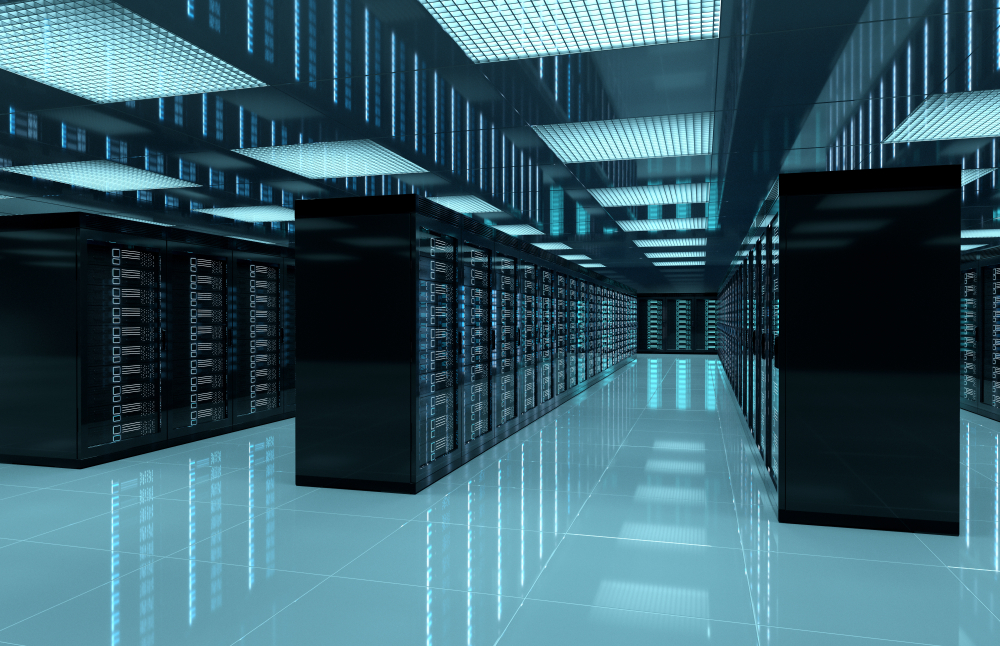
Bloomberg reported what might be the most important infrastructure story of 2026: nearly half of all U.S. data centers planned for this year have been delayed or canceled — not for lack of money or land, but because the specialized electrical equipment needed to bring them online is in critically short supply.
The numbers are staggering. Out of approximately 12 GW of data center capacity announced for 2026, only about 5 GW is currently under active construction. The remaining 7 GW — billions of dollars in planned infrastructure — sits stalled waiting for transformers, switchgear, and battery systems that can take 3 to 5 years to deliver. Before 2020, lead times ran 24 to 30 months. The AI surge has doubled the wait.
Electrical infrastructure represents less than 10% of total data center cost — but it's as vital as the compute hardware. A delay in any single element of the power chain halts the entire project. And the constraint is global: the two dominant Chinese transformer suppliers — TBEA and China XD Group — report order books full through 2027. Colocation vacancy in the Americas ended 2025 at 4.2% — near historic lows — and the supply that was supposed to relieve it isn't arriving.
Data centers already consume 3–4% of U.S. electricity and are projected to reach 10% by 2028. The $650+ billion the hyperscalers committed for 2026 capex is real. The physical infrastructure to deploy it is not.
One company that manufactures the exact equipment holding up the AI buildout:
Company: Eaton Corporation (SYM: ETN)
The global power management leader — manufacturing the switchgear, transformers, circuit breakers, and power distribution units that every data center and grid upgrade requires.
Eaton is currently trading around $414.60. When 7 GW of data center capacity is stalled because of electrical equipment shortages — and lead times stretch to 5 years — the companies that make the equipment have pricing power that most investors haven't fully priced. Eaton's electrical segment is the fastest-growing part of the business, revenue has been growing in the mid-teens, and the backlog is at record levels. Every gigawatt of data center capacity that gets unstalled passes through Eaton's product line. This isn't an AI stock. It's the chokepoint.
Bottom line: When the bottleneck is physical equipment, the winners aren't the loudest app. They're the quiet supplier everyone has to pay.
4) The Trump-Xi Summit Is the Headline… but "Friction as Baseline" Is the Trade
Trump and Xi are meeting today and tomorrow in Beijing. The Atlantic Council framed it cleanly: "US-China trade is stuck between a fragile truce and renewed escalation — and either way, friction is becoming the baseline."
Boeing CEO Ortberg and Citigroup CEO Fraser are at the table. A potential 500 Boeing aircraft purchase and 25 million metric tons of soybeans annually are on the menu. A "Board of Trade" mechanism to formalize limited tariff adjustments is being discussed. CNBC reported Iran will dominate the actual conversations — Treasury Secretary Bessent confirmed it.
But the structural backdrop matters more than any announcement. The IEEPA tariff authority was struck down. The White House rebuilt to 15% via Section 122, which lapses in July. New Section 301 tariffs are being investigated but take months to implement. China's Announcement No. 21 gives Chinese firms a private right of action against anyone complying with U.S. sanctions. Chinese exports to the U.S. are down 11% year-over-year.
The last tariff truce sent the S&P up 3% in a day. Investors who bought the headline sold the news three weeks later.
One company that wins regardless of summit outcome because its revenue is domestically anchored:
Company: Waste Management (SYM: WM)
100% domestic revenue. Inflation-linked municipal contracts. Essential services that can't be offshored, tariffed, or disrupted by a summit communiqué.
Waste Management doesn't need a trade deal, a tariff truce, or a photo op in Beijing. Its revenue comes from American households, businesses, and municipalities under long-term contracts that escalate with inflation. When "friction is the baseline" and global supply chains face perpetual uncertainty, the companies with zero international exposure and contracted domestic demand become relatively more valuable. That's not exciting. That's the point.
Bottom line: The summit will move futures for a day. Baseline friction moves earnings for years. Position accordingly.
Before You Go
Here's the contrarian question for Wednesday:
If regulators ban stablecoin yield in name but allow it in practice… what else in this market is being "regulated" the same way — with loopholes for the insiders?
Found this helpful? Share it with others.
Written by Behind the Markets