
Key Points:
- SMIC (SMICY) surged as much as 15% in Hong Kong after Huawei unveiled a new semiconductor theory that claims to bypass the need for ASML's advanced EUV lithography machines
- Huawei's "Tau Scaling Law" and LogicFolding architecture target 1.4nm-equivalent transistor density by 2031 — without the equipment the U.S. has banned China from buying
- Hua Hong Semiconductor also jumped 15% at the open, closing up 10.5%
- Huawei says it has already mass-produced 381 chip designs using this approach over six years
- The breakthrough directly challenges NVIDIA, AMD, and Intel in the AI accelerator market and undermines the entire premise of U.S. export controls
The Announcement That Shook the Chip World
On Sunday, May 25, at the 2026 IEEE International Symposium on Circuits and Systems in Shanghai, Huawei chip chief He Tingbo walked onto a stage and effectively told the Western semiconductor industry that its biggest advantage might not matter anymore.
The keynote was titled "New Semiconductor Path in Practice." And what she presented wasn't a theoretical white paper or a five-year wish list. It was a working framework — one Huawei claims it has been using for six years to design and manufacture hundreds of chips.
She called it the Tau (τ) Scaling Law.
For decades, the semiconductor industry has operated under one basic idea: make transistors physically smaller. That's Moore's Law — shrink the geometry, pack more transistors onto a chip, and performance goes up. It's why companies like ASML became some of the most valuable in the world. Their extreme ultraviolet lithography machines are the only tools on earth capable of printing circuits at the smallest nodes. And the U.S. government made sure China couldn't buy them.
Huawei's argument is simple: What if you don't need to shrink the geometry at all?
What the Tau Law Actually Does
Instead of making transistors smaller, the Tau Scaling Law focuses on compressing signal propagation delay — the time it takes for an electrical signal to travel through a circuit. Huawei's companion architecture, called LogicFolding, reduces the resistive and capacitive load on signals, effectively boosting transistor density and performance without requiring the most advanced lithography equipment.
In plain English: Huawei claims it can get 1.4nm-equivalent chip performance by 2031 using tools it already has access to.
That's significant. Because right now, the most advanced chips in the world — the ones powering NVIDIA's data center GPUs and Apple's latest iPhones — are built at 3nm and 2nm nodes using ASML's machines. If Huawei can get anywhere close to those performance levels without those machines, the entire strategic calculus of the U.S.-China chip war changes overnight.
SMIC's Monster Move
The market didn't wait for peer review.
SMIC, China's largest chip foundry and the company most likely to manufacture Huawei's next-generation Kirin processors, opened 15% higher in Hong Kong on Monday at HKD 91.80. Trading volume was staggering — 109 million shares changed hands in pre-market alone, worth nearly HKD 10 billion. The stock eventually settled at a 5.7% gain for the day as traders took profits, but the message was clear: the market believes Huawei is onto something.
Hua Hong Semiconductor, China's second-largest foundry, opened 15% higher as well and held onto a 10.5% gain by the close.
Why This Matters for U.S. Investors
Here's the part that should make every chip investor sit up straight.
Huawei didn't just publish a theory. The company says it has already mass-produced 381 chip designs using Tau Scaling principles over the past six years. New Kirin processors launching later in 2026 will be the first to formally adopt the LogicFolding architecture. And Huawei's stated roadmap puts it on a collision course with NVIDIA and AMD in the AI accelerator market — the single most valuable segment of the semiconductor industry right now.
If even a fraction of this works as advertised, the implications ripple across every major U.S. chip stock. ASML's near-monopoly on advanced lithography becomes less of a moat. NVIDIA's dominance in AI training chips faces a state-backed competitor that doesn't need to play by Western supply chain rules. And the export controls that were supposed to keep China a generation behind? They start looking like they accelerated China's search for an alternative path rather than stopping it.
The Bigger Picture
Markets reopened Tuesday with futures jumping on renewed hope for a U.S.-Iran peace deal that could reopen the Strait of Hormuz. The S&P 500 is coming off eight consecutive weekly gains — its longest streak since 2023 — with the Dow setting a fresh record close at 50,579.70 on Friday. Kevin Warsh was sworn in as the new Fed Chairman that same afternoon, inheriting a 3.50-3.75% rate and 3.8% inflation.
But the story investors should be watching isn't in Washington or Tehran. It's in Shanghai. Because if Huawei's Tau Scaling Law works at commercial scale, the $600 billion global semiconductor industry just got a new set of rules.
And the old playbook — buy ASML, buy NVIDIA, trust the export controls — might need rewriting.
Today's Bonus Content: SpaceX 'Dark Energy' Replaces Foreign Oil
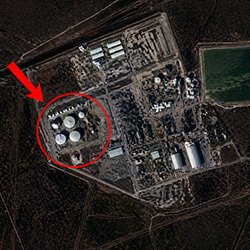
For years, we've been told SpaceX is a rocket company. But according to new satellite images from 300 miles above the Earth's surface, there is something very strange going on at SpaceX right now that has nothing to do with space. It could soon replace our need for foreign oil forever and ignite a $10 trillion boom for the stocks involved. Click here to learn more.
Found this helpful? Share it with others.