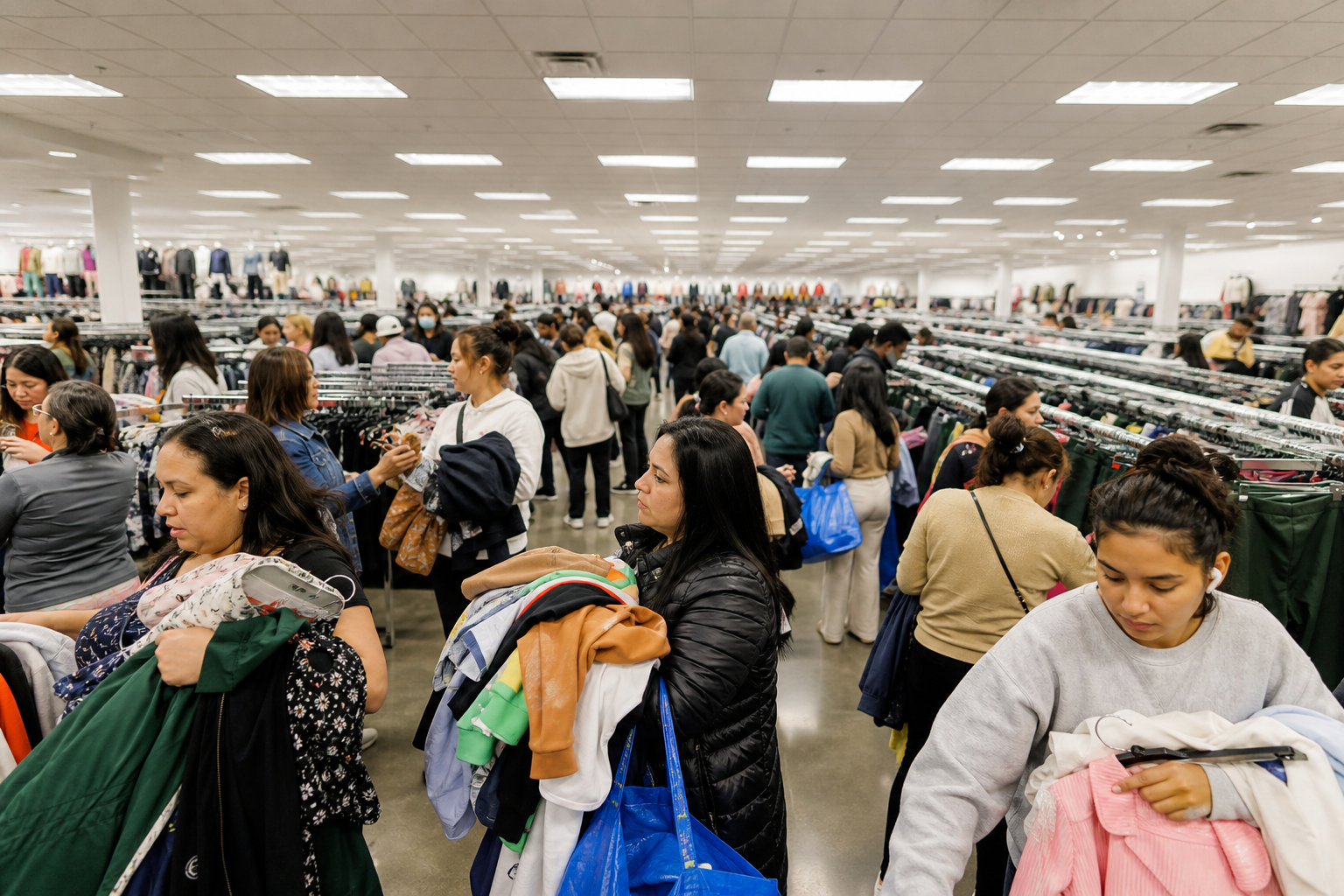
Ross Stores (ROST) reported after the bell Thursday, and the numbers were staggering. Comparable store sales surged 17%. Earnings per share hit $2.02, crushing the $1.73 estimate by 17%. Revenue jumped 21% to $6.01 billion, blowing past the $5.64 billion consensus by nearly $370 million. Management raised full-year guidance across the board.
The stock jumped over 5% in after-hours trading, and for good reason. In a week where Walmart dropped 7% warning about the pressured consumer, Ross Stores just proved that Americans aren't done spending — they're just done overpaying.
KEY POINTS:
• 💰 Ross Stores' Q1 revenue hit $6.01 billion (+20.6% YoY), beating estimates by $369 million. Comparable store sales surged 17%, driven primarily by transaction growth and customer traffic increases across all demographics.
• 📈 EPS of $2.02 beat the $1.73 estimate by 17% and jumped 37% year-over-year. Operating margin expanded 120 basis points to 13.4%, fueled by higher merchandise margins, occupancy leverage, and lower distribution and freight costs.
• 📊 Management raised full-year guidance — EPS now expected at $7.50-$7.74, with same-store sales growth of 6-7%. Q2 guidance calls for 6-7% comp growth and EPS of $1.85-$1.93.
• 🛍️ Customer growth was broad-based — double-digit increases across income levels, age groups, ethnicities, and geographies. Notably, the fastest growth came from younger shoppers.
• ⚡ The contrast with Walmart's same-day report was striking. Walmart dropped 7% on cautious guidance citing fuel costs and inflation. Ross surged 5% by proving that value-oriented retail is thriving precisely because consumers are under pressure.
The Trade-Down Effect in Real Time
Thursday delivered one of the most revealing split-screen moments of this earnings season. In the morning, Walmart — the country's largest retailer — dropped 7% after warning that gasoline prices are squeezing its customers and that inflation could worsen. By the evening, Ross Stores — the country's largest off-price retailer — reported one of its best quarters in company history.
These two reports aren't contradictory. They're telling the exact same story from different angles.
When inflation runs at 3.8%, when gas prices eat into household budgets, and when consumer prices outpace wage growth for the first time in two decades, people don't stop buying things. They look for better deals. They trade down. They walk past the department store and into Ross, where they can find brand-name merchandise at 20% to 60% below regular retail prices.
That's exactly what the numbers show. Ross's 17% comparable store sales growth was driven primarily by transaction volume — meaning more people walking through the door and buying more items. The company reported double-digit customer growth across every demographic category: income levels, ages, ethnicities, and geographies. Young shoppers grew the fastest.
The Numbers Behind the Beat
The raw financials are worth pausing on because they're genuinely exceptional. A 17% comp in brick-and-mortar retail doesn't happen very often. For context, TJX Companies — Ross's closest competitor — reported comp sales of 6% earlier this week, which was considered outstanding. Ross nearly tripled that figure.
Revenue of $6.01 billion represented a 21% increase from the year-ago quarter. Earnings per share of $2.02 — up 37% year-over-year — marked one of the strongest beats in the off-price sector in recent memory. Analysts were expecting $1.73. Ross blew past that by 29 cents per share.
Margins expanded meaningfully too. Operating margin hit 13.4%, up 120 basis points from a year ago. That improvement came from three places: higher merchandise margins (meaning better buying and pricing), occupancy leverage (more sales through the same store footprint), and lower distribution and freight costs. When you combine surging demand with improving cost efficiency, you get the kind of quarter that makes analysts rethink their models.
Management responded by raising guidance across the board. Full-year earnings per share are now expected to land between $7.50 and $7.74, with same-store sales growth of 6% to 7%. Those numbers are conservative relative to the Q1 blowout, suggesting there's room for further upside surprises.
What This Tells You About the Consumer Economy
The American consumer in 2026 is not broke. But the American consumer in 2026 is making different choices than the American consumer of 2024.
Tax refunds were larger this season, and Ross acknowledged that as a tailwind. But the underlying drivers go deeper. Inflation at 3.8%, gasoline prices above $4 a gallon in most of the country, and wages that aren't keeping pace — all of these push consumers toward value. Off-price retailers like Ross, TJX, and Burlington aren't just benefiting from this shift. They're built for it.
The off-price model works because it thrives on the same forces that hurt traditional retail. When brands overproduce, off-price retailers buy the excess at a discount. When consumers tighten their budgets, they trade down to stores where the brands are the same but the prices are lower. When department stores struggle, their loss is Ross's gain.
What This Means for Your Money
Ross Stores' quarter was the clearest proof yet that the "trade-down economy" is real and accelerating. With inflation stubbornly high, energy costs elevated, and the consumer feeling the squeeze from every direction, companies that offer genuine value are winning — and winning big.
Thursday's dueling earnings reports drew the line clearly. Walmart, despite a $3 billion revenue beat, fell 7% because its guidance acknowledged consumer pain. Ross, reporting just hours later, surged 5% because consumer pain is its business model. In a market searching for clarity about where the economy is heading, Ross Stores just gave you the answer. Americans are still spending. They're just doing it at a discount.
Up Next: 161 Million Americans Have No Idea What’s Coming

Right now, the largest wealth transfer in history is being set in motion...
By an invisible mechanism forcing money into the AI trade... every single day.
When it breaks, millions of retirement accounts could be cut in half.
But a former Goldman Sachs derivatives trader is revealing a mathematical signal that can help predict when to sell your stocks... before the crash.
He'll show you the 3 simple steps you need to take now to prepare.
Found this helpful? Share it with others.