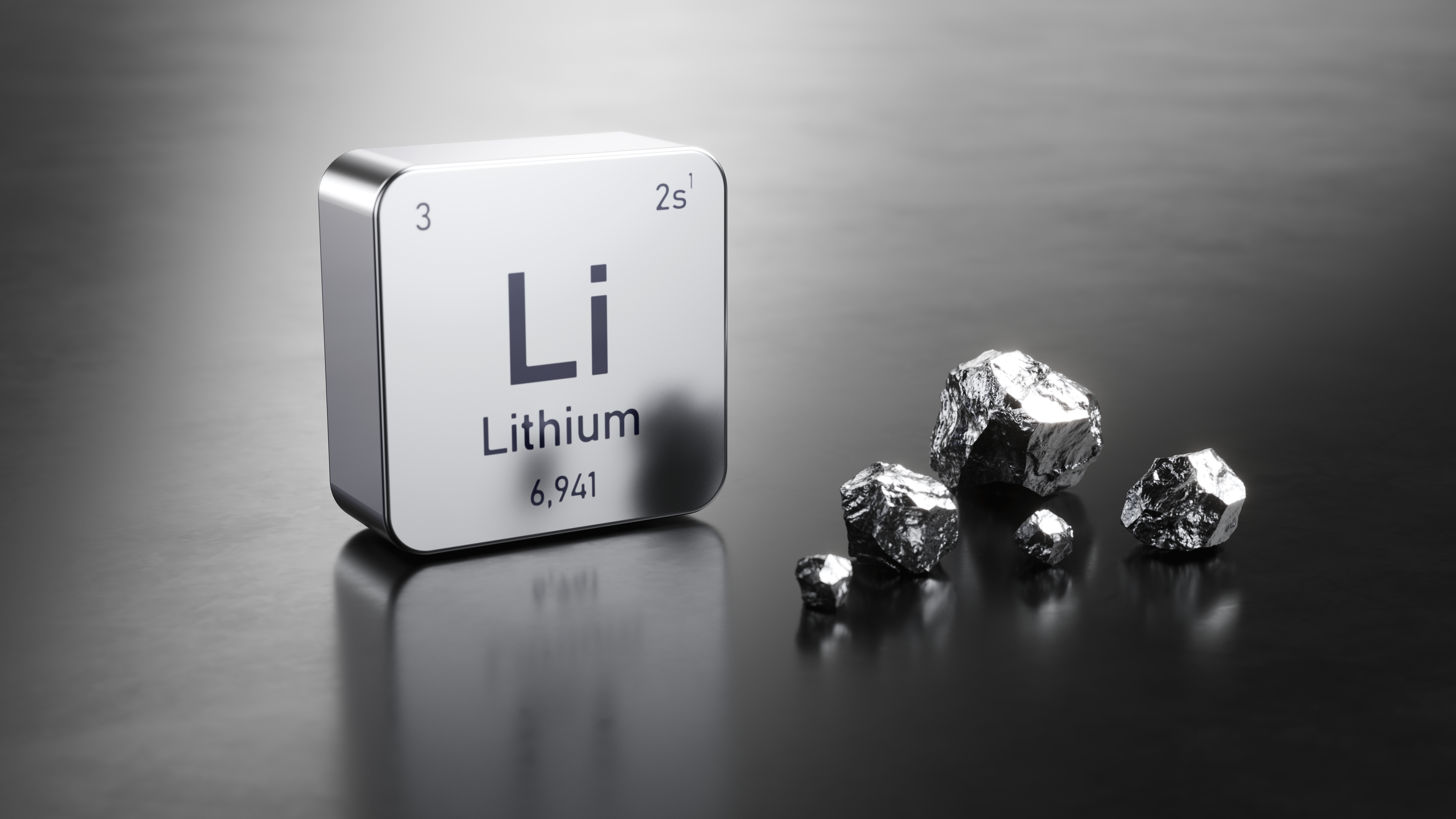
Lithium is starting to matter again.
Not because the market suddenly fell in love with battery metals.
Because the supply-and-demand setup is getting tighter at the same time the world keeps asking more from electrification, storage, and grid infrastructure.
That is the real story.
The long-term case for lithium still comes down to one simple point: the energy transition needs it, and replacing it at scale is not easy. Wood Mackenzie said in its latest lithium outlook that global demand could exceed 13 million tonnes by 2050 under an accelerated transition scenario, and that supply deficits could emerge as early as 2028 without significant new investment. The firm put the problem clearly: the question is not whether the world needs more lithium, but whether the industry can mobilize capital fast enough to meet demand.
That matters because lithium is no longer just an EV story.
It is also a grid-storage story.
And that second leg may be what changes the market faster than investors expect.
The big shift is not demand — it is timing
The easiest mistake investors make with commodities is assuming demand alone decides the price.
It does not.
What matters is whether supply can catch up in time.
That is where the lithium setup is getting more interesting. Albemarle recently raised its 2030 global lithium demand forecast by 10% and said it now expects 2026 demand to rise to between 1.8 million and 2.2 million metric tons, implying growth of roughly 15% to 40% next year. That is a very large range, but even the low end still points to strong growth.
That is why the market keeps revisiting the bullish case.
If demand accelerates that quickly while new projects still face permitting delays, financing hurdles, and execution risk, the “future surplus” story can disappear much faster than investors expect.
Why Wall Street is starting to sound more bullish again
The most important part of this setup is that the forecast debate is shifting.
Not everyone agrees on how tight the market gets, but the direction of the conversation matters.
Recent reporting cited Morgan Stanley forecasting a 2026 lithium carbonate equivalent deficit of about 80,000 metric tons, while UBS estimated a smaller but still meaningful 22,000-ton deficit. Those are very different numbers, but they point in the same direction: a tighter market than many investors were expecting not long ago.
That is a meaningful change in tone.
Because lithium spent a long stretch being discussed as a glut story.
Now the conversation is moving back toward scarcity.
That does not guarantee a straight line higher in prices. Commodities rarely work that way. But it does mean the market is once again starting to price in the possibility that demand will outrun what the industry can actually deliver.
The cleaner way to play it: ETFs
For most investors, the hardest part of the lithium trade is not the macro view.
It is picking the right stock.
Mining companies come with execution risk, political risk, project delays, processing risk, and balance-sheet issues. That is why ETFs can make more sense for investors who want exposure to the theme without betting everything on one operator.
Two cleaner ways to get that exposure are LIT and BATT.
Amplify Lithium & Battery Technology ETF
ETF: Amplify Lithium & Battery Technology ETF (SYM: BATT)
BATT is designed as a broader way to own the lithium-and-battery ecosystem.
Amplify says the fund is built around companies generating significant revenue from battery storage solutions, battery metals and materials, and electric vehicles, and that it seeks to track the EQM Lithium & Battery Technology Index.
That matters because it gives investors more than just miners.
You get exposure across the value chain, which helps if the biggest upside shifts from upstream lithium producers to downstream battery or EV names. In other words, this is not just a pure commodity bet. It is a broader electrification-and-battery infrastructure bet. Recent holdings data also show the fund spread across dozens of names, reinforcing that diversification angle.
That is the appeal.
You are not trying to guess one winning lithium stock.
You are trying to own the broader trend.
Why a diversified lithium ETF still makes sense
The lithium story is attractive, but it is not clean.
That is exactly why diversification matters.
Even if the long-term outlook improves, the path will still be volatile. Prices can overshoot in both directions. Project timelines can slip. Governments can interfere. Commodity markets can stay irrational longer than investors want. That is why a diversified ETF approach often makes more sense than trying to nail the one perfect company in a very messy supply chain.
Bottom line
Lithium looks like it is moving into a more interesting phase.
Demand is still strong. Supply still looks constrained. And more major forecasts are starting to point toward a tighter market instead of the easy surplus narrative investors got used to. Wood Mackenzie says deficits could emerge by 2028 without more investment, while Albemarle now sees much stronger demand growth into 2026 and beyond.
That does not mean lithium goes straight up from here.
But it does mean investors should probably start paying attention again.
For investors who want exposure without taking single-stock risk, diversified ETFs tied to lithium, batteries, and electrification still look like one of the cleaner ways to play the theme.
Trending Now: SpaceX ‘Dark Energy’ Replaces Foreign Oil
For years, we've been told SpaceX is a rocket company... that will one day take humans to Mars (and the moon).
But according to new satellite images from 300 miles above the Earth's surface, there is something very strange going on at SpaceX right now that has nothing to do with space.
A new division of SpaceX is deploying a new way to power our world... that could replace our need for foreign oil forever -- without using nuclear fission, solar, wind, geothermal, coal, or any sort of battery.
When you consider SpaceX burns 29,600 gallons of fuel per launch... it makes sense the business would want a better way to generate energy.
But what it's doing right now could change not only SpaceX's operations... but also dramatically affect the entire country -- and your investments.
What it's deploying is a newly permitted technology I know simply as "Dark Energy."
Most people have no idea something like this is even possible.
And it will sound like science fiction - at first.
But as I prove in my new boots-on-the-ground interview from West Texas, this is the beginning of what could be a $10 trillion boom for investors who know what to do - and who take the right steps now.
SpaceX can't make this "Dark Energy" by itself. It relies on a small group of little-known suppliers to make it happen.
And I believe that's why a laundry list of billionaires and tech CEOs are getting themselves into position.
Early supporters of "Dark Energy" include Nvidia CEO Jensen Huang, Oracle founder Larry Ellison, and OpenAI CEO Sam Altman.
Not to mention names like Brad Gerstner, a legendary tech investor who managed to be early on Uber, Microsoft, Amazon, Meta, and Nvidia.
He just joined a $300 million round backing this technology.
Or Garry Tan.
Garry invested in Coinbase back in 2012... turning a $300,000 stake into $2.4 billion in less than 10 years.
He's backed Airbnb, Stripe, DoorDash, and Dropbox... and his firm has invested in companies that are now worth more than $1 trillion combined.
Today, he's backing "Dark Energy."
This discovery could change our daily lives... and radically lower the cost of power.
And I believe that for you, this could be one the most profitable moments of your financial life if you position your money behind the right stocks before this news spreads.
I'm sharing all the details right now, on camera.
Click here to see how you could double your money or more by backing this new "Dark Energy."
Found this helpful? Share it with others.