Morning Watchlist: Friday Edition
A quick note from Behind the Markets
We've made it to the end of the week — and by the time you read this, the most important number of the month is about thirty minutes old.
The August CPI hit the wire at 8:30 this morning, the last inflation reading the Fed sees before it decides on rates next Tuesday and Wednesday. This week, futures put the odds of a hike near 60%. We're still waiting for the market to digest the news, so any major effects will be covered in our Saturday issue (make sure you check your inbox tomorrow morning for the weekly recap).
While the whole week waited on that referee, three quieter stories caught our eye: a robot that just got a checkbook, a mall that refuses to die, and a mortgage rate that has quietly turned every homeowner into a repair customer.
Three stories this morning. Three pairings. Let's get into it.
1) The Robots Got Checkbooks
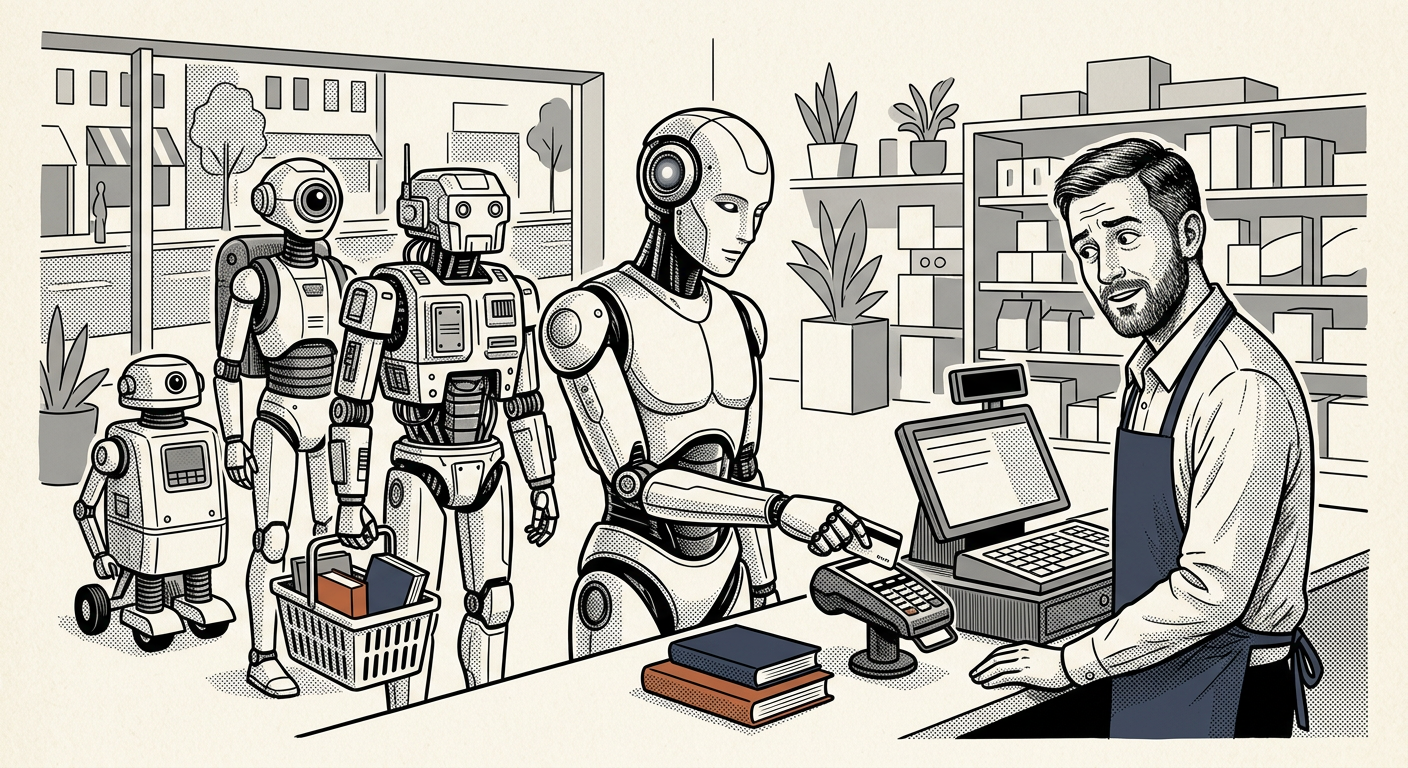
On Tuesday, Meta introduced Muse — a personal AI agent that doesn't just chat. It sends emails, books travel, fills out forms, and spends actual money, with checkout running through Stripe's Link and purchase protections attached. A free tier gets you a taste; the full service runs $20 a month, or $100 for the heavy-duty plan. Google is racing to the same finish line, and so is Anthropic.
The market's verdict came fast. Meta rose 5.4% on Wednesday.
But the launch left us chewing on a different question. If a piece of software is about to send emails and spend money on your behalf, who checks its ID?
Think about how an office building works. Every employee stops at the security desk, gets a badge, and that badge decides which doors open. Now imagine the building hires a million interns overnight — none of them human. Every one needs credentials, permissions, and an off-switch. The security desk just became the most important desk in the building.
The pairing: Okta (OKTA) — Watch
Okta runs that security desk for corporate software — it manages who (and now what) gets to log in to a company's systems. The agent era is already showing up in the results: new AI security products made up about 30% of bookings last quarter, revenue grew 11% to $805 million, and future contracted business rose 17%. Goldman Sachs put a $203 target on the stock citing rising AI-agent demand.
So why Watch and not Buy? Because the crowd beat us to the lobby. From a 52-week low near $63, Okta has more than doubled this year — it closed Wednesday at $172.74, pennies from its high, after rising another 5% the day the market fell in love with Muse. That's a $30 billion company at about 42 times next year's expected earnings. The S&P 500: 21. And the average analyst target sits at $182 — barely above the price. We've seen this setup in Tenable and GitLab this quarter: an above-target pop is an exit ramp for early money, not an entrance for ours. Our entrance: a pullback toward the $140s — roughly where the stock stood before its August earnings pop — or growth accelerating well past 11% to earn the multiple. What kills it: the agent platforms bundling their own badge desks, with Microsoft first in line.
2) The Mall Refuses to Die
On Wednesday, Signet Jewelers — the parent of Kay, Zales, Jared, and Blue Nile — beat earnings by 45 cents, posted positive comparable sales in every fine-jewelry brand, raised its full-year profit forecast by more than a dollar a share, and expanded its buyback to $700 million. The stock jumped 10%. The CEO's telling phrase: "high single-digit unit growth at higher price points." With gold near $4,400 an ounce, people are buying more jewelry at higher prices.
Thursday morning, Macy's followed. Adjusted earnings of 63 cents against the 37 cents Wall Street expected, guidance raised, and Bloomingdale's grew comparable sales 11.3% — its best second quarter ever. One honest asterisk, and it's becoming the season's recurring footnote: 23 cents of that Macy's number was tariff refunds, the same flavor of one-time help that padded Lululemon's "beat" last week. Strip it out and the quarter was still solidly better than feared.
Physical retail was supposed to be dying. Instead the register keeps ringing. And when every stall at the farmers market has a good Saturday, the surest business in town is renting out the stalls.
The pairing: Tanger (SKT) — Buy
Tanger owns 42 outlet and open-air shopping centers across 22 states and Canada — the discount end of physical retail, exactly where the trade-down migration we've tracked since August (Ross, Burlington, BJ's, Ollie's) drives on weekends. Occupancy is 96.6%. And here's the number we love: when a space turns over, the next tenant signs at rents 28% higher than the last one paid. Dead malls don't get raises.
A quick term of art: REIT profits are measured in FFO — funds from operations — which is earnings before the large paper-only depreciation charge real estate books every year. Tanger just beat on FFO, raised its full-year FFO guidance to $2.45–$2.52 a share, raised the dividend 7%, signed five new Saks Off 5th leases, and bought an Ohio center at an 8.5% first-year return. At $37.82, it's a $4.5 billion company at about 15 times this year's FFO, paying a 3.3% yield.
The honest risks: the outlet trip is a drive, and record pump prices tax it. The consumer carrying 7% loan rates could crack — the same risk we named on Polaris. Tariff-squeezed tenants could hand back keys. And the analyst consensus is a lukewarm Hold with a $41 target, so nobody on Wall Street is excited (yet) — which, regular readers know, is often how we like it.
3) Nobody Is Moving
The quietest big story of the week came from the bond market's plumbing. On Wednesday the average 30-year fixed mortgage climbed to 6.85% — its highest since June 2025 — the 10-year Treasury set another 52-week high at 4.84%, and the Treasury announced a $6 billion bond buyback, triple the normal size, to steady the market.
Here's what a 6.85% mortgage does to a neighborhood: nothing. That's the point. Sellers sitting on 3% loans won't give them up; buyers facing 7% can't stretch. So houses don't change hands. We've traded this freeze twice already — selling M/I Homes when the rate thesis broke, buying Invitation Homes because renting beats a 7% mortgage. There's a third winner we haven't touched.
In a town where nobody can afford a new car, the mechanic does fine. When you can't move, the house you're stuck with keeps aging — and everything inside it keeps breaking.
The pairing: Frontdoor (FTDR) — Buy
Frontdoor is the parent of American Home Shield, the country's biggest home-warranty company: 2.11 million members pay a subscription, and when the water heater or the air conditioner dies, Frontdoor's network fixes it. Nearly four in five members renew every year. The second quarter was a record: revenue up 5% to $645 million, adjusted earnings up 19%, gross margins of 59%, guidance raised, and buybacks running 21% ahead of last year. Truist carries a $105 target.
At about $81, that's a $5.6 billion company at roughly 17 times next year's expected earnings. The S&P 500: 21. A subscription repair business priced below the market, in a country whose housing stock gets a year older every year nobody moves.
The honest risks: total membership is only growing about 1% — this is a renewal machine, not a growth rocket, and the price has to stay reasonable for that. The channel that sells warranties alongside home closings is frozen by the same 6.85% mortgage that helps everywhere else. And brutal summers cut both ways — air conditioners breaking is demand, but claim costs spike too.
Before You Go
That's the watchlist. The badge desk behind the robot boom, the landlord behind the beat parade, and the repairman behind the frozen housing market. One theme: when a story gets loud, get paid one door down.
Housekeeping for a busy stretch: Powell Industries was listening to Oracle's capex plans, and Saturday's review grades the fallout, along with Apple-week verdicts on Cirrus Logic and Assurant. Kroger reports this morning right beside the CPI — that's the food-inflation referendum we paired with BJ's. Then the main event: the Fed decides Tuesday and Wednesday, with the Bank of Japan right behind it — and Aflac's yen thesis on the clock.
Found this helpful? Share it with others.
Written by Behind the Markets