Key Points:
- Oracle dropped 11% on Thursday after reporting record Q4 and full-year results but revealing negative free cash flow of $23.7 billion for fiscal 2026
- Q4 non-GAAP earnings per share came in at $2.11, beating estimates of $1.89 by nearly 12%, while full-year revenue hit $67 billion
- Cloud Infrastructure revenue surged 77% to $18.1 billion, and total cloud revenue rose 39% to $34 billion — both records
- Capital expenditures exploded 162% to $55 billion, with plans to spend approximately $70 billion in fiscal 2027
- Oracle plans to raise $40 billion more through debt and equity, including a $20 billion at-the-market share offering, to fund AI data centers including the $500 billion Stargate project
The Earnings Were Perfect. The Cash Flow Wasn't.
Oracle beat on revenue. Beat on earnings. Raised guidance. Set records across every cloud metric that matters. And on Thursday, the stock dropped 11% — its worst single-day decline since January 2025.
The reason wasn't in the income statement. It was in the cash flow statement.
For fiscal year 2026, Oracle reported negative free cash flow of $23.7 billion. That means the company spent $23.7 billion more than it generated — despite reporting record revenue and record profits. And management just told investors that spending is about to accelerate.
Welcome to the new economics of artificial intelligence, where the most successful companies in the world are the ones burning the most cash.
What Oracle Reported
The headline numbers were outstanding. Q4 fiscal 2026 non-GAAP earnings per share hit $2.11, crushing the $1.89 consensus by nearly 12%. For the full year, total revenue reached $67 billion, in line with the company's guidance.
Cloud was the engine. Total cloud revenue for fiscal 2026 hit $34 billion, up 39% year-over-year. Cloud Infrastructure — the segment most directly tied to AI workloads — generated $18.1 billion in revenue, up 77%. In Q3 alone, cloud infrastructure revenue was $4.9 billion, growing 84%.
The backlog was even more dramatic. Remaining Performance Obligations — essentially contracted future revenue — stood at $553 billion, up 325% from a year earlier. Of that, $75 billion represents prepaid or customer-supplied hardware for large AI contracts.
Management raised fiscal 2027 revenue guidance to $90 billion — a 34% increase over fiscal 2026, an acceleration from this year's 22% growth.
The Price Tag of AI Dominance
So why did the stock drop? Because the path to $90 billion in revenue runs through a mountain of capital expenditure.
Oracle spent $55 billion in capex during fiscal 2026 — a 162% increase over the prior year. That spending is what turned operating cash flow of roughly $23.5 billion into negative free cash flow of $23.7 billion. In plain terms: Oracle's operations generated cash, but its investment in AI infrastructure consumed more than double what the business produced.
And the spending isn't slowing down. CFO Hil Maxson told analysts that net capital expenditures for fiscal 2027 are expected to reach approximately $70 billion, not counting $20 to $25 billion in customer prepayments that will offset some of the cost. Oracle plans to activate nearly one gigawatt of computing power in the current quarter alone — roughly equivalent to the total computing capacity it brought online during all of fiscal 2026.
To fund this expansion, Oracle plans to raise approximately $40 billion through a combination of debt and equity financing, including a $20 billion at-the-market equity issuance. This comes after the company already raised $43 billion in debt and $5 billion in equity during fiscal 2026.
The Stargate Factor
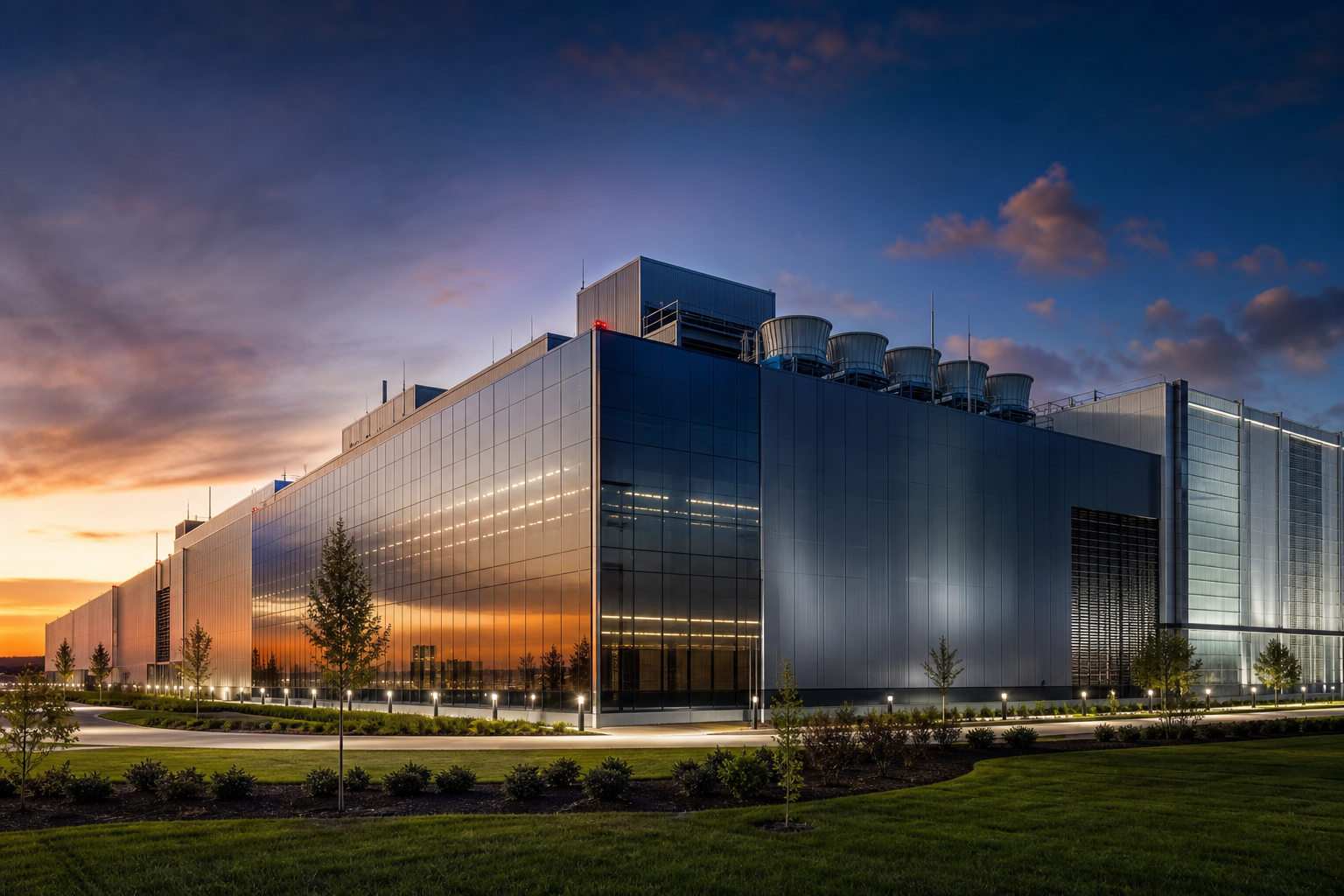
Oracle isn't spending in a vacuum. The company is one of three partners — alongside OpenAI and SoftBank — in the Stargate project, a $500 billion initiative to build AI data center infrastructure across the United States.
Chairman Larry Ellison has described the scale: each facility spans half a million square feet, with 10 buildings under construction and plans to expand to 20 locations beyond the initial Abilene, Texas site.
The Stargate commitment helps explain why Oracle's capital spending has exploded. Building AI infrastructure at this scale requires upfront investment that dwarfs anything in the company's history.
The Stock Tells a Different Story
Wall Street isn't so sure. Oracle's stock has now fallen roughly 48% from its 52-week high of $345.72, trading at $178.54 with a market cap of roughly $514 billion. The stock is down about 8% year-to-date, trailing the Nasdaq's 9% gain.
The concern isn't about demand — Oracle's $553 billion backlog proves demand exists. The concern is about returns. When a company spends $55 billion in a single year and still has $70 billion more to spend next year, investors want to know when the cash flow turns positive again.
Oracle joins a growing list of AI infrastructure companies facing this exact tension. Alphabet announced an $85 billion equity raise. Super Micro revealed a $7 billion offering just this week. The pattern is the same: unprecedented demand, record revenue, and a balance sheet that can't keep up without outside capital.
What It Means for Investors
Oracle's Q4 report is a case study in the disconnect between growth and value in the AI era. By every traditional earnings metric, the company delivered. Revenue grew. Margins held. Guidance went up.
But free cash flow went negative by $24 billion, and the company needs $40 billion more from investors to fund next year's expansion. At some point, the revenue from all this infrastructure investment has to catch up with the capital going in. Oracle's management clearly believes it will — $90 billion in revenue, a $553 billion backlog, and the Stargate project all point in that direction.
The market's response on Thursday suggests investors want to see the proof, not just the promise. And until Oracle's enormous spending starts generating positive free cash flow again, that 11% drop may be just the beginning of the debate.
Read Next: This IPO Could Make SpaceX Look Small (Read before June 16)
A red-hot AI startup just filed to go public — and it's already valued at nearly $1 trillion. Wall Street legend Marc Chaikin believes a single announcement on June 16 could send that number far higher. He's found a backdoor way in before the IPO. Get the details before June 16.
Found this helpful? Share it with others.