
The World Must Prepare for a Post-Quantum Computing World Today
Quantum computing isn’t just another incremental step forward in technology. It’s an unprecedented leap into an entirely new paradigm.
Unlike classical computers, which process one calculation at a time in binary “on” or “off” bits, quantum computers leverage qubits—capable of existing in multiple states simultaneously thanks to the principles of superposition and entanglement. This allows them to evaluate countless possibilities in parallel, unlocking speeds that leave today’s fastest supercomputers in the dust.
According to McKinsey, the commercial impact of quantum computing could create $1.3 trillion in annual value by 2035. That’s not a distant-future dream; research labs and private companies are making breakthroughs today that could bring practical applications within the decade.
“Complex problems that currently take the most powerful supercomputer several years could potentially be solved in seconds,” wrote Charlie Campbell in Time. “This could open hitherto unfathomable frontiers in mathematics and science, helping to solve existential challenges like climate change and food security.”
The Double-Edged Sword of Quantum PowerFor all the transformative potential quantum computing brings—revolutionizing pharmaceuticals, logistics, AI, finance, climate modeling... there’s a darker side. Those same incredible processing capabilities can break modern encryption systems in mere seconds. The RSA and ECC encryption standards that protect your banking data, government communications, and corporate secrets would be rendered obsolete almost overnight. This is why leading technology and cybersecurity firms are already mobilizing for a “post-quantum” world. Once practical quantum computers exist, unprepared organizations risk catastrophic breaches. Marisol Cruz Cain, Director of Information Technology and Cybersecurity at the U.S. Government Accountability Office, warns:
This looming threat has sparked a gold rush in quantum-safe cryptography and next-generation cybersecurity solutions. |
Chaikin Analytics
Sell these stocks now—Here’s what to buy instead
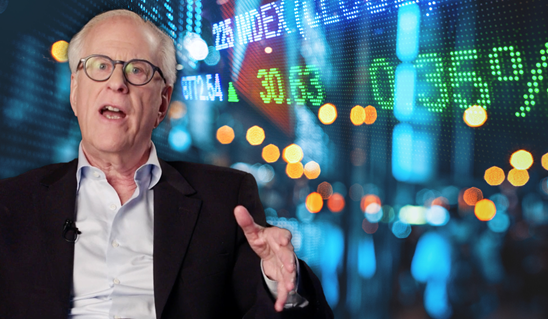
Wall Street legend Marc Chaikin says you must know these 3 critical things before you invest new money today:
1. The two big sectors to avoid—one of which is healthcare stocks
2. The three sectors that have EXTREMELY BULLISH ratings
3. And the exact date this raging bull market is most likely to end, based on 100 years of market data.
For details click here to view Chaikin’s brief presentation.
Cybersecurity as an Investment MegatrendWhile quantum computers are still in the experimental stage, the need for upgraded digital defenses is already urgent—and it’s fueling major investment opportunities. A few companies leading the way include: Company: Palo Alto Networks (SYM: PANW) A global leader in enterprise cybersecurity platforms, offering AI-powered threat detection and cloud-native security solutions. Company: Okta (SYM: OKTA) Specializes in identity and access management, a critical pillar of security in a post-quantum environment where authentication systems must be quantum-resistant. Both firms are pouring resources into staying ahead of emerging threats—making them attractive long-term holdings for investors betting on the cybersecurity arms race. But you don’t need to pick individual winners to get exposure to the trend. Several exchange-traded funds (ETFs) offer diversified access to this booming sector. ETF: Global X Cybersecurity ETF (SYM: BUG) This ETF invests in companies poised to benefit from increased adoption of cybersecurity technology, from software developers to hardware manufacturers. Holdings include firms working on intrusion prevention, encryption, and endpoint security. It’s a cost-effective way to gain exposure to a basket of global leaders in the space. ETF: iShares Cybersecurity and Tech ETF (SYM: IHAK) Tracks an index of companies in both developed and emerging markets involved in cybersecurity hardware, software, and services. It offers broad coverage of the industry while also providing geographic diversification. For long-term investors, these ETFs could be well-positioned to capture gains as quantum computing inches closer to reality and organizations worldwide race to safeguard their data. Why the Timeline Matters for InvestorsSome might assume they have years—or even decades—before quantum computing impacts markets. But waiting could mean missing the biggest early-stage growth phase in quantum-proof cybersecurity. Just as the internet created entirely new industries in the 1990s, and artificial intelligence is creating them now, the post-quantum era will reward companies and investors who position themselves before mass adoption. With the U.S., China, and the EU pouring billions into quantum R&D, the tipping point could arrive faster than most expect. Governments are already working on post-quantum cryptography standards, and forward-thinking corporations are beginning migrations now to avoid being caught unprepared. |
Trade Algo
🚀 Instantly Gain An Unfair Advantage In The Stock Market
Trade Algo is a revolutionary new technology that uses ‘Dark Pool’ data (not usually available to the everyday retail trader) and artificial intelligence to detect trades being made by large institutions...
...this allows you to make smart data driven trading decisions with ease.
Bonus Chart of the Day: Chipotle’s Potential Bounce Beaten-down shares of Chipotle Mexican Grill (SYM: CMG) may be nearing the end of their recent pullback. Piper Sandler just upgraded CMG to Overweight with a $50 price target—about 20% upside from current prices. This comes despite Chipotle lowering its same-store sales outlook for 2025 twice this year. The optimism comes from expectations that summer promotions will boost traffic and revenue. Analyst Brian Mullen raised his FY26 revenue estimate to $13.43B (up 0.07%) and EPS to $1.34 per share. For FY27, revenue is now projected at $14.87B (up 0.5%) with EPS at $1.52—a 2% increase from prior forecasts. If demand rebounds as expected, CMG could be a classic case of short-term pessimism giving way to long-term growth potential. |
Found this helpful? Share it with others.
Written by Ian Cooper