Key Bullet Points:
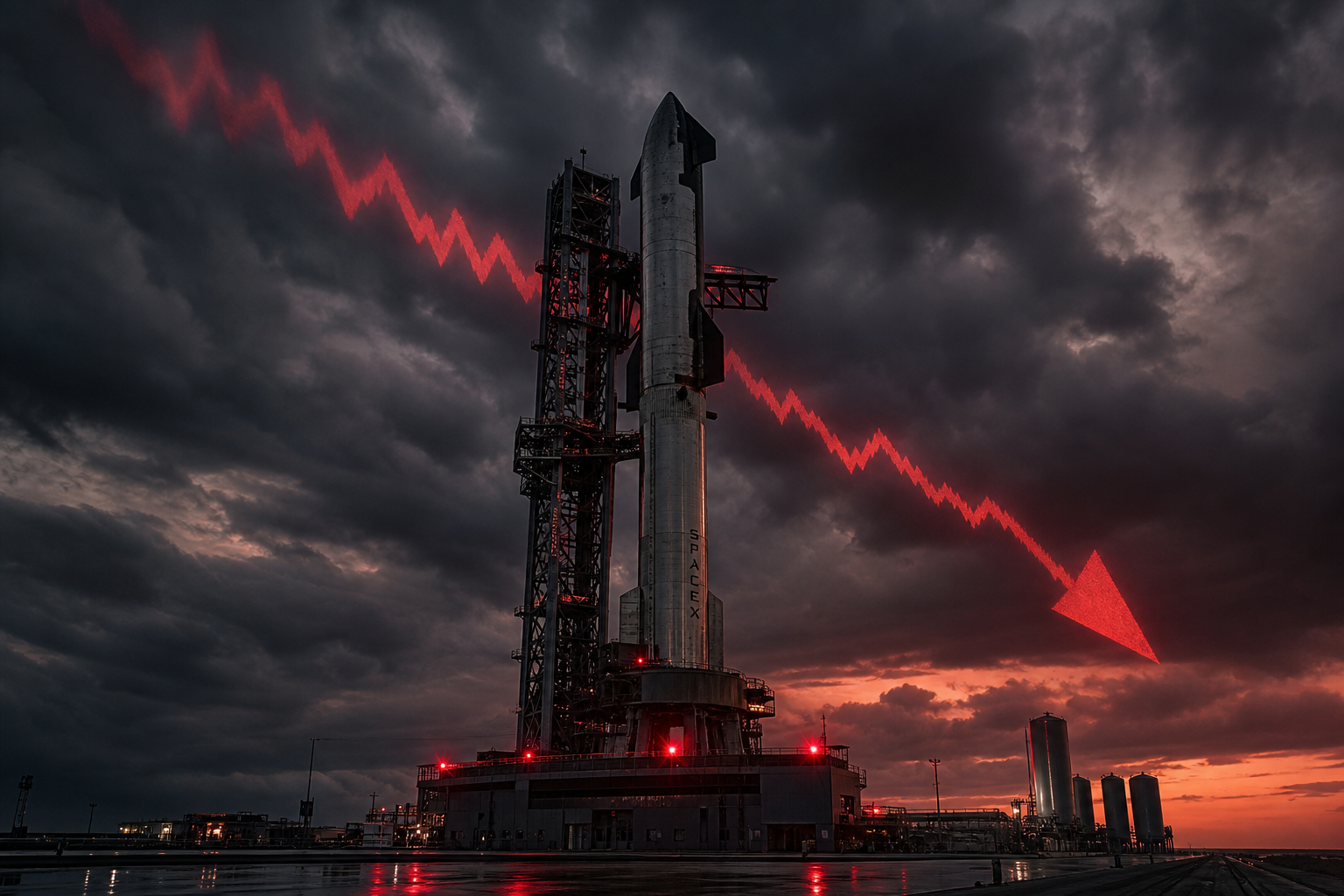
- SpaceX (SPCX) crashed below $125 on Friday — dropping approximately 4.8% — after Starship Flight 13 was aborted when two Raptor engines failed to ignite, adding to a selloff that has erased roughly 44% of the stock's value from its post-listing high of $225.64 and pushed it well below its $135 IPO price
- The company lost an estimated $53 billion in market value after hours Thursday alone when the Starship scrub hit — and with the first wave of insider lockup expirations arriving in early August, the selling pressure is only expected to intensify as early investors rush to exit before more supply hits the market
- Iran launched missiles and drones at four U.S.-allied Gulf nations overnight Friday — striking Qatar, Kuwait, Bahrain, and Jordan in retaliation for a sixth consecutive night of American airstrikes — damaging a Kuwaiti water desalination plant and injuring a child in Qatar, marking the conflict's most dangerous escalation yet
- Brent crude surged 4% to $87.82, with oil up 12% for the week — the biggest weekly gain since April — as markets priced in the growing risk that the Strait of Hormuz, through which 20% of global oil supply flows, could face prolonged disruption
- The Nasdaq fell 1.47% to 25,882 as the semiconductor selloff entered official bear market territory — with the SOX index down more than 20% from its highs, AMD falling 5.3%, Intel dropping 5.8%, and the $3.3 trillion chip industry recording its worst week since March 2025
The Rocket That Was Supposed to Change Everything
One month ago, SpaceX was the most anticipated IPO in a generation. Elon Musk's rocket company debuted on the Nasdaq at $135 per share, valuing it at over $2 trillion and triggering the largest single-day passive buying event in index history. Institutional investors fought for allocations. Retail traders piled in. The narrative was irresistible: the company that landed rockets, launched Starlink, and was building humanity's path to Mars — now available to everyone.
On Friday, SpaceX closed below $125.
The stock has now lost approximately 44% of its value from the post-listing high of $225.64. It has been falling for five consecutive trading sessions. And the catalyst for the latest leg down wasn't a financial miss or a downgrade — it was physics.
Starship Flight 13, the test launch that was supposed to demonstrate the next iteration of the most powerful rocket ever built, was aborted Thursday evening when two Raptor engines failed to ignite during the countdown sequence. Elon Musk posted on social media that the "engines didn't start," offering no further explanation.
The market's response was immediate and severe. SpaceX lost an estimated $53 billion in implied equity value in after-hours trading Thursday. On Friday, the stock fell another 4.8%, dropping beneath the $125 level as sellers overwhelmed every attempt at a bounce.
The Lockup Nightmare
The price action is bad. What comes next could be worse.
The first wave of insider lockup expirations arrives in early August — just weeks away. When those restrictions lift, shares held by early-stage investors, employees, and pre-IPO backers become freely tradeable for the first time. At $135, those shares represented the IPO price — a clean exit at breakeven. At $125, they represent a loss. And the psychology of a locked shareholder watching their gains evaporate creates a powerful incentive to sell the moment the window opens.
By December 8, lockup releases will bring the potentially tradeable float to roughly 40% of the company's outstanding shares. Musk's own holdings and the remaining 60% stay locked until mid-2027. But between now and December, the market must absorb an unprecedented wave of new supply in a stock that is already trending decisively lower.
Raymond James still maintains a buy rating with a $242 target, implying nearly 94% upside. Wall Street's average target is $242.22. But consensus price targets meant for a stock at $200 look increasingly academic at $125.
Iran Goes Regional
The geopolitical backdrop is no longer background noise. It is the story.
Overnight Friday, Iran retaliated against a sixth consecutive night of American airstrikes by launching missiles and drones at four U.S.-allied nations in the Persian Gulf. Qatar, Kuwait, Bahrain, and Jordan were all targeted. In Kuwait, an Iranian strike damaged a water desalination plant — infrastructure critical to a desert nation's survival. In Qatar, a child was injured by falling debris. Jordan intercepted three incoming Iranian missiles with no casualties.
The significance cannot be overstated. For weeks, the U.S.-Iran conflict had been a bilateral affair — American strikes hitting Iranian military and now civilian infrastructure, with Iran's responses limited to its own territory and the Strait of Hormuz. Friday's attacks crossed that line. Iran is now striking sovereign allies of the United States.
The U.S. airstrikes that preceded the retaliation were themselves an escalation. American forces hit bridges in Iran's southern Hormozgan province, killing at least seven people, and collapsed a tower at the Chabahar port on the Gulf of Oman — a critical trade route for landlocked Afghanistan and a symbol of Iran's commercial ties to Central and South Asia.
President Trump delivered a primetime address to the nation, declaring the United States was "winning big in Iran." Iran's government warned that the Strait of Hormuz — through which roughly 20% of global oil supply transits daily — remains a "red line."
Oil's Biggest Week Since April
The energy market heard the message.
Brent crude surged 4% on Friday to $87.82 per barrel. West Texas Intermediate gained 4% to $82.28. For the week, oil prices have risen approximately 12% — the largest weekly gain since April and a pace that, if sustained, would push Brent back above $90 within days.
The risk premium is no longer theoretical. With Iran launching missiles at Gulf infrastructure, with U.S. forces hitting bridges and ports, and with the Strait of Hormuz under active threat, the market is pricing in a scenario where actual supply disruption — not just fear of it — becomes reality.
Deutsche Bank flagged the oil rally as a direct inflation risk. "Higher Brent supports inflation concerns," the bank warned Friday morning, noting that Brent above $85 complicates the Federal Reserve's already difficult calculus on interest rates. Fed Governor Warsh testified this week that rate hikes remain "on the table." If oil stays here — or goes higher — those hikes become more likely.
The Bear Market in Chips
The semiconductor selloff completed its transformation from rotation to reckoning on Friday.
The SOXX — the iShares Semiconductor ETF — opened in confirmed bear market territory, down more than 20% from its recent highs. The PHLX Semiconductor Index recorded its steepest weekly decline since March 2025. The $3.3 trillion chip industry that powered two years of market gains is now actively destroying capital.
AMD fell 5.3% on Friday. Intel dropped 5.8%. Oracle slid 6.3%. Broadcom lost 5%. Nvidia dipped 3% before recovering. The selling is indiscriminate — no distinction between foundries, designers, equipment makers, or software. If it touches a chip, it sells.
Apple provided one of the week's few bright spots, holding near its all-time high of $334.68 and closing Friday around $332. The stock's resilience amid a tech massacre underscored the market's new hierarchy: companies that generate undeniable cash flow survive. Everything else gets repriced.
The Nasdaq closed Thursday down 1.47% at 25,882, with Friday's action extending losses. The Dow fell 0.20% to 52,553. The S&P 500 dropped 0.51% to 7,534.
Netflix posted record revenue Thursday evening and promptly lost 9% after hours on disappointing guidance. Alphabet fell 4% on Thursday and another 2% Friday after its Gemini 3.5 Pro AI model was delayed by months. Intuitive Surgical beat earnings and crashed 11% to 52-week lows on insurance coverage warnings.
The biggest IPO of the year is below its debut price. The biggest AI trade of the decade is in a bear market. The biggest geopolitical risk since 2022 is escalating by the hour.
Monday opens with everything in play.
Found this helpful? Share it with others.