Key Points:
- SpaceX filed its amended S-1 this week, offering 555.6 million Class A shares at $135 each — targeting a $1.75 trillion valuation and raising roughly $75 billion
- The offering would shatter every IPO record ever set, dwarfing Saudi Aramco's $29.4 billion debut in 2019 by more than two-and-a-half times
- JPMorgan CEO Jamie Dimon personally hosted a nationwide event Thursday, simulcast to 90 locations across 26 states, pitching the deal to thousands of high-net-worth clients
- SpaceX reported $18.7 billion in 2025 revenue, with Starlink generating $11.4 billion and more than 10 million subscribers across 160 countries
- Trading under the ticker SPCX on Nasdaq, shares could begin trading as early as June 12
The IPO Everyone's Been Waiting For
There are big IPOs, and then there's what SpaceX is about to do.
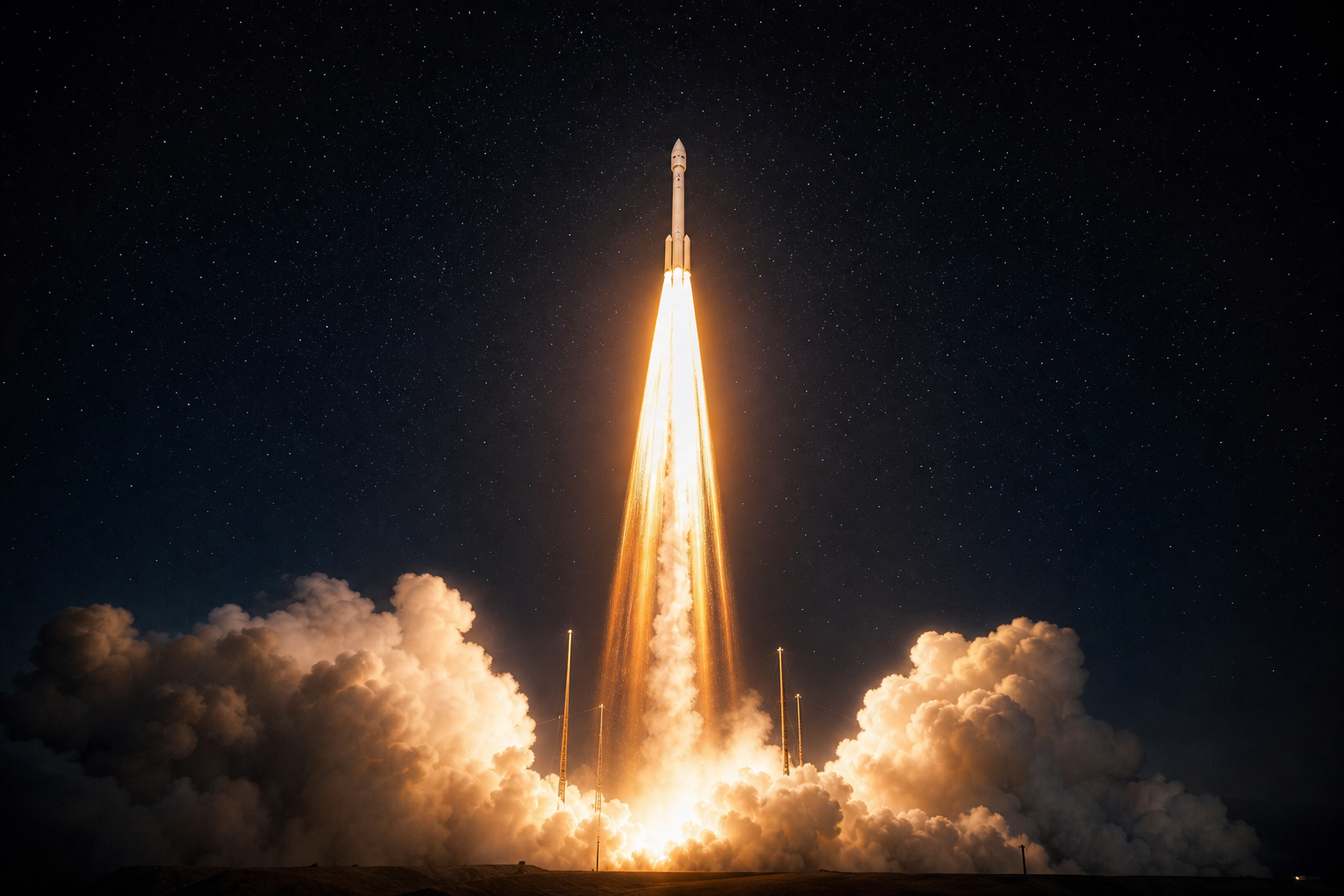
The company formally known as Space Exploration Technologies Corp. updated its S-1 filing this week, locking in the terms of what will almost certainly be the largest initial public offering in stock market history. The numbers are staggering: 555,555,555 shares of Class A common stock at $135 per share, raising approximately $75 billion and implying a market capitalization of roughly $1.75 trillion.
To put that in perspective, the previous record for an IPO was Saudi Aramco's $29.4 billion offering in 2019. SpaceX isn't just beating that record — it's obliterating it.
Twenty-one underwriting banks are working the deal, with Goldman Sachs in the lead. The roadshow kicked off Thursday, with pricing expected on June 11 and trading on Nasdaq under the ticker SPCX beginning as early as June 12. Perhaps most notably, retail investors are earmarked for 30% of the float — three times the typical allocation for a mega-cap IPO — signaling that SpaceX and its underwriters want everyday investors to have a real seat at the table.
Jamie Dimon Goes All In
If the terms weren't enough to signal the magnitude of this event, JPMorgan CEO Jamie Dimon's personal involvement should remove any remaining doubt.
On Thursday, Dimon hosted a live interactive discussion about the SpaceX IPO from JPMorgan's headquarters, joined by wealth management chief Mary Callahan Erdoes, SpaceX president Gwynne Shotwell, and CFO Bret Johnsen. The event was simulcast to approximately 90 JPMorgan locations across 26 states, reaching thousands of the bank's high-net-worth clients.
When the CEO of America's largest bank dedicates an afternoon to personally pitching a single stock to his wealthiest clients, it tells you something about the demand — and the fees — at stake. This is not business as usual.
What the S-1 Actually Shows
For years, SpaceX's financials were the stuff of informed speculation. The S-1 filing changed that, and the picture that emerged is both impressive and sobering.
SpaceX generated $18.7 billion in revenue in 2025, up 43% from $13.1 billion in 2024. Starlink — the satellite internet division that now serves more than 10 million active customers across 160 countries — accounted for $11.4 billion of that total, or about 61% of revenue. Starlink also generated $4.4 billion in operating profit, making it the company's financial engine.
The rocket launch business brought in $4.1 billion, up 8% year-over-year, driven primarily by Pentagon and NASA contracts.
But here's where it gets complicated. SpaceX posted a net loss of $4.9 billion in 2025, and the first quarter of 2026 alone showed a $4.28 billion net loss. The culprit? An AI segment that lost $6.35 billion on an operating basis in 2025 — roughly $2.5 billion per quarter. The company has an accumulated deficit of $41.3 billion.
In other words, SpaceX is a rocket company with a massively profitable internet business that's burning billions on artificial intelligence. Sound familiar? It should. That's essentially the playbook every tech giant is running right now.
The Musk Factor
Then there's the question of control.
CEO, CTO, and chairman Elon Musk holds 5.22 billion Class B shares, each carrying 10 votes. That gives him 82.4% of the total voting power post-IPO. If you buy SPCX on June 12, you're buying a ticket — not a steering wheel.
Forbes currently values Musk's net worth at $826 billion, with his SpaceX stake alone worth an estimated $542 billion. At the $1.75 trillion IPO valuation, that stake could push Musk past the trillion-dollar mark, making him the first person in history to achieve that distinction.
What It Means for the Market
The SpaceX IPO arrives during a week that tested the market's recent momentum. The S&P 500's nine-day winning streak snapped on Wednesday as Broadcom tumbled 15% after its earnings outlook disappointed and CrowdStrike sank after a strong quarter failed to meet elevated expectations.
But the bigger story isn't one day of selling — it's the sheer scale of capital being mobilized around innovation. A $75 billion IPO doesn't just redistribute money. It creates a gravitational pull that draws attention, capital, and conviction toward the companies building infrastructure for the future.
Whether SpaceX is worth $1.75 trillion on day one is a debate that will rage for months. At roughly 94 times 2025 revenue and deeply unprofitable on a net basis, the valuation demands a leap of faith in Starlink's growth trajectory, Starship's commercial potential, and an AI bet that's burning cash at a breathtaking rate.
But if there's one thing markets have taught us over the past two years, it's this: investors are willing to pay a steep premium for the companies they believe are building the future. And very few companies have a stronger claim to that narrative than SpaceX.
The countdown to June 12 has officially begun.
Related Reading: SpaceX 'Dark Energy' Replaces Foreign Oil
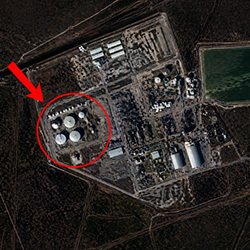
For years, we've been told SpaceX is a rocket company. But according to new satellite images from 300 miles above the Earth's surface, there is something very strange going on at SpaceX right now that has nothing to do with space. It could soon replace our need for foreign oil forever and ignite a $10 trillion boom for the stocks involved. Click here to learn more.
Found this helpful? Share it with others.