Morning Watchlist: Sunday Edition
A quick note from Behind the Markets
It's Sunday morning, and the week in front of us is the most crowded calendar since the Fed hiked. The third quarter ends Wednesday at the close. August inflation data lands Wednesday morning. Micron sits its exam Wednesday night, Nike confesses Thursday, and Friday brings the September jobs report — the number the whole 5% bond market has been waiting to argue about.
Three stories this morning. Five verdicts. Let's get into it.
1) The Referee Finally Spoke
We put a Sell on Costco on September 6th — for holders, and explicitly a price call, not a bet against the business. Thursday night, the business showed up and proved both halves of the sentence.
The quarter was excellent. Earnings came in at $6.75 a share against the $6.55 Wall Street wanted (including a 15-cent one-time tariff-refund benefit). Net sales rose 11.2% to $93.9 billion — a touch light of estimates, though membership fees of $1.85 billion carried total revenue past them. Renewal rates ticked UP to 92.3% in the US and Canada. Traffic grew 3.3%. There is no crack in the loyalty. There never was.
Then management said the quiet part: the quarter's 6.7% comps excluding gas represent "a more normal level" going forward. Deceleration, from the company's own mouth. And the market shrugged — the stock slipped 0.9% Thursday to $896.48, then edged up a quarter of a percent after hours. When the best retailer in America reports an 11% quarter and the tape yawns, that's the tell: at this price, perfection is already the baseline.
Here's the scoreboard. We flagged the stock near $930 at roughly 56 times earnings. On the new full-year earnings of $20.76 a share, Thursday's close works out to about 43 times — the multiple deflated the pleasant way, mostly by earnings growing into it. It is still double the market's price tag, for growth the company itself now calls normal.
Costco (COST) — Sell stands (for holders). The house is still the best on the block. The price per square foot is still roughly triple the neighborhood.
BJ's Wholesale (BJ) — Still Buy. Thursday validated the club model itself — the fee-collecting, renewal-machine economics — and BJ sells that same model at about 19 times expected earnings, less than half Costco's tag. Last verified print: $90.97.
PriceSmart (PSMT) — Still Watch. Costco's recipe in countries Costco doesn't operate, and the crowd is starting to find it — $173.15 Thursday, above the average analyst target. The entrance is unchanged: a pullback toward the $140s, or October's report proving the double-digit comps durable.
2) The Ban Hits the Shelf Tuesday
On Tuesday, the United States bans imports of Canadian alcohol, dairy, and motorcycles — announced September 9th, live September 29th. When the ban was announced we paired it with Polaris, the home-field powersports maker (September 10th Watch, unchanged — the entrance is still October's order book). The crowd's eyes are on the motorcycle aisle.
Walk one aisle over, to the liquor store.
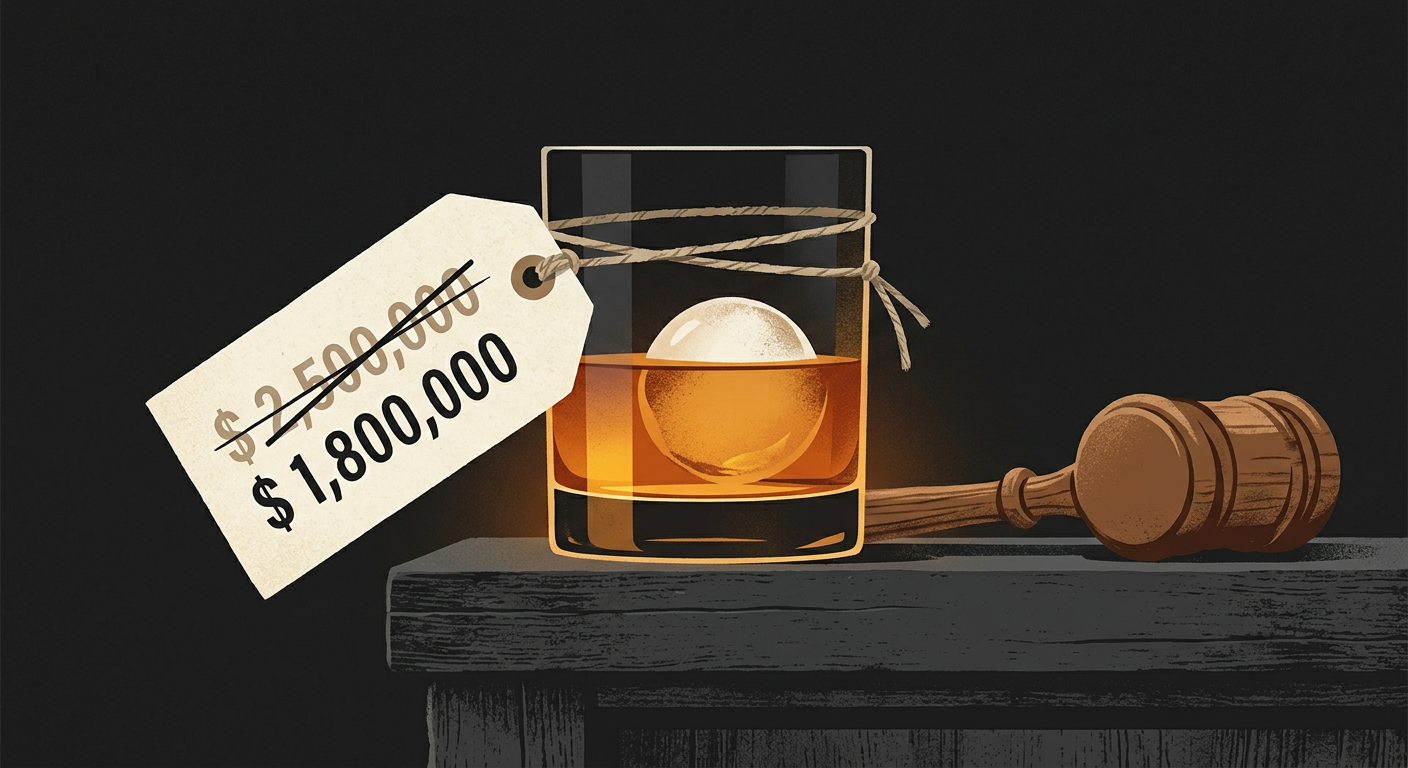
Canadian whisky is supposed to vanish from American shelves this week — mostly. Here's the honesty the headline skips: the biggest name, Crown Royal, distills in Manitoba but bottles in Alabama, and the ban's fine print only blocks containers under four liters. The biggest Canadian brand dug a tunnel under its own border before the wall went up. So no, this ban will not hand American distillers a windfall. Treat it as a small raise, not a jackpot.
Then why are we in this aisle at all? Because the cheapest big American spirits company happens to be standing exactly where the small raise lands — priced as if nobody will ever order a whiskey again.
The pairing: Brown-Forman (BF.B) — Buy
Brown-Forman is the Jack Daniel's company, and this year two separate suitors came to the door. Merger talks with Pernod Ricard collapsed in April. In July, the board confirmed it had rejected an unsolicited $15 billion takeover offer from Sazerac. Today the entire company sells for about $12 billion — roughly 20% below the offer its own board turned away.
Think of a house two different neighbors tried to buy in the same year. The family said no both times — and it is a family: the Browns' voting shares mean no one buys this house without an invitation. You can't buy the house. But the market will sell you the stock at a price the buyers couldn't get.
At about $26, near its 52-week low, the stock trades around 15 times next year's expected earnings with a 3.5% dividend yield. The S&P 500: 21 times. It's cheap because the business has genuinely struggled — revenue slipped 1% last fiscal year and earnings fell 18% as American whiskey demand slumped. That slump is the discount. This month's quarterly report offered a pulse: guidance reaffirmed, with growth in ready-to-drink cocktails and Jack Daniel's Tennessee Blackberry.
This is the PayPal lesson from August wearing a different label: when a stock trades well below an offer its own board called inadequate, you're being paid to wait out a mood. Tuesday's ban is the free option, not the thesis. The honest risks: the whiskey slump deepening instead of stabilizing, Canada's own retaliatory shelf-pulls of American brands (Jack Daniel's takes that punch), and the certainty that the family will likely never sell — the bid is the appraisal, not the exit.
3) The Oldest Cars in America Go to Confession
The American car fleet is the oldest ever recorded — roughly 12.8 years on average — with auto loans near 7% and record pump prices. This week the industry files its quarterly confession: CarMax reports Tuesday morning, and September auto sales land Thursday.
The crowd will grade the loud numbers — CarMax's comps, the sales pace, whatever Tesla posts when its quarter closes. Fine. But when nobody can afford a new car, somebody still has to sell the used one, finance it, and fix the one that stays in the driveway.
The pairing: Lithia Motors (LAD) — Buy
Lithia is the largest auto retailer in the country: nearly $38 billion in trailing revenue across new cars, used cars, financing, and service. The market values all of it at $6.9 billion — under 8 times next year's expected earnings. The S&P 500: 21.
A dealership is a grocery store for cars. The shiny stuff in the window is thin-margin shelf space. The deli counter in the back — the service bay, the parts desk, the finance office — is where the money is. And a record-old fleet is a nation of customers who need the deli counter more every year they keep the car.
The business isn't broken: record second-quarter revenue of $9.8 billion, a dividend just raised 23%, still buying dealerships, and fifteen analysts at a consensus Buy with an average target of $450 against a stock last verified at $312 (Monday's close). Why so cheap, then? Because profits are falling while revenue grows — net income is down 19% over the past year as pandemic-era car margins normalize and floorplan borrowing costs bite in a 5% world. The bet is that the deli counter outlasts the markdown on the shelf.
The honest risks: consumer credit cracking at 7% loan rates is the kill switch — a dealer finances its customers, and a customer who can't pay is everyone's problem. And near-term, a CarMax stumble Tuesday could mark down the whole aisle; we watched Casey's do exactly that to Murphy USA a few weeks ago, and the cheap one wore it fine. That's a repricing we'd welcome, not flee.
Before You Go
The week, in order.
Monday: Jefferies reports after the close — the first Wall Street confession of every earnings season, and a direct read on our Houlihan Lokey ice-storm call.
Tuesday: the Canada ban goes live, Carnival and CarMax report before the bell (grading the vacation shelf and the used-car aisle), and JOLTS job openings print.
Wednesday is the hinge: August PCE inflation in the morning, the third quarter ends at the close, and Micron reports after it — the Street wants about $31.49 a share from our September 15th Buy.
Thursday: ISM manufacturing, September auto sales, and Nike after the close — the tell we named for both our Nike and Dick's watches.
And Friday at 8:30 AM, the week's biggest moment: the September jobs report, consensus around +50,000, one month after August's +162,000 shock put a Fed hike back on the table. That number is the referee for everything on our shelf that 5% money has repriced.
One thing you will NOT have to trade: a government shutdown — Congress has already funded the government into December. One landmine, at least, is defused.
Have a wonderful Sunday.
We'll see you tomorrow.
Found this helpful? Share it with others.
Written by Behind the Markets