Morning Watchlist: Sunday Edition
A quick note from Behind the Markets
It's Sunday morning, and the week in front of us is where the fourth quarter gets its first real schedule. The holiday shopping season unofficially opens Tuesday. The Fed publishes its diary Wednesday. And earnings season sends in its opening witnesses — a snack giant Thursday, an airline Friday — before the banks take the stand the week after.
Friday morning's September jobs report came in soft — just 29,000 jobs added against roughly 84,000 expected, with unemployment ticking up to 4.2% — and the first reaction was exactly what you'd guess: Treasury yields eased off their 24-year highs, stocks rallied, and the market all but crossed a late-October hike off the list.
Three stories this morning. Three pairings. Let's get into it.
1) The Starting Gun of the Holiday Season
On Tuesday and Wednesday, Amazon runs Prime Big Deal Days — the October sale that has quietly become the starting gun of the American holiday shopping season. Every major retailer now counter-programs it with a deal event of its own, so for two days this week, most of American retail runs a fire drill for December.
Now set that against the shopper walking in. In late September, consumer confidence printed a 12-year low. And yet the trade-down migration we've tracked since August — Ross, BJ's, Dollar General, the outlet centers — says the gloomy consumer hasn't stopped shopping. They've changed stores, changed brands, and started hunting. A two-day discount event is built for exactly that customer.
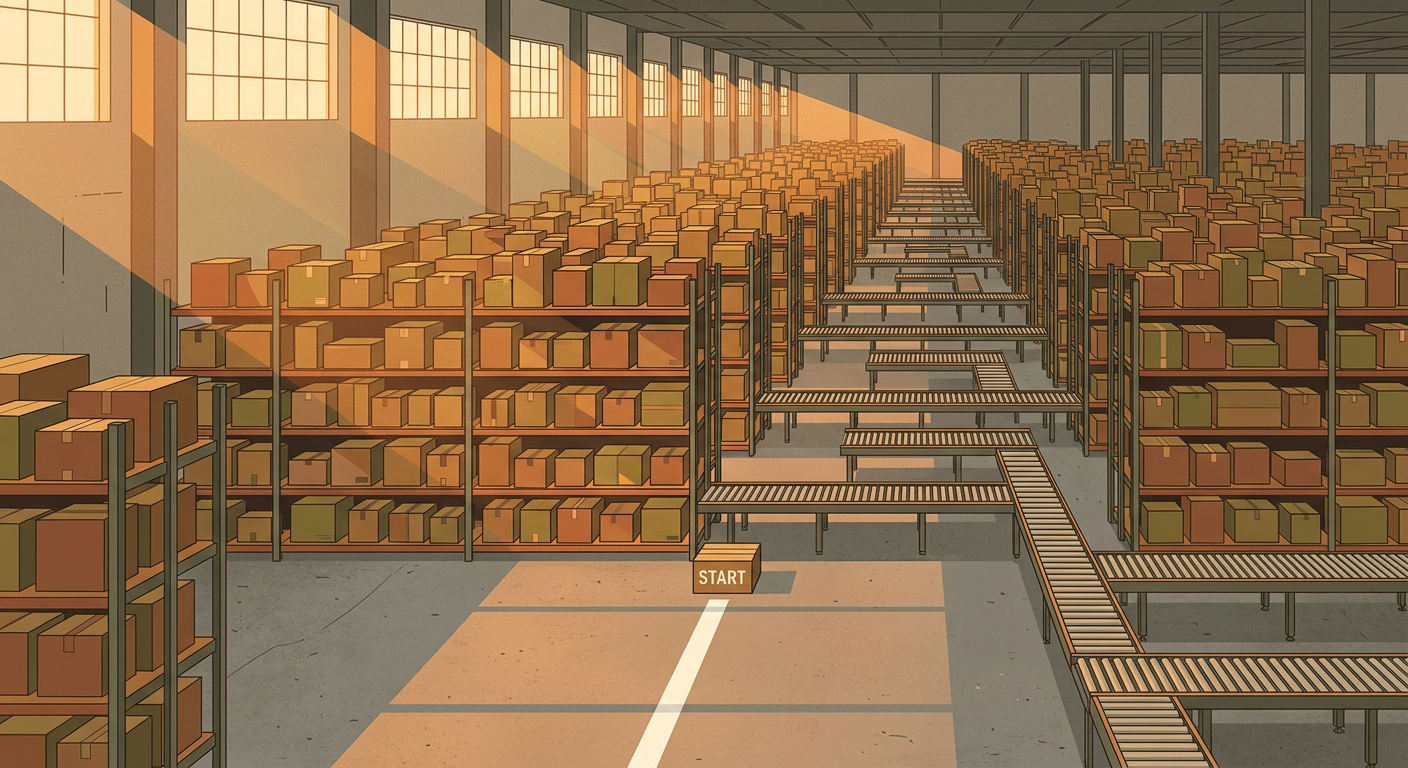
Here's the thing about a deal-event arms race. Whichever retailer wins the sale, somebody still has to pick the item off a shelf at 2 AM, pack it, ship it at the speed Amazon taught everyone to expect — and process the return two weeks later. Amazon built its own kitchen for that. Almost everyone else hires the caterer.
The pairing: GXO Logistics (GXO) — Buy
GXO is the world's largest pure-play contract-logistics company: more than 1,000 warehouses that it runs on behalf of other businesses — the retailers and brands that promised Amazon-speed delivery without owning Amazon's machine. It recently signed a ten-year logistics deal with Columbia Sportswear in Europe. When a big brand's one-click order actually gets picked, packed, and returned, GXO is often the name on the loading dock.
The business is doing its job: second-quarter revenue of $3.44 billion, up 4.3%, earnings that beat estimates, and a full-year profit forecast of $2.95 to $3.15 a share. The stock is not being graded on any of it. At Thursday's close of $45.96 — it scraped a 52-week low in mid-September — GXO trades at roughly 15 times this year's guided earnings and about 14 times next year's. The S&P 500: 21 times. Analysts lean strongly positive, with average targets in the $60s, roughly 40% above the price.
Why so cheap? Because the market has marked down everything that touches the discretionary shelf, and GXO keeps only a sliver of every order it handles — net margins run near 1%, so a genuine consumer recession cuts volumes with very little cushion. That's the honest risk, along with contract renewals and the cost of warehouse robotics. The test is whether the holiday volume shows up. This week is the first drill.
2) Five Years of Price Hikes Walk Into the Room
Thursday at 6 AM, PepsiCo reports third-quarter earnings — the first major consumer-staples confession of the season. Wall Street wants $2.30 a share on about $25 billion of revenue. The stakes are bigger than the quarter: this is the company where five years of aggressive price increases finally met a shopper who said no. Management admitted as much when it cut some prices back in February, and the activist Elliott Management has spent about a year in the shareholder register pressing for a shake-up. The stock closed Thursday at $125.60 — pennies off its 52-week low, down about 10% this year, now yielding 4.7%.
The crowd will spend Thursday grading the brand. We'd rather think about what the fight actually is. A chip is corn, starch, oil, and flavoring — and every battle coming for the American pantry is a battle over recipes. National brand against store brand. Full-sugar against zero-sugar. The old snack against the protein-packed, GLP-1-era version of it. Somebody has to supply the ingredients for every one of those recipes, on every side.
Don't bet on a chef. Own the stall where every chef shops.
The pairing: Ingredion (INGR) — Buy
Ingredion sells starches, sweeteners, and texture ingredients to the world's food and beverage makers — the name brands and the store brands that undercut them. That's the point: the trade-down migration is ingredient-neutral. A private-label chip is made from the same corn starch. And reformulation — less sugar, more protein, the same mouthfeel — isn't a threat to an ingredient house; it's extra engineering work at better prices. Ingredion just doubled down on exactly that, closing in on its $5 billion all-cash acquisition of Tate & Lyle — the sweetener-and-texturant specialist whose shareholders accepted the deal in July — building a combined company with roughly $10 billion in revenue.
At $96.46 — Ingredion is a $6.1 billion company near its own 52-week low. It trades at under 9 times next year's expected earnings. The S&P 500: 21. The dividend yields 3.4%. The consensus rating is a Hold, yet the average target sits at $121.50 — a quarter above the price. The crowd is absent. That's usually when we're interested.
The honest risks: last year's revenue slipped 3% and earnings fell 10% — soft volumes earned part of this discount — the Tate & Lyle integration is a $5 billion cash bill in a 5% world, and crop-input swings cut both ways. Near-term, a PepsiCo guide-down Thursday could mark down the whole food aisle. As with Casey's and Murphy USA, that's a repricing we'd welcome, not flee.
3) The Oldest Planes in the Sky Go to Confession
Friday morning, Delta reports — the first airline of earnings season, with Wall Street expecting around $18.3 billion of revenue, delivered into an oil market that spent most of the Gulf war near $96 a barrel before crude slid more than 4% this past Friday. We already own the fuel question from both sides — Copa is our unhedged winner if diplomacy ever deflates crude, and Alaska remains a Watch with its trigger re-armed. So this week we're looking past the fuel line to the fleet.
It's the same story we told about cars. The American car fleet is the oldest ever recorded, and we bought the dealership service bay. Jets are aging the same way: with Boeing and Airbus delivery backlogs stretched years out, airlines everywhere are flying older planes longer than they planned to. An airline that can't take delivery of a new jet does the next best thing — it rebuilds the one it has. And it can't do that in-house.
The pairing: AAR Corp (AIR) — Watch
AAR is one of the largest independent aircraft-maintenance providers in the world — the overhaul shop where airlines send airframes, engines, and parts. On Tuesday of last week it reported earnings of $1.49 a share against the $1.29 expected, with revenue up 22% over the past year, and raised its full-year sales forecast from low-double-digit growth to low teens. The same day, it announced a 65% controlling stake in MRO Holdings — airframe heavy-maintenance shops across the Americas — at an implied enterprise value of about $4 billion.
And the stock fell 6% on the news. Not because of the business: because the deal is funded partly with $2.1 billion of new debt, priced into a 5% world. At Thursday's close of $99.90, AAR sits about 35% below its 52-week high, at roughly 17 times next year's expected earnings, with seven covering analysts at a consensus Buy and an average target of $154.50.
So why Watch and not Buy? Because the mortgage hasn't been priced yet. A great acquisition at the wrong interest rate is a mediocre one, and we'd rather see the financing land — and the raised guidance survive it — before we pay for the combined company. Friday's soft jobs number pulled yields down, which makes that mortgage cheaper to write; a friendlier window is not yet a signed rate sheet. The entrance: the debt priced without eating the deal's math, or a deeper markdown that pays us for the wait. The kill: air travel demand genuinely breaking — pricey fuel is a tax on every ticket, and Delta's Friday report is the first read — or the usual friction of owning 65% of something rather than all of it.
Before You Go
The week, in order.
Monday: ISM services, the first big read on the sector that is most of the economy.
Tuesday and Wednesday: Prime Big Deal Days, the holiday season's opening fire drill and the first live test of our GXO call. Wednesday at 2 PM, the week's biggest moment: the Fed releases the minutes of the September meeting — the one that hiked — and the market reads the committee's reasoning knowing something the committee didn't: 29,000 jobs, 4.2% unemployment, and hike odds that collapsed from roughly 37% to almost nothing by Friday. Here's how we'd grade it. Watch the long end, not the odds. Last week's riddle was a 10-year yield that rose on cool inflation — a bond market arguing about supply, not the Fed. If yields keep easing on a soft economy, the 5%-world markdown on our financial shelf starts to refund. If the 10-year shrugs off weak jobs the way it shrugged off cool inflation, the supply argument is driving, and no set of minutes changes that.
Thursday before the bell: PepsiCo, the staples confession, with Ingredion standing one aisle behind it — and note that a 29,000-jobs economy is the trade-down thesis's weather, not its kill switch; the kill switch is the shopper stopping entirely.
Friday before the bell: Delta, plus the University of Michigan's preliminary consumer-sentiment read.
And circle the week after: Goldman Sachs reports October 13th to open bank earnings, with Anthropic's record Nasdaq debut still expected before the month is out.
That's the watchlist: the caterer behind the holiday fire drill, the market stall where every chef shops, and the rebuild shop for a fleet that can't be replaced. One theme, as always: the best opportunities stand one step behind the headline.
Found this helpful? Share it with others.
Written by Behind the Markets