Morning Watchlist: Friday Edition
A quick note from Behind the Markets
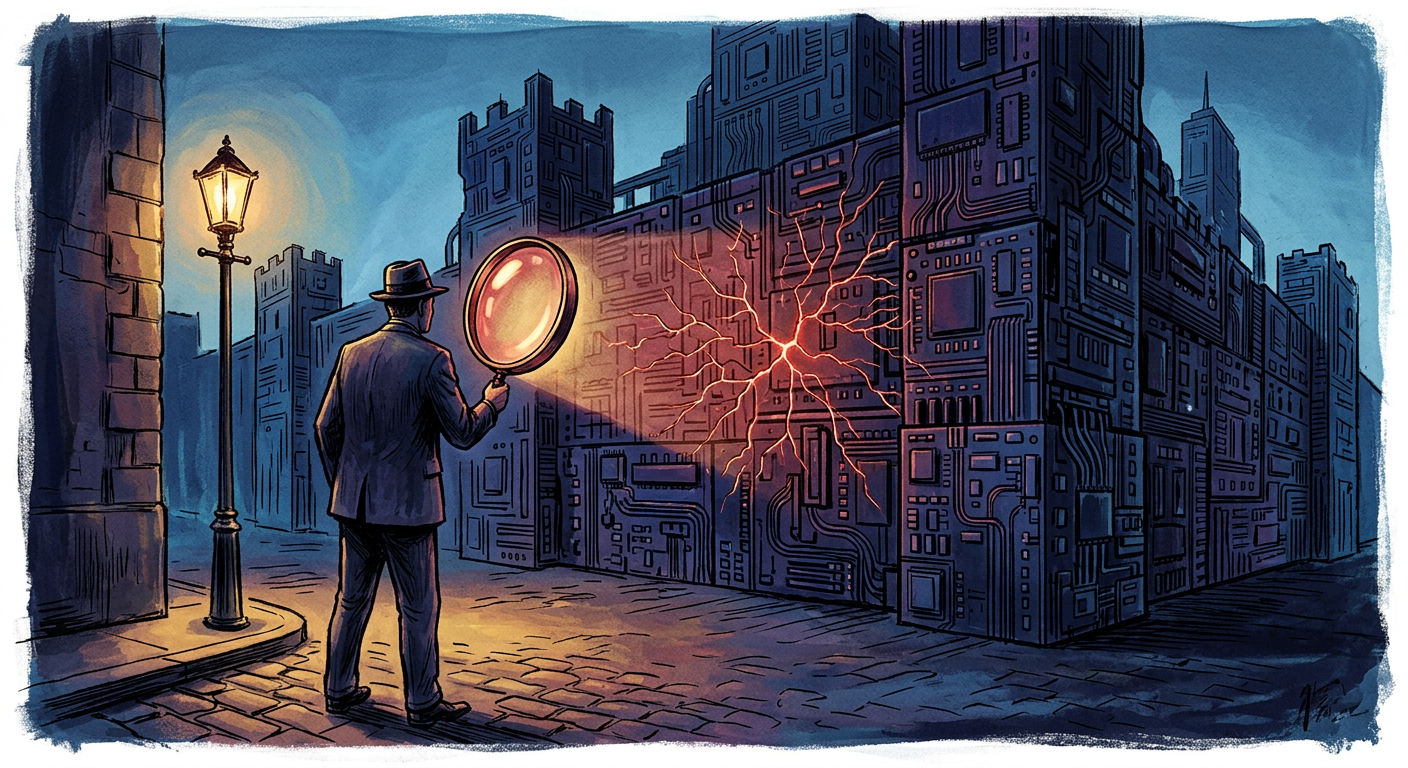
We're closing out the week, and at 10 o'clock this morning — about an hour after this note lands — new Fed Chair Kevin Warsh walks to a podium in Wyoming and gives his first Jackson Hole speech. Futures markets put roughly one-in-three odds on the Fed's next move being a hike, not a cut, and Wednesday's inflation report (3.7% headline, 3.3% core) did nothing to settle the argument. One speech. One question: is the hiking cycle paused, or finished?
While the world waits on that sentence, the week's other verdicts already came in.
Nvidia answered the biggest question in markets Wednesday night — and buried in the answer is an invoice almost nobody is reading.
The Justice Department told us burglars have been casing the Federal Reserve.
And the dip we promised to watch for showed up Thursday morning, wearing a disguise.
Three stories this morning. Three pairings. Let's get into it.
1) The Two-Trillion-Dollar Receipt
First, the loud number. On Wednesday night, Nvidia reported $96.2 billion in quarterly revenue — up 106% from a year ago, with $89 billion of it from data centers — and guided next quarter to $108 billion. The stock wobbled, then rose about 5% in after-hours trading as the details sank in.
But the number that stopped us wasn't revenue. It was the order book. Management says it is sitting on more than $2 trillion in future orders. CEO Jensen Huang summed up the whole era in five words: "Now, compute is revenue."
Maybe so. But every dollar of that backlog has to plug into a wall socket. Compute may be the revenue — electricity is the invoice. And the market started sniffing this out before Nvidia even spoke: on Wednesday, pipeline giant Williams Companies jumped 5.6% on surging natural gas demand from AI data centers. Nuclear plants take a decade to build. Data centers get built in two years. The only fuel that reliably shows up on that schedule is natural gas.
The pairing: Range Resources (RRC) — Buy
Range is one of the largest natural gas producers in Appalachia, pumping from the Marcellus shale in Pennsylvania — which happens to sit next door to the mid-Atlantic data center corridor. Market cap: about $9.7 billion.
Think of it as owning the firewood lot in a town where everyone just installed a wood stove. The stoves get the attention. The firewood gets the reorder.
The stock closed Wednesday around $42, at roughly 11 times earnings — the average American stock costs about 18 — while generating around a billion dollars of operating cash flow a year. The honest risks? Range doesn't set its own price; the futures curve and the weather do. A warm winter or a gas glut sinks the earnings no matter how many data centers break ground, and if AI capex ever slows, this trade cools with it. But paying 11 times earnings for the fuel under a $2 trillion backlog is the kind of math we like.
2) The Burglars Cased the Federal Reserve
Here's the story the Nvidia countdown buried. On Wednesday, the Justice Department unsealed court documents describing a Chinese state-sponsored hacking group called QTFY — allegedly former People's Liberation Army members working through a front company in Nanjing. Their target list reads like a map of the country's nervous system: the Federal Reserve, the U.S. Senate, NASA, the Departments of Justice and Energy, NIH, hospitals, telecoms, power companies, defense contractors. The campaign dates back to 2018. Attorney General Todd Blanche called it a "major national security issue."
That same evening, CrowdStrike — the biggest pure-play name in cybersecurity — reported a record quarter: revenue up 26%, recurring revenue at $5.84 billion, guidance raised. The stock jumped nearly 12% after hours, to a market value around $189 billion — roughly 145 times this year's expected adjusted profit.
We went looking at the cheap end of the same aisle — and found something almost poetic. Among the tools the government seized was one called QScan, which the hackers used to probe networks for weak points.
There's a public company whose entire business is running that same scan for the good guys.
The pairing: Tenable (TENB) — Watch
Tenable is the home inspector of the internet: its software rattles every digital window and doorknob a company owns and reports which ones are unlocked, before someone in Nanjing finds out first. It's a $3.7 billion company doing about a billion dollars in annual revenue, and it beat expectations when it reported in late July.
Tenable trades at about 16 times next year's expected earnings. CrowdStrike: 145 times this year's. Same rising tide, one-tenth the ticket. There's even a calendar catalyst — Tenable joins the S&P SmallCap 600 on Monday, which forces index funds to buy it.
So why Watch and not Buy? Because the discount has a reason: revenue is growing only about 9% a year, and the stock already popped in early Thursday trading on CrowdStrike's coattails — right up against the average analyst target of about $35. Cheap and slow is a fair fight; we want a better entry. If the sympathy pop fades, or if Washington's post-QTFY security budgets start showing up in Tenable's bookings, we move. What kills it: growth stalling into the single-low digits while the big platforms swallow the category.
3) The Dip We Promised to Watch
On Monday we flagged Burlington Stores as a Watch at around $338, and made ourselves a promise: "If Burlington stumbles over that raised bar and the stock sells off, that's your entrance."
Thursday morning, Burlington reported. It stumbled. The stock sold off. And we're still not buying. Here's why.
The profit line was terrific — earnings of $2.96 a share crushed the $2.19 estimate, and management raised full-year guidance. But sales grew 11% against estimates calling for slightly more, and comparable sales grew just 2%. Remember the number that started this whole thread: Ross grew comparable sales 10%. The trade-down migration is real — but the migrants are apparently all walking into Ross.
Picture a clearance sale where the markdown is real but the crowd is across the hall. The price improved. The story didn't.
The pairing: Burlington Stores (BURL) — still Watch
The stock slipped about 2% in early Thursday trading to around $308 — call it 9% below where we flagged it, or roughly 25 times next year's earnings, down from 28. That's a better price for a worse fact. We'd rather pay a little more for proof the traffic is coming back than a little less for hope. Our new trigger: comparable sales reaccelerating toward its off-price peers — or a markdown deep enough that we're paid to wait. There's always another rack.
A Note on Past Issues
Two quick updates. First, oil fell again Wednesday — West Texas crude near $80 — on reports Iran and Oman discussed a temporary shipping corridor through the Strait of Hormuz. That's half the trigger for our Alaska Air Watch; the other half is crude holding here through this morning's Warsh speech and whatever Tehran does next. Second, Fabrinet and FormFactor: we said Nvidia's report might hand us a supplier-shadow dip. Nvidia beat instead, and the complex rallied. No dip, no entrance, no chase — both stay on Watch.
Before You Go
An electricity bill hiding inside a $2 trillion backlog, a break-in at the Fed that makes the cheap end of cybersecurity interesting, and a discount rack we're disciplined enough to keep walking past.
At 10 this morning, Warsh speaks — and whichever way the market lurches, the best opportunities will be standing where they always are: one step behind the headline.
See you tomorrow.
Found this helpful? Share it with others.
Written by Behind the Markets