Morning Watchlist: Monday Edition
A quick note from Behind the Markets
It's the last day of August — and the first full trading week of the Kevin Warsh era.
On Friday morning at Jackson Hole, the new Fed chair finally gave the speech the whole market had circled in red ink.
He said the quiet part out loud.
Three stories this morning. Three pairings. Let's get into it.
1) The New Sheriff Said It Plainly
Friday morning, 10 a.m. Eastern, Wyoming. Kevin Warsh's first Jackson Hole address as Fed chair — and there was no mumbling in it.
On who's to blame for inflation: "The responsibility for 65 months of sustained, elevated inflation sits squarely with the central bank." On what comes next: "We must be confident that underlying inflation is moving to our objective, clearly and at sufficient speed. Otherwise, we have work to do."
In Fed language, "work" means rate hikes. And the timing wasn't subtle: two days earlier, Wednesday's PCE report — the Fed's preferred inflation gauge — came in at 3.7%, hotter than the 3.6% economists expected, with core stuck at 3.3%. Before Warsh even spoke, futures markets were putting roughly one-in-three odds on the Fed's next move being a hike. The 30-year Treasury has been sitting near its highest yields since 2007.
Put it together and the message is higher-for-longer, with the emphasis on longer. So instead of asking who gets hurt by that, we asked our usual question. Who quietly gets paid?
Here's who. When money gets nervous, it doesn't go home. It parks. Trillions of dollars sit in money market funds earning the short-term rates Warsh just promised to keep interesting — and somebody collects a fee on every parked dollar.
The pairing: Federated Hermes (FHI) — Buy
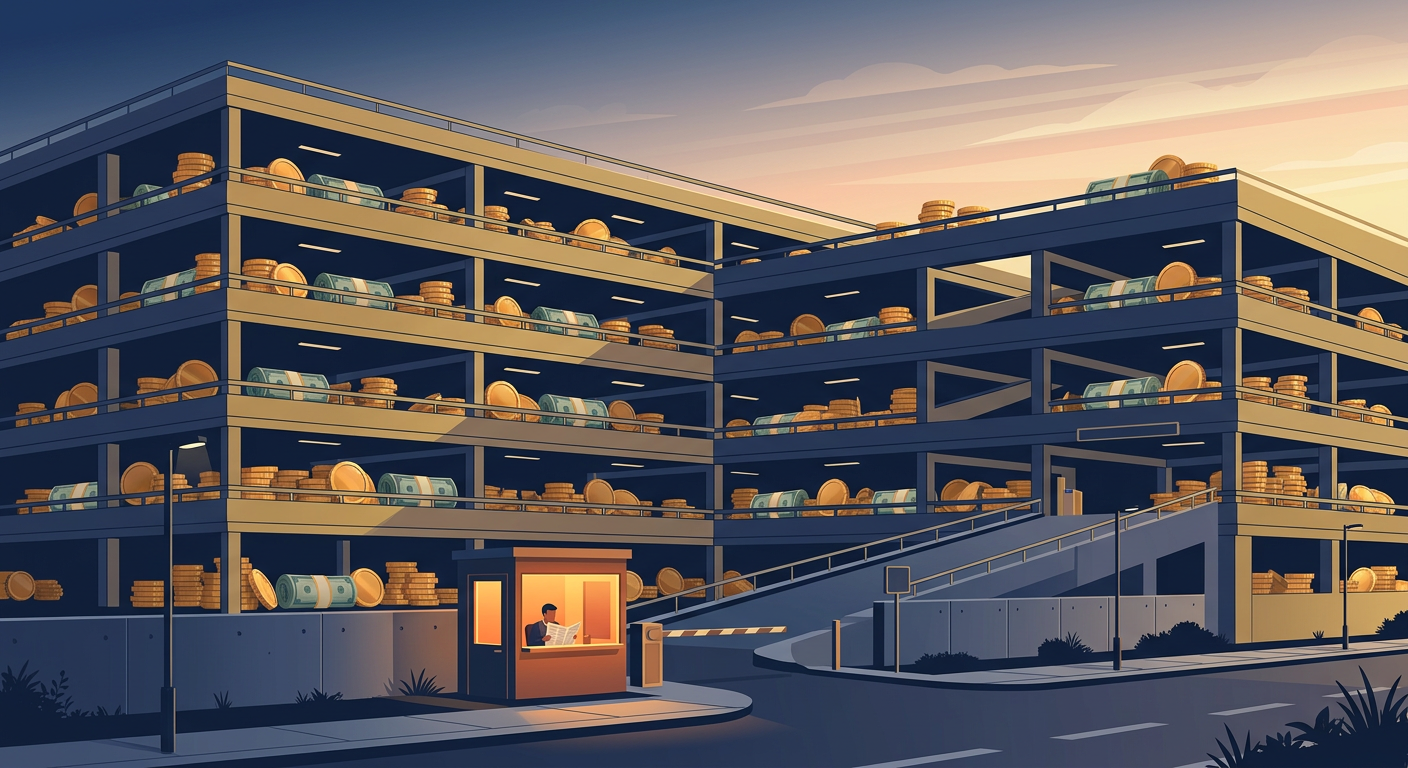
Federated Hermes is one of America's largest money market fund managers — the parking garage operator in a city where everybody's circling the block. Assets under management just hit a record $911.6 billion, with $676.9 billion of that in money market funds. Cash management isn't a side business here; money funds generate about half the company's revenue.
The second quarter was a beat: earnings of $1.38 a share, up from $1.16 a year ago, on revenue growth of 18%. The company is worth about $4.6 billion — squarely in our mid-cap wheelhouse — and pays a 2.3% dividend.
Now the punchline. This record-setting business costs about 12 times earnings. The S&P 500: about 21.
Every month the Fed waits is another month of rent on the world's most crowded parking garage. One honest caveat: Wall Street's consensus is a Hold, with an average target near $61 against a roughly $65 stock — the same targets-chasing-price setup we bought in Eldorado Gold. What kills the thesis: the Fed winning quickly. A fast slide in short rates would send parked cash hunting for returns elsewhere. Warsh just told you, in his own words, that he's in no hurry.
2) The For-Sale Sign Came Down
On Thursday, Wendy's fell 13% to under $8 a share. Nothing happened to the burgers. What happened was a rumor died: Reuters reported that Trian Partners — the activist fund that had been preparing a take-private bid — shelved the idea. The stock gave back its entire 24% takeover rally in one session.
Here's the lesson, and it's worth the tuition somebody else just paid: a stock propped up by a buyout rumor is a house held up by the for-sale sign. Remove the sign, and you're left with the actual condition of the property. In Wendy's case: same-store sales down 7%, customer traffic down 12.5%, the full-year outlook withdrawn, and the dividend cut to seven cents to fund a turnaround.
But those 12.5% of customers didn't stop eating lunch. They changed lines. And earlier this month, we learned exactly which line: Burger King passed Wendy's to become America's number two burger chain.
The pairing: Restaurant Brands International (QSR) — Buy
Restaurant Brands owns Burger King, along with Tim Hortons and Popeyes. The Whopper revamp is doing what turnarounds are supposed to do: Burger King's U.S. same-store sales grew 8.5% last quarter — while its closest rival's fell 7%. In fast food, market share is a lunch line. The line next door just got shorter, and this kitchen is the one gaining customers who have to eat somewhere.
Company-wide earnings per share are up about 41% over the past year. At about $78, the stock costs roughly 18 times next year's expected earnings — still under the market's 21 — with a 3.3% dividend while you wait. The average analyst target sits near $86, and the consensus is a Buy.
The honest risks? McDonald's doesn't concede lunch lines quietly, and a value war squeezes everyone's franchisees. The stock also sits within a few percent of its 52-week high, and next year Burger King has to lap its own Whopper-fueled comparisons. We still like buying the chain taking the share over the chain donating it.
3) Smart Money Bought "The Gas Stations of the Sky"
While the crowd watched Wyoming, a quieter transaction caught our eye. On Thursday, Apollo Global Management agreed to buy into Atlantic Aviation — with KKR keeping a substantial stake — at a valuation of nearly $10 billion.
Atlantic Aviation doesn't make planes and doesn't fly them. It runs the private-jet terminals: the fueling, the hangars, the ground services at high-traffic airports. The gas stations and parking lots of the sky. Apollo's partner on the deal called it plainly: "The private aviation market has structural tailwinds that we believe will persist."
So two of the smartest capital allocators on earth just marked the infrastructure of private aviation at ten billion dollars. Our question, as always, is one step behind the headline: if the marina is worth that much, what does the boatyard cost?
The pairing: Textron (TXT) — Buy
Textron builds the planes that taxi up to Atlantic's fuel pumps — Cessna Citations, the best-selling business jets in the world — plus Bell helicopters for the Pentagon. The whole company costs about $14 billion at roughly $82 a share. That buys an $8.0 billion aviation backlog, a $7.5 billion Bell backlog, and a stock trading at about 12 times next year's expected earnings, within sight of its 52-week low. The average analyst target: $102.
There's housekeeping working in our favor too. Textron is shopping its industrial segment, sharpening the company into a purer aviation-and-defense play, and Textron Aviation's new CEO, Brian Rohloff, takes the corner office today.
The risks, plainly: jet deliveries actually fell last quarter — 40 versus 49 a year ago, with pricing doing the heavy lifting — full-year guidance leans on Pentagon funding for Bell's new MV-75 program, and if Warsh's "work" gets aggressive, corporate jet orders are an early casualty. That's why the stock is near its low. We'd rather buy the boatyard when it's out of fashion than after the marina deal makes the papers.
Before You Go
A Fed chair who told you he has work to do, and the toll collector on all that parked cash. A burger rumor that evaporated and the rival quietly eating the customers. And a $10 billion receipt for the gas stations of the sky, with the planemaker sitting near its lows.
Three different aisles, one theme: while the crowd argues about the headline, the better business is usually standing one step behind it.
We'll see you tomorrow.
Found this helpful? Share it with others.
Written by Behind the Markets