Morning Watchlist: Wednesday Edition
A quick note from Behind the Markets
We're at the midpoint of the short week, and the market came back from the holiday to find oil pressing toward $100, a September hike still live on the table — and the President threatening to ban a planemaker.
"NO MORE SELLING BOMBARDIER IN THE UNITED STATES!" That was Monday's Truth Social post, published hours before Canada's counter-tariffs went live. Meanwhile, on the other side of the world, Japan's stock market just tumbled — for a reason most American investors will skip right past. And this afternoon at 1 p.m. Eastern, Apple's new CEO walks onstage for the first time to unveil the most expensive iPhone lineup ever built.
A trade war climbing into the private-jet cabin. A currency waking up in Tokyo. A $2,500 phone. Three stories this morning. Three pairings. Let's get into it.
1) The Trade War Reaches the Private-Jet Cabin
The scheduled part happened Tuesday at 12:01 a.m.: Canada's retaliatory tariffs took effect — 15% to 50% on roughly $27.6 billion of American goods, more than 700 products, steel to dairy. We've been positioned for that for weeks; Commercial Metals and Eagle Materials sit under the umbrella.
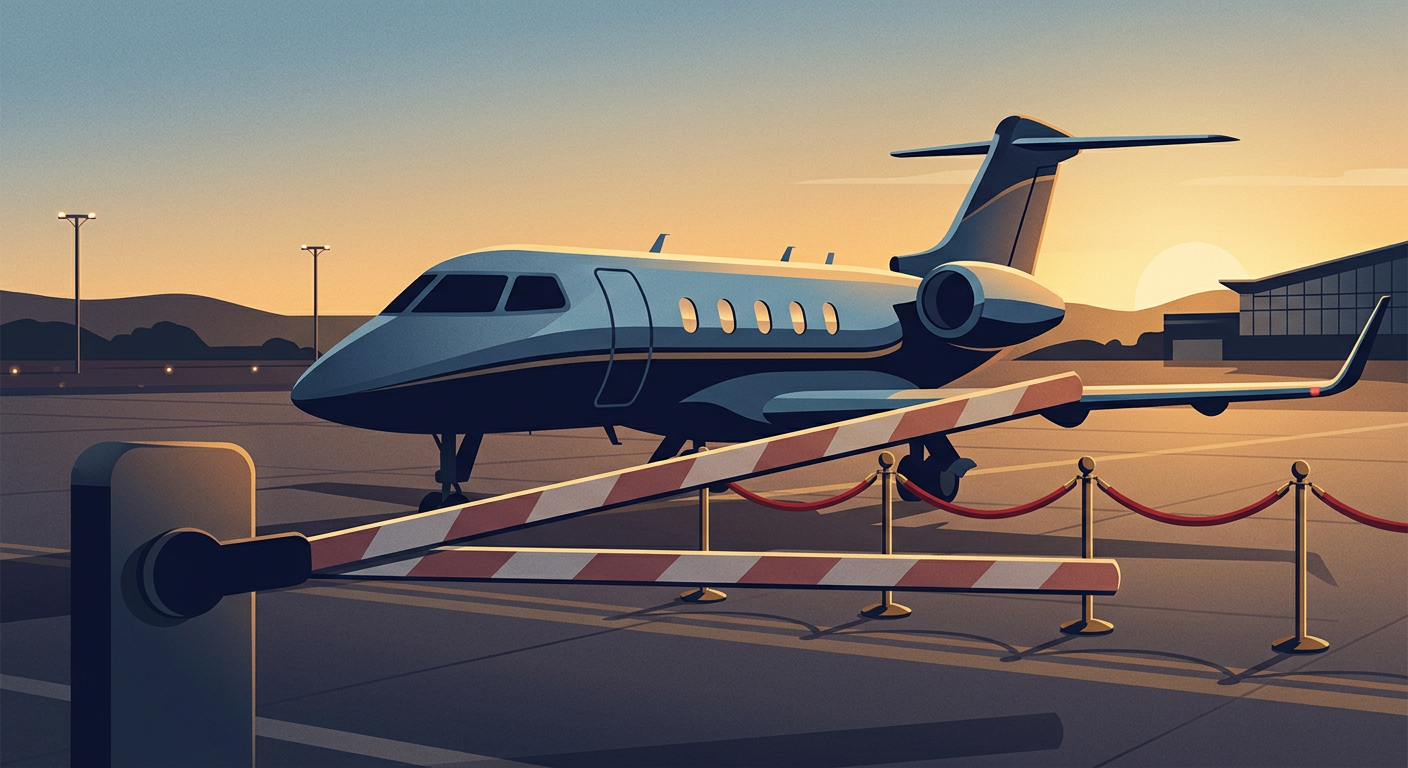
The unscheduled part came Monday night. President Trump posted that Bombardier — the Montreal maker of Challenger and Global business jets — should be barred from selling in America unless it builds its planes here. His words: "If they want our Market, they must build here."
Now the numbers. More than half of Bombardier's revenue comes from American customers — call it roughly $5 billion of the $10.2 billion it forecasts for this year. Its Toronto-listed stock actually rose about 3.5% as trading resumed — the market betting this is a negotiating tactic, not policy. Maybe so. But a business jet is a multi-year commitment — a delivery slot, a service network, a resale market — and buyers don't sign multi-year commitments into a shouting match. Even a threat moves shopping lists.
So who picks up the phone? Gulfstream — but it's buried inside General Dynamics, a defense conglomerate. Textron's Cessna — our August 31st Buy, for entirely different reasons; that call stands. But one competitor is a nearly pure aircraft company holding something the others don't even need: a signed exemption from this exact trade war.
The pairing: Embraer (EMBJ) — Buy
Embraer is Brazil's planemaker — it changed its NYSE ticker from ERJ to EMBJ last November — and its Praetor and Phenom jets compete head-on with Bombardier's Challengers. Here's the part we love. In February, Washington exempted aircraft from the Brazil tariffs — Embraer is back to selling into the U.S. at zero. And it has been assembling those Phenoms and Praetors in Melbourne, Florida for some fifteen years, and expanding the plant. Trade wars are musical chairs — when the music stops, you want to already be sitting in a chair inside the room. Embraer bought its chair in Florida a decade and a half ago.
And the business doesn't need the ban to work. Backlog just hit a record $34.5 billion, up 16% in a year. The latest quarter set a revenue record with profit up 25%. Flexjet signed an order worth up to $7 billion — the largest executive-jet deal in the company's history — and Japan's ANA added eight more E190-E2 airliners just last week. At Friday's close of $73.81, that's a $13.2 billion company at about 20 times next year's expected earnings. The S&P 500: 21. Fifteen analysts rate it Strong Buy, average target near $90; JPMorgan says $104.
The honest risks: a social media post is not policy — a Republican senator pushed back within hours — and if the ban evaporates, Bombardier keeps selling. Fine. We're not buying the ban; the record backlog is the thesis and the ban is a free option. The bigger worry is that the tariff guns swing back toward Brazil — they did once before February's exemption — and business jets are a cyclical business having a very good year.
2) The Other Central Bank Cleared Its Throat
While the crowd counts Fed hike odds — futures still say about 60% for next week — the week's most interesting central-bank story is nine time zones away.
On Tuesday, Japan's Nikkei fell 1,130 points, about 1.7%, and the yen surged to 153 against the dollar — its strongest level since February. The trigger: Japanese real wages rose 2.4% in July, the biggest jump in five years, and second-quarter growth was revised up. Traders now widely expect the Bank of Japan to raise rates to 1.25% at its September 17–18 meeting — which starts the day after the Fed's ends. Two central banks, back to back, both leaning the same direction for once.
For thirty years, "Japan" and "rising rates" didn't belong in the same sentence. When that changes, money that borrowed cheap yen to buy everything else starts coming home, and the yen climbs. So who in America gets paid when the yen gets a raise?
The duck does.
The pairing: Aflac (AFL) — Watch
Aflac sells supplemental insurance, and the majority of its profit is earned in Japan — in yen — then reported to you in dollars. It's like owning a rental property overseas: when the local currency climbs, the rent check grows in translation, and you didn't lift a finger. Last quarter the yen averaged 159 to the dollar, about 9% weaker than a year earlier, and that alone shaved a nickel per share off earnings — strip out the currency and profits actually grew. Japan's margins are running at 34%. At 153 and climbing, the headwind starts running the other way.
At Friday's close of $117, Aflac is a $63 billion company at about 17 times this year's expected earnings — under the S&P's 21 — that returned $1.3 billion to shareholders last quarter and has raised its dividend every year for more than four decades.
So why Watch and not Buy? Because the currency has to actually deliver. Fifteen analysts rate it a Hold with an average target sitting at the price. Japan premiums are still shrinking about 4% a year. And if the Fed hikes hard while the BoJ blinks, the yen slides right back toward 160 and the raise gets revoked. Our entrance: the BoJ delivers next week and the yen holds — or any pullback toward $110 while we wait.
3) A $2,500 Phone Needs a Bodyguard
This afternoon, John Ternus hosts his first product launch as Apple's CEO — the "Surprise and Shine" event. The expected menu: a folding iPhone Ultra starting somewhere between $2,000 and $2,500, iPhone 18 Pro models $100 to $300 pricier than last year, and the cheap standard model pushed to next spring. Read that lineup again — it's a price hike dressed as a keynote.
We already own the sound of this story: Cirrus Logic, our September 2nd Buy, ships the audio chips in whatever gets announced today — that call is unchanged, and today is its exam. But there's a second quiet winner, and it works no matter whose chips are inside.
Nobody buys a protection plan for a $40 flip phone. Everybody thinks twice about carrying a $2,500 folding computer in a back pocket uninsured. The more expensive the china, the more you pay the movers to bubble-wrap it.
The pairing: Assurant (AIZ) — Buy
Assurant is the company behind the curtain of device protection: when you add insurance to your phone through a major carrier, there's a good chance Assurant writes it — and it runs the trade-in machinery too, handing consumers $1.63 billion in trade-in value in the first quarter alone. Premiums scale with the price tag, and an upgrade supercycle feeds the trade-in mill from both ends. The second quarter set a record and management raised full-year guidance. At Friday's close of $285.74, it's a $14.1 billion company at about 13.5 times earnings. The S&P 500: 21.
The honest risks: Apple's own AppleCare competes for the same worried thumbs. The stock is up 33% in a year and sits about 6% below its high, so we're not early. And September is the peak of hurricane season — Assurant's housing arm insures against exactly that, and one bad storm month can bruise a quarter.
Before You Go
That's the watchlist. A planemaker already sitting inside the border, an insurer already paid in the currency that's rising, and the company already attached to the price tag that's going up. One theme: when the rules change, own whoever changed seats early.
Housekeeping: Tomorrow night Oracle reports, with options pricing roughly an 11% move — Powell Industries is listening. And the inflation gauntlet runs to the wire: PPI tomorrow morning, CPI Friday at 8:30 — the last numbers before the Fed decides Tuesday and Wednesday, with the Bank of Japan right behind it.
Found this helpful? Share it with others.
Written by Behind the Markets