Washington Just Picked a Side in the Money Wars. Here's How to Invest It.
A quick note from Behind the Markets
For years, the crypto conversation was a circus.
"Number go up." Memes. Ponzi yield.
But the real story — the one that actually matters — is payment rails and regulatory power.
And this week, Washington showed its hand.
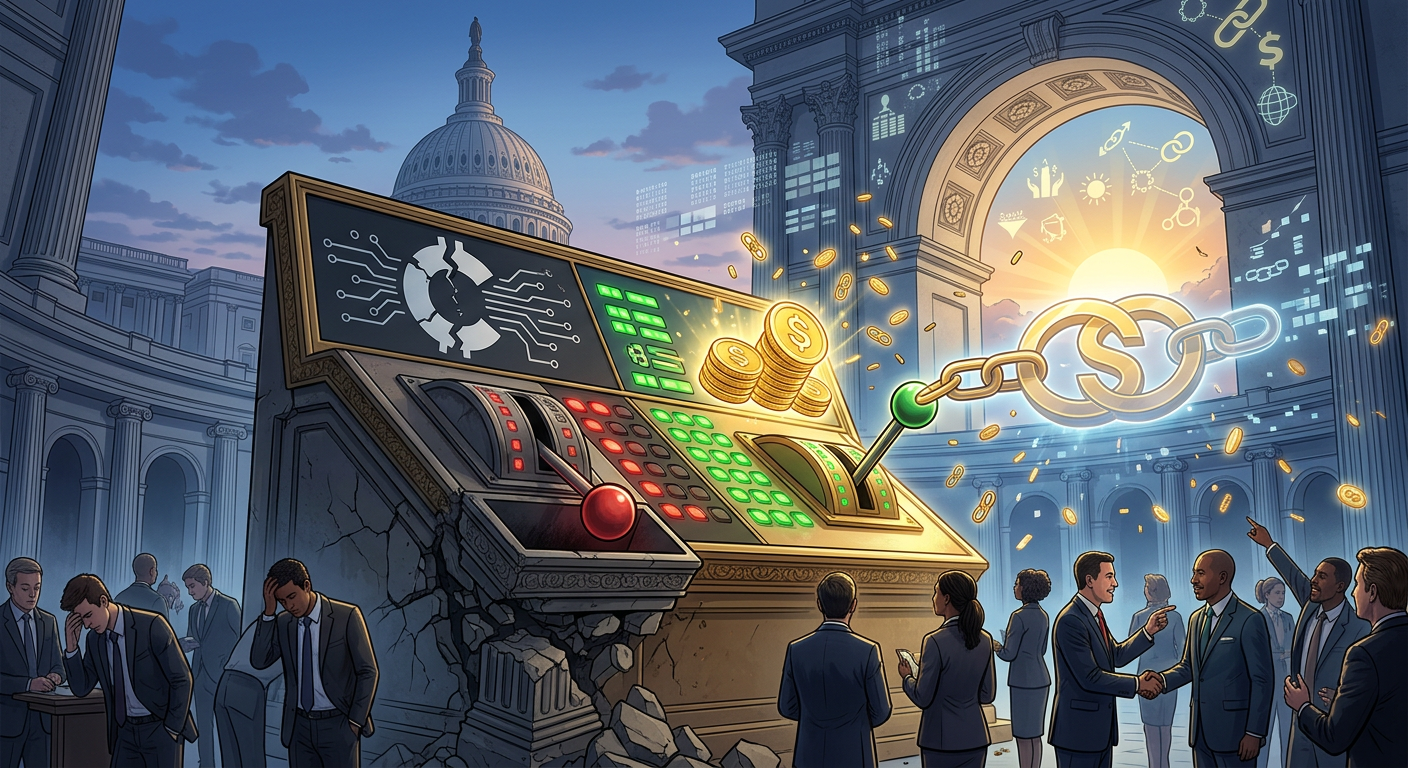
1) The Senate's CBDC ban is a major signal: the U.S. is choosing private rails over state money
The U.S. Senate passed the 21st Century ROAD to Housing Act 85–5, including language that bans the Federal Reserve from creating or working on a CBDC — a government-issued digital dollar — through 2030. The House followed the next day, 358–32, sending it toward the President's desk.
The bill also carves out stablecoins, explicitly protecting any "dollar-denominated currency that is open, permissionless, and private." And even after 2030, the Fed still can't act on a CBDC without explicit congressional authorization.
Wall Street will treat this as simply "crypto bullish." It's not that simple. It's a structural signal about who controls the next generation of money rails. Pair it with last year's GENIUS Act — the first federal stablecoin law, requiring 1:1 reserves and federal licensing — and the message is unmistakable: the U.S. wants digital dollars built and run by the private sector, under tight regulation.
So who actually issues those private digital dollars? The most direct bet is the largest regulated stablecoin issuer in America.
Company: Circle Internet Group (SYM: CRCL)
Issuer of USDC, the largest regulated U.S. dollar stablecoin; earns yield on its reserves
Circle is the purest public stablecoin play. It issues USDC, which its CEO says accounts for roughly 80% of dollar digital-currency transactions, and it makes money the boring way — earning interest on the Treasuries and cash backing every token. A regulated regime that blesses private stablecoins while banning a government competitor is, in theory, written for exactly this business.
Now the hard truth, and you need to hear all of it. Circle is not yet profitable, trades at a negative P/E, and is wildly volatile — the stock came public, spiked above $260, and has since collapsed to around $70, a fraction of its high. Wolfe Research has a Sell rating on it, the Bank for International Settlements has warned on stablecoin risks broadly, and its reserve income falls if the Fed cuts rates. This is a speculative, high-risk way to play the theme — a small, size-it-carefully position at most, not a core holding. The regulatory tailwind is real; so is the possibility of a permanent loss if the business or the valuation cracks.
Bottom line: If the U.S. blocks a retail CBDC while explicitly carving out stablecoins, it's making a bet: the dollar's digital future will be private-sector led… and tightly regulated.
2) Stablecoins aren't "crypto." They're banking without the bank's margin.
Here's the uncomfortable truth for incumbents: if stablecoins get legal clarity, they compete with banks in the most profitable place — payments, settlement, float economics, and transaction fees.
The long-run pressure point isn't Bitcoin. It's the boring stuff: faster settlement, cheaper cross-border transfers, programmable payments. Banks have a moat… until they don't. And when policymakers pick a lane, the moat gets tested.
But here's the move smart incumbents are making: instead of fighting stablecoins, they're routing them — turning a threat into a new toll lane. The biggest payment network doing exactly that is the cleaner, higher-quality way to own this shift.
Company: Mastercard (SYM: MA)
Global payments network embedding stablecoin settlement into its existing rails
Rather than get disrupted, Mastercard is absorbing stablecoins into its plumbing. In June it began settling transactions in regulated dollar stablecoins (USDC and PYUSD) alongside fiat — enabling intraday, weekend, holiday, and on-chain settlement across networks like Ethereum, Solana, and Base. It also agreed to acquire stablecoin-payments orchestrator BVNK for about $1.8 billion. In other words, whether money moves the old way or the new way, Mastercard still wants to be the toll booth.
MA currently trades around $496, with a consensus analyst target north of $660 and a fortress of recurring, high-margin transaction revenue. The honest caveats: it's a premium-valued name, it faces a long-running merchant-fee legal settlement, and "agentic commerce" plus stablecoins are genuine long-term threats to the card model if Mastercard doesn't adapt fast enough. But of the two sides of this trade — the disruptor or the incumbent that co-opts the disruption — Mastercard is the profitable, defensible one.
Bottom line: A regulated stablecoin regime can be a slow-motion margin squeeze on banks and payment middlemen — especially the ones living on fees, not spread income.
3) The contrarian trade: ignore the "coin flips," watch the rails, and follow the compliance winners
Most retail crypto talk is still price worship.
But the winners in a regulated regime are often the unglamorous layers: custody, compliance, identity, transaction monitoring, and institutional rails.
The adult part of the space isn't sexy — which is exactly why it can be mispriced. Think of this as an enterprise-infrastructure story, not a casino. And one 240-year-old institution has quietly positioned itself as the regulated backbone of the whole thing.
Company: BNY (SYM: BK)
The world's largest custodian bank; building the regulated custody and reserve infrastructure for digital assets
BNY (formerly BNY Mellon) is the ultimate "boring toll booth." It oversees roughly $59 trillion in assets under custody and administration, and it has methodically built itself into the regulated plumbing for digital assets: it provides fund services for over 80% of U.S., Canadian, and EMEA digital-asset ETPs, custodies more than 50% of tokenized fund assets globally, and just launched the BNY Dreyfus Stablecoin Reserves Fund — a vehicle for stablecoin issuers to park their reserves under the GENIUS Act. As a regulated, systemically important bank, it offers the one thing crypto-native firms can't: institutional trust.
BK trades around $137, generates roughly $5.5 billion in annual net income, pays a steady dividend, and has been buying back stock aggressively. The caveats are the usual bank caveats: its earnings are sensitive to interest rates, fee revenue moves with markets, and the digital-asset opportunity, while real, is still a small slice of a very large traditional business. This isn't a moonshot — it's the slow, durable way to own the infrastructure. When the wild stuff gets regulated and the institutions move in, they move in through custodians like BNY.
Bottom line: If regulators squeeze the wild stuff and legitimize stablecoins, the biggest winners can be the boring infrastructure companies — the toll booths.
Before You Go
The whole point of being independent is seeing what Wall Street refuses to say out loud.
This CBDC vote is a message: Washington wants digital dollars — just not government-run retail digital dollars.
That changes the map.
Found this helpful? Share it with others.
Written by Behind the Markets