Key Points:
- Intel shares surged 13% on Monday after reports that Google has ordered more than 3 million TPU chips to be manufactured at Intel Foundry through 2028
- The Google deal could account for roughly half of Google's projected 2028 TPU output, making Intel one of the biggest beneficiaries of the AI chip buildout
- Nvidia is also reportedly evaluating Intel's 18A process for a next-generation multi-die GPU design — a stunning vote of confidence from its biggest competitor
- Intel now counts Google, Microsoft, Amazon, and Tesla/SpaceX/xAI among its foundry customers, with a pipeline exceeding $15 billion in lifetime commitments
- The stock has risen from a 52-week low of $18.97 to $112, giving Intel a market cap of $554 billion — one of the most dramatic comebacks in semiconductor history
The Comeback Nobody Believed In
Twelve months ago, Intel was the most hated stock in tech.
The company was bleeding money in its foundry division. Its market cap had shrunk to a fraction of Nvidia's. Analysts were openly questioning whether the company could survive as an independent entity. The stock was trading at $19.
Today, Intel is worth $554 billion. And on Monday, it surged 13% on the kind of news that would have seemed impossible a year ago: Google — the company building one of the most ambitious AI chip programs on the planet — chose Intel to manufacture more than 3 million of its TPU processors through 2028.
What Google's Deal Actually Means
According to reports from Reuters and TrendForce, citing The Information, Google has tapped Intel Foundry to produce over 3 million Tensor Processing Units — Google's custom AI chips — by 2028. Morgan Stanley estimates Google will need more than 6 million TPUs between 2027 and 2028, meaning Intel's order could represent roughly half of Google's total projected output.
The deal validates Intel's advanced packaging capabilities, particularly its EMIB technology, which has reportedly reached yield levels of approximately 90%. Google's next-generation TPU v8e, expected in the second half of 2027, is likely to incorporate it.
But the Google deal wasn't even the most surprising part of Monday's news.
Nvidia Is Knocking on Intel's Door
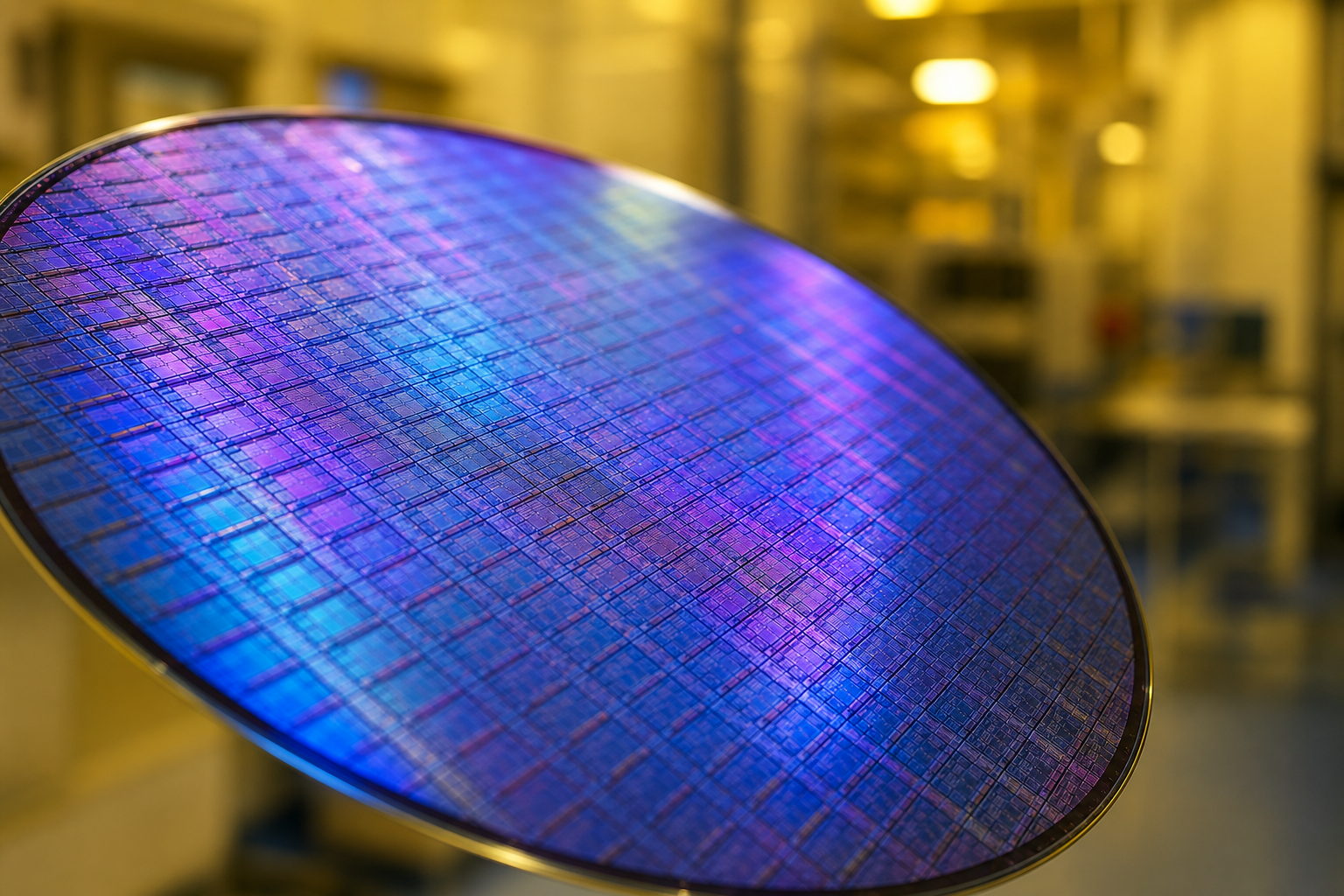
Separately, reports indicate that Nvidia has begun early testing of Intel's 18A process through multi-project wafer runs — a standard industry method for validating manufacturing feasibility before committing to full production.
Nvidia, the undisputed king of AI chips and Intel's most formidable competitor, is evaluating whether to build its next-generation multi-die GPUs on Intel's manufacturing process. If Nvidia ultimately moves forward, it would represent perhaps the most powerful validation of Intel's foundry strategy imaginable.
Intel's 18A node uses two breakthrough technologies: RibbonFET, a gate-all-around transistor architecture, and PowerVia, a backside power delivery system that routes electricity through the rear of the wafer. Intel claims the combination beats TSMC's competing N2 node in key performance metrics, though that claim remains hotly debated.
A Roster That Reads Like a Who's Who
What's most striking isn't any single deal — it's the customer list.
Microsoft is building its Maia 2 AI processor on Intel's 18A node. Amazon's AWS has committed to a Trainium chip derivative slated for 2027. The Terafab project — a $25 billion joint venture between Tesla, SpaceX, and xAI — named Intel as its primary foundry partner in April. And now Google has placed what could be Intel's largest external foundry order ever.
Intel's foundry pipeline now exceeds $15 billion in lifetime commitments. For context, Intel Foundry generated just $307 million in total external customer revenue for all of fiscal 2025. The gap between where the business is today and where these contracts point is enormous.
The Numbers Behind the Transformation
Intel's Q1 2026 earnings showed a company in a fundamentally different position than a year earlier. Revenue hit $13.6 billion, beating guidance by $1.4 billion. Non-GAAP gross margin reached 41%, a full 650 basis points above guidance. Earnings per share came in at $0.29 versus guidance for breakeven — the sixth consecutive quarter of beats.
The Data Center and AI segment grew 22% year-over-year, the first double-digit growth since 2022. Gaudi 3, Intel's AI accelerator, booked more than $500 million in committed orders for the second half of 2026. And Intel Foundry revenue jumped 20% sequentially to $5.4 billion, though the segment still posted a $2.4 billion operating loss.
From $19 to $554 Billion
The magnitude of Intel's recovery is difficult to comprehend.
The stock hit $18.97 in mid-2025, when the market had all but written off the company. By the time CEO Lip-Bu Tan took over and began restructuring the foundry strategy around external customer wins, the stock had already started climbing — but few believed the momentum would hold.
It held. Intel ended 2025 at roughly $37. By mid-April 2026, it was $65, up 76% year-to-date. On May 11, it touched $129.45 — its highest price in over two decades. After pulling back with the broader tech selloff last Friday, it roared back on Monday to close near $112.
At 22 times forward earnings, Intel remains cheaper than Nvidia or AMD. But the foundry division lost $10.3 billion in fiscal 2025, and TSMC still holds a massive lead in manufacturing scale.
Why This Matters
The bull case is simple: Intel is becoming the domestic foundry champion that Washington wants and Silicon Valley needs. Every major hyperscaler building custom AI chips now has a relationship with Intel Foundry. If 18A yields hold and the Terafab project reaches production, Intel could evolve into the most strategically important semiconductor company in the Western world.
The bear case is equally straightforward: external revenue is still a sliver of total output. The foundry is deeply unprofitable. And at $112, the stock prices in a future that hasn't arrived yet.
But for investors who bought at $19 — or even at $37 or $65 — those concerns feel academic right now.
Intel's turnaround is no longer a thesis. It's a $554 billion fact.
Today's Top Story: Trump Admin to Pump $1 Billion into this “Off-the-Radar” AI Stock

The U.S. government pumped more than $1 billion into Intel. The stock popped 128%. It pumped $400 million into MP Materials. The stock popped 200%. It bought 10% of Trilogy Metals. The stock popped 500%. And now, Trump has chosen this AI stock for a $1 billion payday.
Found this helpful? Share it with others.