Morning Watchlist: Thursday Edition
A quick note from Behind the Markets
Today the market digests the results of the Fed meeting and Warsh's press conference. A quarter-point hike was better than 90% priced in, and the 10-year had just spent two days flirting with 5% — its highest perch since 2007.
So this morning, we're doing what we do when everyone else is staring at one podium in Washington. We're reading the paperwork the crowd skipped: a card-spending report, a Senate vote count, and a survey about robots and craft fairs.
Three stories this morning. Three pairings. Let's get into it.
1) The Country That Couldn't Stop Swiping
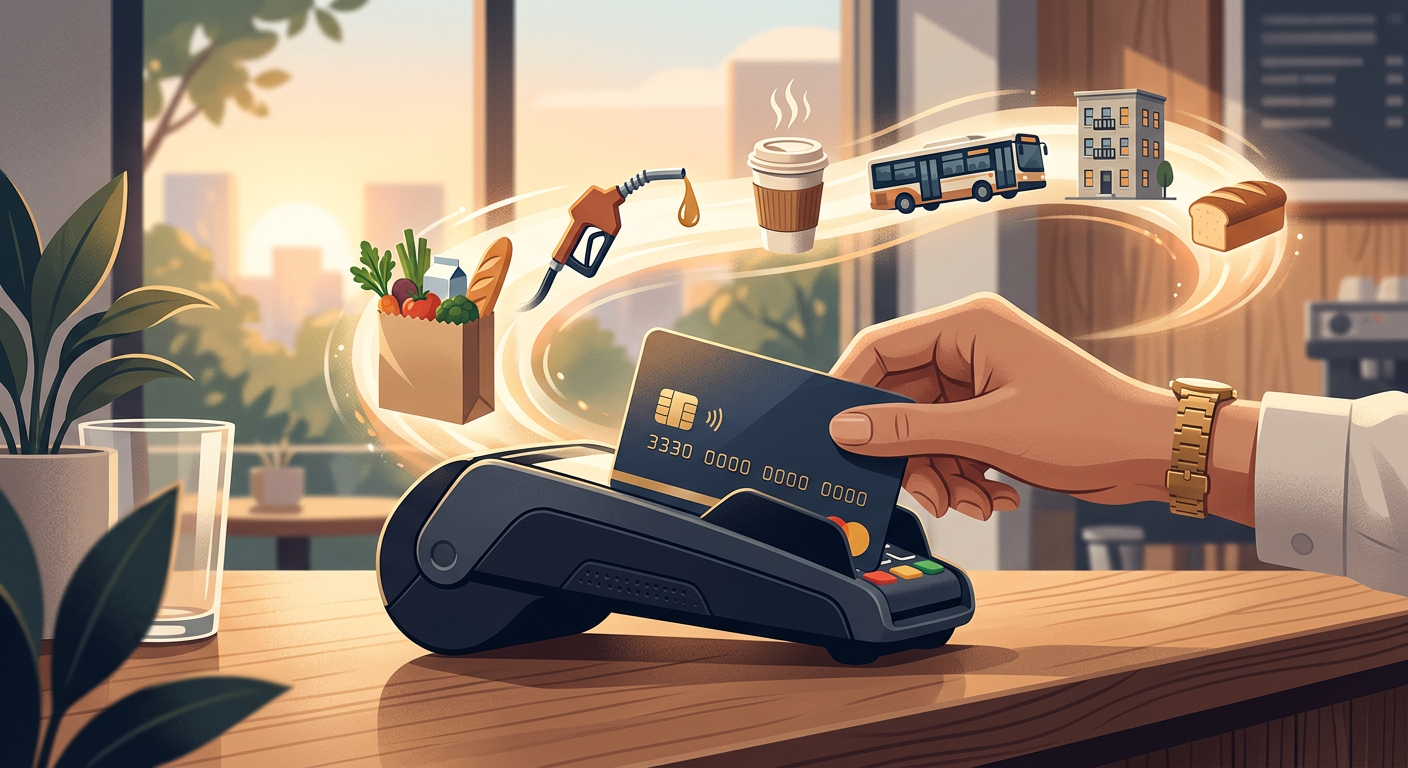
Bank of America watches tens of millions of card accounts, and this month's Consumer Checkpoint — its running diary of what Americans actually spend — landed with a number that shouldn't exist. In August, with gas prices near records, diesel at an all-time high, and mortgages at 6.85%, total card spending rose 4.5% from a year ago. And it accelerated from July, up 0.9% month over month.
Dig into the report and the picture gets stranger. Credit-card utilization is declining across most age and income groups. Lower- and middle-income households are still sitting on elevated deposit balances. Spending and wage growth, in the bank's words, "have largely converged across income groups."
This is not a consumer running out of money. It's a consumer hunting. The same report shows big-box and general-merchandise stores outrunning traditional retailers through back-to-school season — the trade-down migration we've been tracking since Walmart's August miss, through Ollie's, BJ's, and the Tanger outlets. And the hunt has a casualty list: Dave & Buster's fell 14% Tuesday after posting a quarterly loss. Sixty-dollar arcade nights are exactly what gets cut so the grocery run can grow.
So here's the question we kept coming back to. If Americans are spending more dollars but changing where the dollars go — who gets paid on the dollars, no matter where they land?
Inflation is a raise for anyone paid a percentage of the bill.
The pairing: Global Payments (GPN) — Buy
Global Payments runs the checkout counter — the payment processing behind millions of merchants — and this was its first full quarter as a pure-play commerce company, after swapping its bank-card servicing arm to FIS and buying Worldpay. Think of a waiter tipped on the bill, not the menu: when the restaurant raises prices, the waiter gets a raise automatically, without asking. A processor's fee is a slice of every marked-up grocery bill in that BofA report.
Second-quarter adjusted earnings rose 11.7% to $3.46 a share, and management guides this year to $13.60–$13.80. At Tuesday's close of $88.98, that's roughly 6.5 times this year's guided earnings. The S&P 500: 21 times. One warning about the screen: the trailing P/E shows a scary 46 — that's merger accounting noise from the Worldpay deal, the same kind of distortion we flagged on Jackson Financial in August, not the real earnings power. Thirty-five analysts rate it a consensus Buy with an average target near $103; Wolfe Research just went to $125.
The honest risks: this is a company mid-way through digesting a mega-merger, and its normalized growth is only 4–5% while slicker rivals like Stripe, Adyen, and Toast fight for the same checkout counters. The kill switch, same as our Check Point rule: if that normalized growth fades toward zero, the cheap multiple was a warning label, not a discount. A genuine spending downturn would hit the toll collector too.
2) Crypto Asked for a Rulebook. The Senate Went Home.
For two years, the crypto industry's biggest ask in Washington has been one document: the CLARITY Act, 600-plus pages deciding who regulates what — which tokens belong to the SEC, which to the CFTC, and under what rules the whole business operates in America.
On Tuesday, the Senate voted 49–50 on whether to even advance it. It needed 60.
The failure wasn't close, and the wreckage was immediate: bitcoin slid toward $76,000, XRP dropped 10%, and about $570 million of leveraged crypto bets were liquidated. Betting markets now put the odds of passage this year at around 5%. And here's the part the industry really doesn't want to discuss: if November's midterms flip the Senate, the Banking Committee gavel likely goes to Elizabeth Warren, crypto's most committed skeptic. This wasn't a delay. It may have been the window closing.
Nobody had more riding on that vote than Coinbase — America's most compliance-forward crypto exchange, whose CEO Brian Armstrong had publicly expressed confidence the bill would pass. The stock fell 10.1% Tuesday to $172.11.
The pairing: Coinbase (COIN) — Sell
This one is for readers who already own it. Coinbase built its entire pitch on being the regulated, onshore, rule-following exchange — a restaurant that designed the whole dining room around a liquor license, and the county board just tabled the application until next year, maybe longer. Now look at what you're paying while you wait. Revenue over the past year: $6 billion, shrinking 9%. The bottom line: a loss of nearly $1 billion. And the stock — even down 57% from its $402 high — still costs about 163 times next year's expected earnings. The S&P 500: 21.
We're not against owning the casino: we've owned CME Group since August 26th precisely because it collects on crypto's volatility — record contract volumes, real profits, a market-ish multiple — whichever way the coins move. Sell the exchange that needs a rulebook; keep the one that already has its license framed on the wall.
What would make this call wrong: a bitcoin melt-up, because Coinbase trades on bitcoin's tape whatever its income statement says; a post-election revival of the bill; and one honest offset — higher rates actually pay Coinbase interest on the stablecoin reserves it shares with Circle. We'd also note 34 analysts still rate it a Buy with a $201 average target. We think they're pricing the license the county just declined to grant.
3) The Machine That Was Supposed to Kill Etsy Sent It Customers Instead
All year, the fear under every internet stock has been the same: AI answers will strangle the open web. When a chatbot answers directly, nobody clicks through — and small marketplaces that live on search traffic starve first.
On Tuesday, Oppenheimer published a note arguing the opposite is happening at the most surprising address on the list. The firm upgraded Etsy from Perform to Outperform with a $90 target, and the reasoning is the interesting part: a survey of 2,500 U.S. consumers found the product improvements are working, the competitive moat is holding, and Etsy is becoming less dependent on Google search — with AI-powered discovery helping, not hurting. Their traffic analysis says non-app buyer activity is stabilizing, enough to underwrite 5% merchandise-volume growth into 2027–28.
Think about why that might be true. Everyone assumed the new interstate would bypass the craft-fair town. Instead it built an off-ramp — because when you ask a machine for "a one-of-a-kind ceramic lamp," mass retail all looks alike, and the answer machine needs somewhere to point. Unique inventory is suddenly a search asset.
Etsy has spent the year cleaning house for this moment: it sold Depop in July to focus on the core marketplace, cut 12% of its staff, and poured the savings into AI personalization. At $74, it's a $6.8 billion company — our mid-cap wheelhouse — trading at about 12 times next year's expected earnings, against the S&P's 21, with a consensus Hold and an average target of $88 sitting above the price.
So why Watch and not Buy? Because one firm's survey is a clue, not a bell — the same discipline we applied to Dick's in August. Etsy's revenue grew less than 3% last year, and the turnaround has to show up in actual merchandise volume, not regression analysis. Our entrance: buyer and volume numbers turning up at the next print — the holiday quarter is the test — or a pullback toward the mid-$60s that pays us for the wait. The kill switch: the original fear proving right after all, with Google's AI answers siphoning traffic and volume shrinking again.
Before You Go
That's the watchlist. A consumer who won't stop swiping and the toll collector priced at a third of the market, a rulebook the Senate left on the table and the exchange holding the application, and a craft fair the robots decided to help. One theme this morning: while the crowd stared at a podium in Washington, the news was in the paperwork.
And the calendar keeps moving: August housing starts land this morning at 8:30, Lennar's Wednesday-night confession gets graded in Saturday's review — watch the print, don't front-run it — and the Bank of Japan decides Friday, the entrance bell we've named for both Aflac and Mitsubishi UFJ.
Found this helpful? Share it with others.
Written by Behind the Markets