Key Bullet Points:
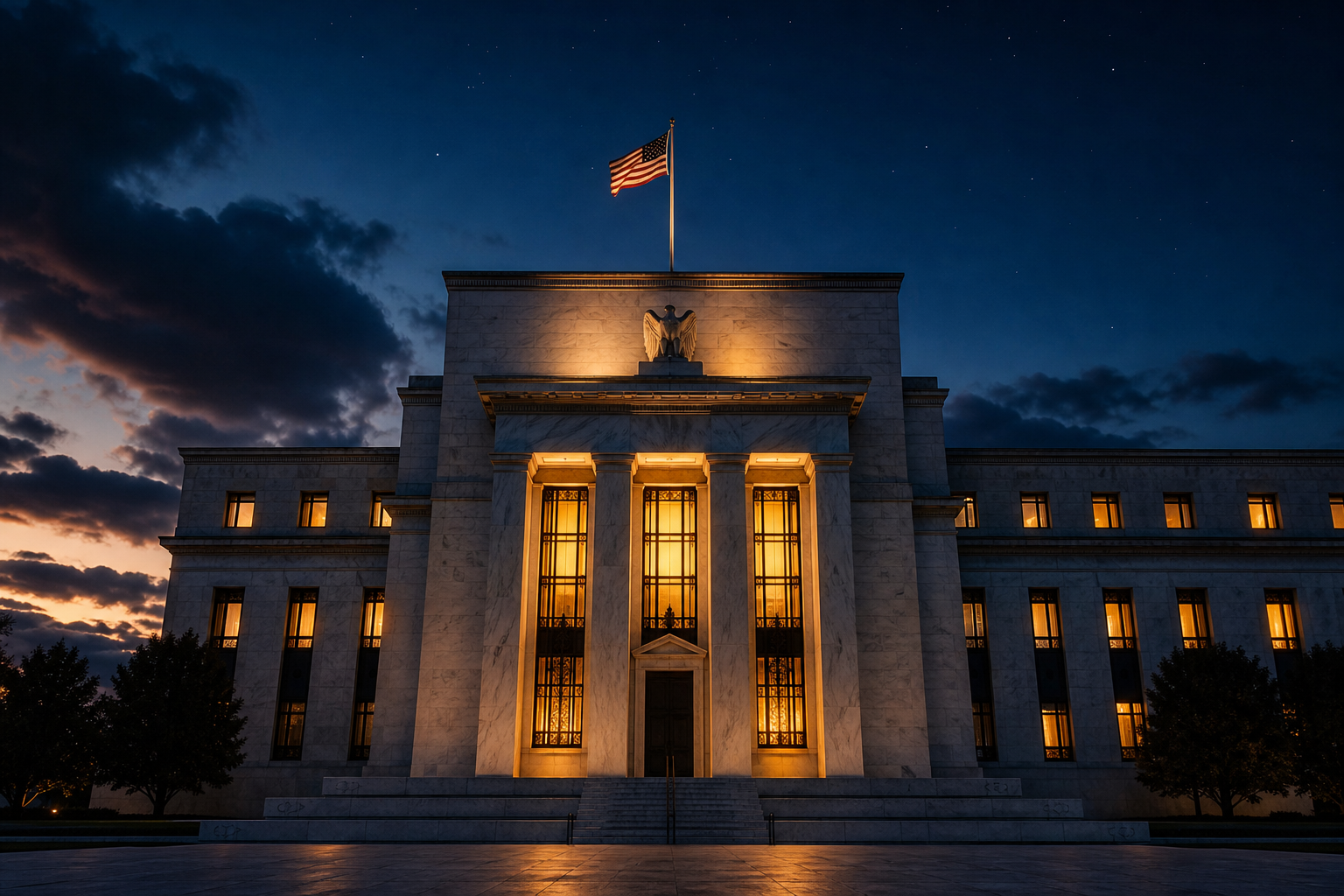
- The Federal Reserve held rates at 3.50% to 3.75% on Wednesday, as expected, but the real news came in the fine print: the FOMC dropped the easing bias that had been in its statement since late 2024, officially shifting to a neutral stance that puts rate hikes and rate cuts on equal footing
- The updated dot plot showed the median FOMC member now projects zero rate cuts for the remainder of 2026, a hawkish shift from the one cut projected in March, with several members penciling in a rate increase by year-end
- New Fed Chair Kevin Warsh, in his first press conference since taking over from Jerome Powell, reportedly withheld his own "dot" from the projections — a symbolic break with 14 years of established practice and a signal that he intends to dismantle the Fed's reliance on forward guidance
- The Dow, which had been on track for a third consecutive record close, gave back its gains after the 2:00 PM decision and finished lower on the session, while the S&P 500 edged down and the Nasdaq slipped as Treasury yields ticked higher
- Oil continued its slide, with Brent crude falling toward $79 a barrel and WTI dropping below $76, as the market priced in a Friday signing of the U.S.-Iran peace agreement expected to reopen the Strait of Hormuz
The Easing Bias Is Dead
For two years, the Federal Reserve's policy statement carried a quiet but powerful signal: the next move on interest rates was more likely to be down than up. Traders called it the easing bias. It shaped trillions of dollars in bets, underpinned the rally in growth stocks, and gave borrowers hope that cheaper money was coming.
On Wednesday at 2:00 PM, Kevin Warsh erased it.
The FOMC's June statement replaced the old language — which referenced "the extent and timing of additional adjustments" to rates — with a notably more neutral formulation: the committee would now "carefully assess incoming data, the evolving outlook, and the balance of risks" before making "any adjustments to the level of the federal funds rate." The shift may sound like wordsmithing. It isn't. It means the Fed is no longer leaning toward cuts. Its next move could go either way.
The Dots Tell the Story
The updated Summary of Economic Projections drove the point home. In March, the median FOMC member projected one quarter-point rate cut before year-end. On Wednesday, that cut disappeared. The median year-end projection for the federal funds rate rose to 3.6% — exactly where it sits today — confirming what bond traders had been pricing for weeks: no relief is coming in 2026.
More striking was the skew. Several committee members projected a rate that was higher than today's level by December, meaning they see a rate hike as more likely than a cut. The March meeting had seven members projecting no change; that number grew, and the hawkish wing expanded alongside it.
The market had been moving in this direction all year. At the start of 2026, futures traders were pricing in two rate cuts. By June, they were pricing in zero — with a roughly 40% chance of a hike instead. The dot plot didn't shock the market. It validated it.
Warsh's Missing Dot
But it was what Warsh did not do that may matter most. Reports indicated that the new Fed chair withheld his own projection from the dot plot — declining to place a dot for the first time since the practice began in 2012.
It was a small act with large implications. Warsh has been openly critical of the dot plot, calling it a form of forward guidance that constrains the committee's flexibility and leads markets to trade against the Fed's intentions rather than respond to economic reality. During his Senate confirmation hearing, he argued that the Fed's over-reliance on public forecasting contributed to the "transitory inflation" mistake of 2021 and 2022.
By withholding his dot, Warsh signaled that bigger changes to the Fed's communication framework are coming. Wall Street is already debating whether the dot plot could be scrapped entirely, or whether Warsh will move to a quarterly press conference schedule, dialing back from the every-meeting format Powell maintained.
Markets Absorb the Shift
Markets entered Wednesday in good spirits. Retail sales data released that morning came in stronger than expected. The Dow had been heading for a third straight record close. Bank stocks — JPMorgan, Goldman Sachs, Bank of America, and Morgan Stanley — all touched new intraday highs, extending a rotation into financials that has been one of the defining trades of the past two weeks.
But the Fed decision at 2:00 PM changed the complexion of the afternoon. Treasury yields ticked higher as traders absorbed the hawkish dot plot shift, and the Dow gave back its morning gains to finish the session lower. The S&P 500 slipped, and the Nasdaq drifted down as higher-for-longer rate expectations weighed on growth names.
Oil continued its slide. Brent crude fell toward $79 a barrel — its fifth consecutive decline and lowest since early March. WTI dropped below $76. Both are being dragged lower by expectations that the U.S.-Iran peace agreement, expected to be formally signed Friday in Switzerland, will reopen the Strait of Hormuz and restore Gulf oil flows.
What Comes Next
The Warsh Fed has announced itself. Rates are on hold. The easing bias is gone. The dot plot now confirms what the bond market has believed for months: no cuts are coming, and a hike is no longer unthinkable.
For investors, the message is clear. The era of the Fed put — the expectation that the central bank would always lean toward easier policy when markets stumbled — has been replaced by something closer to genuine uncertainty. Warsh wants markets to stop trying to predict the Fed and start responding to the economy itself. Whether that works is the defining question of his tenure.
The next FOMC meeting is July 28-29. By then, we will know whether the Iran deal held, whether oil prices continued to fall, and whether inflation finally began to crack. Until then, Kevin Warsh has the chair he waited 15 years for — and he's already made it his own.
Trending Now: You must do this before the OpenAI IPO
It's no longer theoretical. It's officially in motion.
OpenAI – the inventors of ChatGPT – just filed the confidential paperwork to go public.
And it could be the largest IPO in American history.
We all knew it was coming. But here's what almost everyone is about to get wrong.
They'll rush to buy OpenAI the moment it hits the market.
And if history is any guide, most of them will regret it.
In nearly every blockbuster tech IPO of the last 15 years, the people who bought on day one underperformed.
While a small group of other folks made as much as 3,900% on a little known investment connected to the IPO.
I call it the Pre-IPO Backdoor.
In my view, it's one of the best moneymaking opportunities out there.
It rarely comes around. You only see it when a huge tech company goes public.
And it's about to open again, thanks to the OpenAI IPO.
There's only one catch. You need to get in before OpenAI actually goes public.
And now the filing is official.
For the full story - and a free ticker you can invest in TODAY - click here.
Found this helpful? Share it with others.