Key Bullet Points:
- Brent crude oil dropped below $72.24 per barrel Thursday — falling beneath the price recorded the day before the United States and Israel launched strikes against Iran on February 28 — marking the first time oil has returned to pre-conflict levels since the war began four months ago, with prices down more than 20% in June alone
- The dramatic decline was triggered by the US-Iran Memorandum of Understanding signed June 17, which outlined a 60-day framework for nuclear negotiations and prompted a gradual reopening of the Strait of Hormuz — the narrow waterway through which roughly 20% of the world's oil supply flows
- West Texas Intermediate crude fell to $69.47 per barrel while Brent settled at $72.62, with analysts forecasting oil will trade in a $60 to $80 range in the coming weeks — a dramatic reversal from the $95+ peaks that rattled global markets in April and May
- The oil collapse is reshaping winners and losers across Wall Street — energy giants like Exxon Mobil and Chevron have fallen sharply as their profit outlooks dim, while airlines and travel stocks have surged on expectations of dramatically lower fuel costs, with American Airlines seeing trading volume nearly triple its daily average
- Despite the relief on oil prices, Thursday's PCE inflation report showed headline inflation at 4.1% — the highest since April 2023 — suggesting that even as energy costs recede, the AI-driven memory chip shortage is creating a new inflationary force that the Federal Reserve will have to reckon with before any rate cuts
The War Premium Evaporates
Four months ago, the world held its breath.
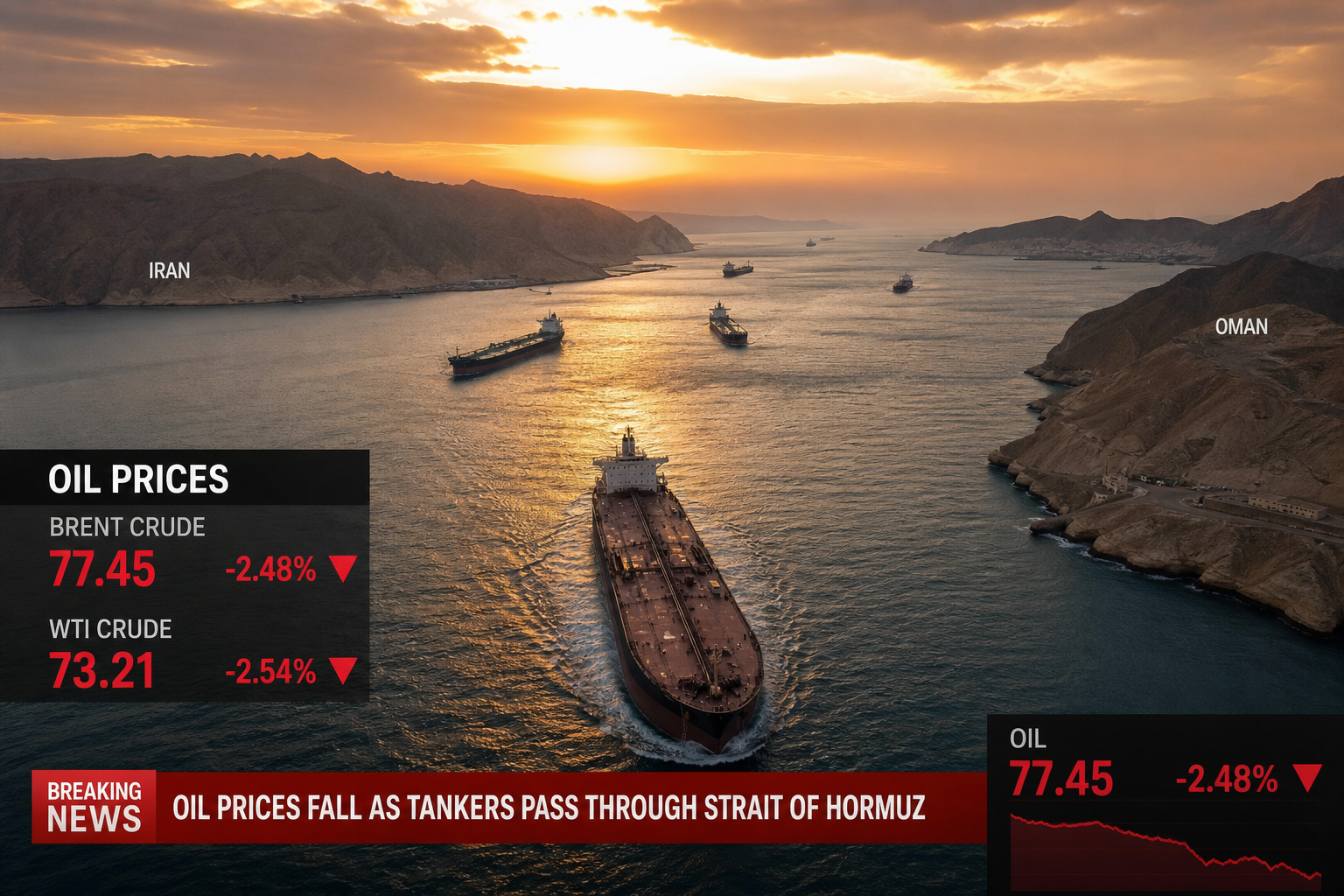
When the United States and Israel launched coordinated strikes against Iran on February 28, oil prices spiked immediately. Brent crude surged above $95 per barrel. The Strait of Hormuz — the narrow chokepoint between Iran and Oman through which roughly 20% of the world's oil passes every day — effectively shut down as Iran blocked tanker traffic in retaliation.
Gas prices surged. Inflation fears reignited. Central banks around the world braced for a sustained energy crisis that threatened to derail the global economy.
Last Thursday, all of that changed.
Brent crude oil fell below $72.24 per barrel — slipping beneath the price recorded on February 27, the day before the first strikes. For the first time since the war began, oil was trading at pre-conflict levels. The war premium that had kept energy markets on edge for four months had finally, decisively, evaporated.
The Strait Reopens
The catalyst was diplomatic, not military.
On June 17, the United States and Iran signed a Memorandum of Understanding in Switzerland, outlining a 60-day framework for negotiations on Iran's nuclear program, sanctions relief, and the reopening of critical shipping lanes. While the talks remain fragile — President Trump threatened new strikes just days later — the market has largely concluded that the worst of the energy crisis is over.
The evidence is visible in the Strait of Hormuz itself. According to the BBC, tanker traffic through the waterway has gradually resumed, with an increasing number of oil tankers navigating the passage. While traffic remains below pre-war levels, the trend is unmistakable: oil is flowing again.
The Guardian reported that strategic inventory releases, a significant drop in demand from China, and tankers leaving the Persian Gulf without signaling have contributed to "a minor oversupply in several key markets." Susannah Streeter, chief investment strategist at Wealth Club, summarized the shift: "Concerns regarding a prolonged global energy crisis caused by the Iran conflict are dissipating."
A 20% Collapse in One Month
The speed of oil's decline has stunned even veteran energy traders.
Brent crude has fallen more than 20% in June alone — one of the sharpest monthly declines in years. West Texas Intermediate, the U.S. benchmark, dropped to $69.47 per barrel, while Brent settled at $72.62. Analysts now forecast oil will trade in a $60 to $80 range in the coming weeks, a far cry from the $95+ prices that dominated April and May.
The implications ripple across every sector of the economy. For consumers, cheaper oil means cheaper gasoline — a direct, immediate relief at the pump that improves household budgets. For airlines, it means dramatically lower fuel costs, which represent one of their largest operating expenses. For manufacturers and logistics companies, it means reduced shipping and transportation costs.
But for energy producers, the collapse is painful. Exxon Mobil and Chevron both fell more than 2% on Wednesday as oil prices slid, with analysts warning that further declines could force the energy giants to revisit their capital spending plans. The profit bonanza that the Iran conflict delivered to oil companies — higher prices with no additional production costs — is rapidly unwinding.
Airlines: The Quiet Winners
On the other side of the oil equation, airlines are emerging as the biggest beneficiaries.
American Airlines — which saw its stock plunge below $12.50 in early March when oil was spiking — has rallied to above $17.50, approaching its 52-week high of $18.04. On Thursday, trading volume in AAL shares reached 203 million — nearly triple its 78 million daily average — suggesting that institutional investors are positioning aggressively for continued upside as fuel costs fall.
The broader travel sector has followed suit, with hotel chains, cruise operators, and online travel platforms all benefiting from the expectation that cheaper energy will boost discretionary spending on travel and leisure.
The Inflation Paradox
But here's the twist that makes this story more complicated than a simple oil-prices-are-falling celebration.
On the same Thursday that oil hit pre-war levels, the Commerce Department released May's Personal Consumption Expenditures (PCE) price index — the Federal Reserve's preferred inflation gauge. The numbers were sobering: headline PCE inflation hit 4.1% on an annual basis, the highest since April 2023. Core PCE, which strips out food and energy, rose 3.4% — the highest since October 2023.
Energy costs drove much of the increase, reflecting the lingering impact of higher oil prices from earlier months. But a new inflationary force is emerging: the AI-driven memory chip shortage that has sent the cost of consumer electronics soaring. With DRAM prices up 98% in the first half of 2026 and Apple raising MacBook and iPad prices by up to 25%, the Fed is facing a uniquely challenging inflation picture.
Oil may be falling, but prices of everything with a chip inside are rising. The net effect: inflation isn't going away anytime soon, and rate cuts remain a distant prospect.
What It Means Going Forward
For investors, the oil collapse creates a clear set of winners and losers.
Energy stocks face headwinds as the war premium that inflated their earnings dissipates. Airlines and travel stocks stand to benefit from lower fuel costs. And the broader market gets a modest tailwind from reduced energy costs, even as chip-driven inflation creates crosscurrents.
But the biggest takeaway is geopolitical. The Strait of Hormuz — through which trillions of dollars in oil flows annually — is reopening. The US-Iran talks, while fragile, represent the most significant diplomatic breakthrough in the Middle East since the conflict began. And the market is voting with its dollars that peace, however imperfect, is the most likely outcome.
Oil at pre-war levels isn't just an energy story. It's a signal that the world's most dangerous geopolitical flashpoint of 2026 may be cooling — and that the global economy, battered by months of uncertainty, might finally be catching a break.
Whether that break lasts depends on whether Washington and Tehran can turn a 60-day memorandum into a lasting peace. But for now, the market is betting on diplomacy — and oil prices are proving it.
Found this helpful? Share it with others.