The Boring Stuff That Moves Money: Oil's Violent Round-Trip, a Split Fed, and the AI Audit Trail
A quick note from Behind the Markets
Wall Street is back to its favorite hobby: pretending "the economy" is the S&P 500.
Meanwhile, the real market is doing what it always does — hiding risk in plain sight: oil supply, tightening credit terms, and regulation that shows up as a surprise expense line six months later.
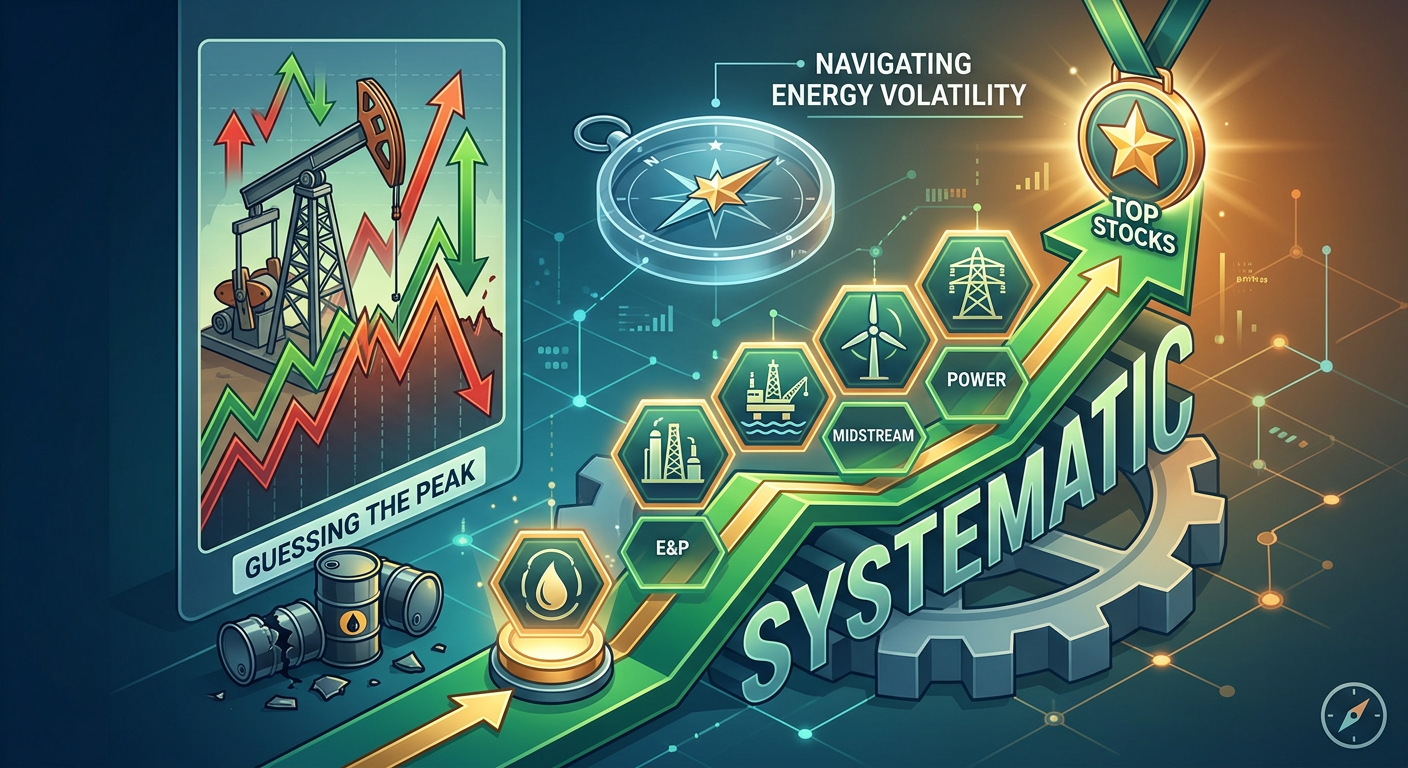
But first, the elephant that walked into the room yesterday: at the NATO summit in Turkey, President Trump declared the Iran ceasefire "over" and floated fresh military strikes. Oil spiked 5–7% back toward $80 — round-tripping the entire decline of the past two weeks in a single session — and stocks sold off. That whipsaw is the perfect setup for today's topic, because it proves the point: you can't build a portfolio on which way the oil headline breaks next. You build it on what survives either way.
1) OPEC+ Keeps Adding Barrels — Into a Ceasefire That Just Collapsed
Here's the tension that defines energy right now. On one side, OPEC+ agreed to raise August output by 188,000 barrels per day — the fifth straight monthly increase, a steady march of more supply. On the other, yesterday's ceasefire collapse just yanked oil from two-week lows near $67 back toward $80 on renewed war risk.
So the honest picture isn't "oil is rolling over" — it's a violent tug-of-war between rising supply and reviving geopolitical risk. Which is exactly why you don't play energy as a vibes trade in either direction. When the strip can swing 15% in a week, the market eventually stops paying for cocktail-party geopolitics and starts paying for break-evens and balance sheets. The safe trade is low-cost production plus shareholder discipline; the weak hands are the levered names and high-decline assets that only work at one oil price.
Company: Chevron (SYM: CVX)
Integrated major with a fortress balance sheet, a low breakeven, and a durable dividend — built to win across the oil cycle
Chevron is the "wins either way" energy name. As an integrated major (production plus refining plus chemicals), it makes money pumping oil when prices are high and makes money processing it when prices are low — a natural hedge against exactly the whipsaw we just saw. It carries one of the sector's strongest balance sheets, funds a $7.12 annual dividend (~4% yield) with 38 straight years of increases, and runs a $10–20 billion buyback. When OPEC+ adds barrels and a war premium reappears in the same week, you want the operator that survives $60 oil and thrives at $80 — not one praying for a spike.
CVX trades around $174–178 at roughly 31x earnings. The honest caveats: Morningstar notes Chevron has greater oil-price leverage than some integrated peers, so it's not immune to a real crude decline; the valuation isn't cheap; and Morgan Stanley recently warned of a potential global oil glut if the OPEC+ barrels keep coming and demand softens. (One vivid footnote tying this to Section 4: Chevron's own Yasa Polaris tanker was reportedly drone-attacked off Russia's Black Sea coast this week — the energy-security risk is not abstract.) This is "own the disciplined survivor," not a leveraged bet on higher oil.
Bottom line: If OPEC+ keeps adding supply while war risk keeps reappearing, energy is a survivability trade, not a vibes trade. Own the names that live at lower prices — not the ones that only win when the world is on fire.
2) Fed Minutes: Wall Street Heard "Cuts." I Heard "Credit Stays Tight."
The June FOMC minutes dropped Wednesday, and markets tried to translate them into one word: "cuts." Read them closely and you get a different message. The committee held rates unanimously at 3.50–3.75%, but underneath, it's split down the middle on where rates go by year-end — and a few officials actually argued for a hike now. Crucially, they stripped out the old "easing bias" language and flagged upside inflation risks from tariffs, energy, and AI-driven demand. Yesterday's oil spike only sharpens that inflation worry.
Here's the contrarian read: even if the Fed eventually eases, bank lending standards and private-credit terms can stay restrictive. Smaller companies don't get rescued by a headline — they get rescued by cash flow. So into earnings season, watch for rising interest expense, tightening covenant language, "strategic review" euphemisms, and surprise equity raises. The next winners aren't the prettiest stories; they're the boring operators who fund themselves.
Company: Automatic Data Processing (SYM: ADP)
Payroll and HR giant with recurring, non-cyclical cash flow — and a business that quietly earns more when rates stay high
ADP is the definition of a self-funding compounder. It processes payroll for hundreds of thousands of businesses, generating deep, recurring, subscription-like revenue that doesn't depend on the capital markets staying open. It's a Dividend Aristocrat with roughly 50 consecutive years of dividend increases. And here's the elegant part for a "credit stays tight" world: ADP holds billions in client payroll funds in transit and earns interest on that float — so a higher-for-longer rate environment is a tailwind, not a headache. While levered small-caps sweat their next refinancing, ADP gets paid more to hold cash.
ADP trades in the low-to-mid $200s (analyst targets cluster around $214–270). The honest caveats: it's a premium-valued, slower-growth "steady eddie," not a rocket; its results are tied to employment, so the weakening labor market (June payrolls were soft) is a genuine headwind to new-client growth; and it does tap debt markets for flexibility (it recently arranged new credit facilities), so it's investment-grade-with-leverage, not literally debt-free. This is ballast for a survivability market, not a moonshot.
Bottom line: Stop betting on a Fed pivot to save weak balance sheets. This is a survivability market — own the operators that fund themselves and get paid to wait.
3) The Quiet AI Winner: Audit Trails, Provenance, and Compliance Plumbing
Retail keeps getting sold the same AI candy: bigger models, bigger GPUs, bigger hype. But the next big spend wave is painfully unsexy — logging, traceability, and provable compliance.
Why now? Enterprises are being forced to answer a simple question: "Can you prove what your AI did, and why?" Regulators are moving toward traceability requirements, and buyers are pushing the same demands through procurement. That creates a toll-collector category around governance, monitoring, and audit tooling — and it's where the specialists who make platforms "safe enough to deploy" get paid regardless of which AI model wins.
Company: Datadog (SYM: DDOG)
The observability and monitoring platform that answers "what is my software — and my AI — actually doing?"
Datadog is the closest thing to a pure-play on the "prove it" wave. Its whole business is monitoring, logging, and tracing what software does across an enterprise's systems — the literal infrastructure for audit trails and traceability. And it's leaning directly into AI observability: tools to monitor how large language models behave, catch errors and misuse, and give companies the logs and evidence they need to deploy AI responsibly. As the "can you prove what your AI did?" question moves from nice-to-have to procurement requirement, Datadog sells the answer.
DDOG trades around $257, just off its June all-time high near $277. Be clear-eyed: it's expensive (a rich, growth-stock multiple that punishes any slowdown), it was recently downgraded by at least one analyst on valuation, its usage-based model means revenue softens if customers cut cloud spending in a downturn, and mega-caps (Microsoft, Amazon) bundle competing monitoring tools. This is "own the toll collector of the compliance wave," bought with the knowledge that you're paying up for growth.
Bottom line: If you want AI exposure without paying for the flashiest hype, hunt the compliance and monitoring layer. The gold rush always creates boring winners.
4) Ukraine's Deep-Strike Campaign Is an Energy Trade, Not Just a War Headline
War coverage focuses on territory. Investors should focus on infrastructure — because energy infrastructure is the war's financial bloodstream.
This is no longer a footnote. Ukraine's long-range drone campaign has now hit Russian refineries roughly 194 times in the first half of 2026, disabling an estimated 40%+ of Russia's refining capacity by Ukraine's count (independent analysts say closer to a quarter is offline). Fuel output is down ~25% year-over-year, rationing has spread across dozens of Russian regions, and — critically for investors — Ukraine has started striking Russia's "shadow fleet" tankers directly, hitting roughly 19 vessels in three days. Stack the renewed Iran/Hormuz risk on top, and you have two simultaneous assaults on the physical plumbing of the oil market.
The implication isn't "oil spikes tomorrow." It's that refining and terminal disruptions force rerouting, discounting, and higher logistics costs — and the real opportunity is often second-order: shipping, insurance, and the boring names tied to energy logistics and security. When compliant tankers have to carry more barrels over longer distances (and the shadow fleet gets hunted), the operators of clean, modern tonnage get paid.
Company: Scorpio Tankers (SYM: STNG)
Owner of one of the world's largest modern product-tanker fleets — a direct beneficiary of disrupted, rerouted oil flows
Scorpio owns about 90 product tankers (the ships that carry refined fuels like diesel, gasoline, and jet fuel). Here's why the current chaos matters for it: when Russian refineries go offline and its export shipping gets attacked, the world has to move refined products further — more ton-miles, tighter available tonnage, higher charter rates. Add the renewed Hormuz risk, and the setup for product-tanker rates strengthens even as the price of oil whipsaws (tankers get paid on volume and voyage distance, not the barrel price). Scorpio has been paying down debt, buying back stock, and reported strong Q2 charter rates. It trades around $74 at roughly 7x earnings, up sharply over the past year.
Now the serious caveats, because tanker stocks are treacherous: this is a deeply cyclical, volatile business — rates can collapse as fast as they spike, the stock has already more than doubled off its 52-week low (so a lot of good news is priced in), and Bank of America recently downgraded it to Underperform. If the wars de-escalate and flows normalize, tanker rates and this stock can fall hard. Size it small and treat it as the high-octane, event-driven expression of the theme — not a buy-and-hold.
Bottom line: Don't trade the war headline. Trade the infrastructure reality: prolonged pressure on energy nodes reroutes global flows and changes who gets paid to move the barrels.
Before You Go
Wall Street wants your attention on the index.
Your edge is thinking like a credit analyst, a supply-chain manager, and a regulator — all at once. That's how retail gets Wall Street-quality research without paying Wall Street fees.
Found this helpful? Share it with others.
Written by Behind the Markets