Morning Watchlist: Tuesday Edition
A quick note from Behind the Markets
On Friday night, trade talks between Washington and Ottawa collapsed. By Saturday, Canadian Prime Minister Mark Carney was speaking in language you don't often hear from Canada: "You're at war when you get attacked. We got attacked."
By Monday, new 50% U.S. tariffs were landing on $20 billion of Canadian goods, the Nasdaq was sliding, and everyone was bracing for a week that ends with a brand-new Fed Chair giving his first big speech.
Loud headlines everywhere. Which means it's time to ask our favorite question: who wins quietly, one step behind the noise?
Three stories this morning. Three pairings. Let's get into it.
1) The Trade War Next Door
Here's what actually happened. Talks broke down Friday night — U.S. Trade Representative Jamieson Greer says Canada "declined to finalize the trade deal" and made "new demands and walk backs." The administration answered with a 50% tariff on $20 billion of Canadian goods: dairy, wine, furniture, cement, even hockey equipment. Carney says Canada will match it dollar for dollar starting September 8, targeting U.S. steel, dairy, appliances, farm equipment, and electronics.
Most of that list is politics. One word on it is a business story hiding in plain sight.
Cement.
Cement is heavy, cheap by the pound, and brutally expensive to move. That makes it one of the most local products in the world economy — but border and coastal markets still lean on imports, and Canada is one of America's biggest cement suppliers. A 50% tariff on the truck coming across the bridge doesn't stop construction. It just hands every domestic cement plant nearby a price umbrella.
The pairing: Eagle Materials (EXP) — Buy
Eagle Materials makes cement and gypsum wallboard, entirely in the United States, from a network of plants across the heartland. Market cap: about $6.3 billion — exactly the kind of mid-cap the headlines skip.
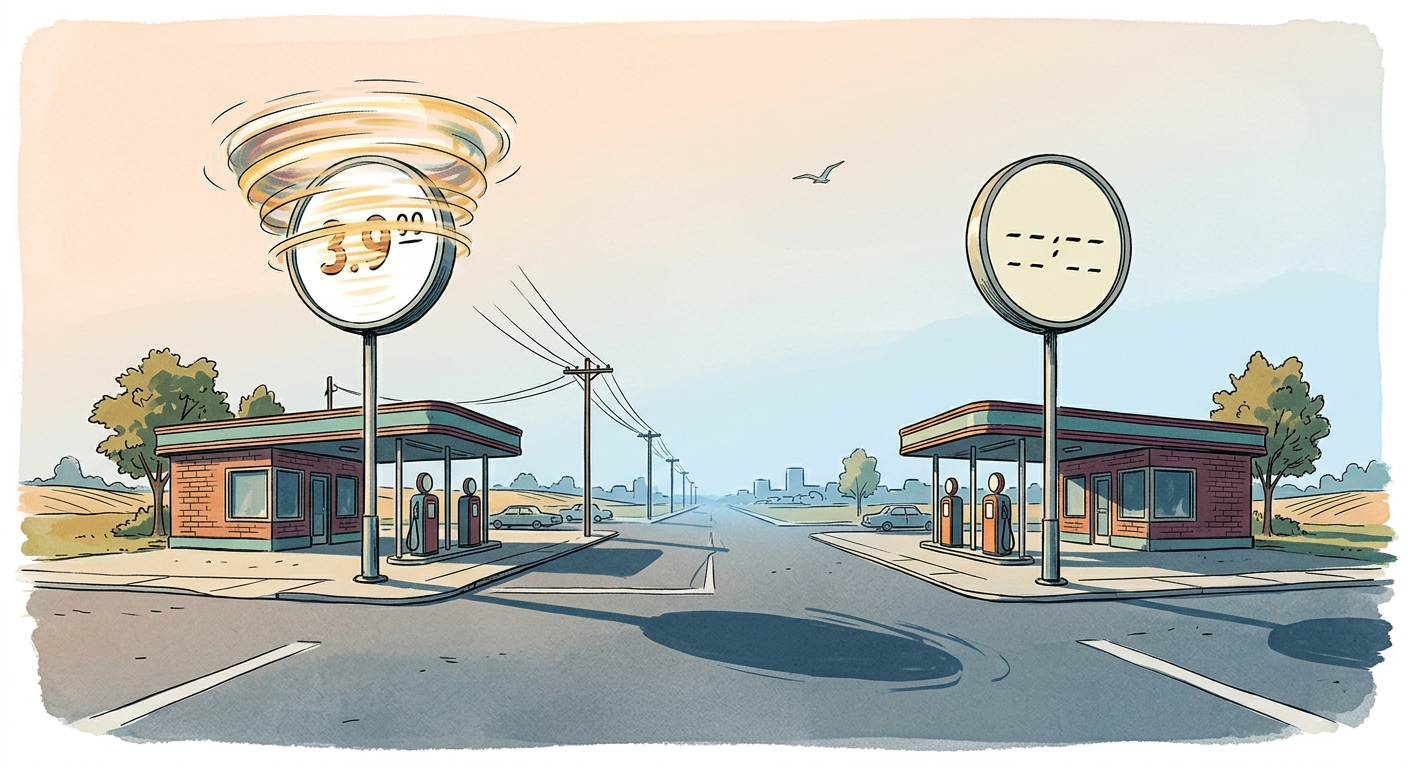
Think of it as the gas station on the corner that just watched its only competitor add a 50% surcharge. It doesn't have to do anything. Its prices just got more competitive overnight.
At about $205, Eagle trades near 16 times next year's expected earnings — the S&P 500 costs about 21 — and the average analyst target sits up at $226, even though the consensus rating is a sleepy Hold. The honest risks? A quick handshake deal that erases the tariff, or high interest rates grinding construction down so far that pricing power doesn't matter. Last fiscal year's earnings actually slipped 9% on soft demand, so this is a tailwind arriving at a cyclical low — which is usually when we like to shop.
2) Everyone Is Writing the Same Check
On Monday, Alibaba did something remarkable. It sold $10.2 billion of new stock in Hong Kong — 710 million shares, priced at an 8.4% discount — in what Reuters called the largest primary follow-on offering in Hong Kong's history.
Why would a giant dilute its own shareholders like that?
One reason. AI infrastructure.
This is a company whose quarterly profit just fell 75% because of AI spending — and it's choosing to spend more. Alibaba even told investors its payback period on AI investment has shortened, from three years to two and a half, because demand is running that hot.
Now hold that thought, because Wednesday is the main event: Nvidia reports earnings, with Wall Street expecting roughly $93 billion in quarterly revenue — about 70% growth. American hyperscalers, Chinese platforms, sovereign funds — everyone on Earth is writing the same check at the same time.
We're not here to referee who wins the AI race. We'd rather own the toll road they all drive on.
The pairing: Fabrinet (FN) — Watch
Every AI data center is really a city of chips that have to talk to each other, and they talk over fiber-optic links. Fabrinet is the precision manufacturer that stitches those optics together — lasers to fibers, at scale — with Nvidia as its marquee customer and, per its recent Rosenblatt conference remarks, a customer list now broadening beyond Nvidia. If data centers are new cities, Fabrinet builds the on-ramps. It doesn't matter whose logo is on the buildings.
The numbers are the argument: Fabrinet just reported quarterly revenue of $1.32 billion, up 45%, with data-center work topping half of revenue for the first time. Full-year revenue grew 36%.
So why Watch and not Buy?
Wednesday.
At about $418 — even after Monday's 4% dip — Fabrinet costs around 23 times next year's expected earnings, and it trades in Nvidia's shadow. If Nvidia so much as clears its throat on Wednesday's call, suppliers like this one can drop 10% on no news of their own. That's the entrance we're waiting for. If the whole complex rips higher instead, we let it go — a 23-times ticket for 36% growth is fair, not stolen. A genuine AI capex slowdown is what kills the setup.
3) The Quiet Number That Pays You
While the tariff headlines blared, the bond market kept whispering the same thing it's whispered all month. The 10-year Treasury yield sat at 4.71% Monday, near its highest in over a year. The 30-year is hovering near levels last seen in 2007 — even after the Treasury doubled its buybacks of long-dated bonds to calm things down.
And on Friday, new Fed Chair Kevin Warsh gives his debut keynote at Jackson Hole, the Fed's annual mountain retreat. Capital.com's Daniela Hathorn expects him to "focus more heavily on the Fed's reaction function" than on promising rate cuts.
Everyone frames high rates as a villain. For one industry, they're a raise.
The pairing: Jackson Financial (JXN) — Buy
Jackson is one of America's largest annuity companies. An annuity is a paycheck you buy in bulk — hand the insurer a lump sum, receive income for life. When rates are high, the insurer can fund a bigger paycheck with the same lump sum, so the product flies off the shelf, and the company invests the premiums at those same fat yields. High rates hit both sides of the register.
It's showing up in the results: Jackson's second quarter delivered 55% earnings-per-share growth and record annuity sales. Market cap: about $9 billion.
Now the punchline. At about $132, Jackson trades at roughly 4.5 times next year's expected earnings. The S&P 500: 21 times. (Ignore the scary trailing P/E — hedge accounting makes an annuity company's backward-looking earnings almost meaningless; the forward number is the tell.) It pays a 2.7% dividend while you wait, and the average analyst target is $146. The honest risks? A dovish surprise from Warsh that yanks rates down fast, or a sharp market drop that bruises the investment portfolios backing those paychecks. At four and a half times earnings, we think a lot of bad news is already in the price.
A Note on Monday's Issue
One update on a recent call. In Monday's edition we recommended AGCO, the pure-play farm equipment maker, as a Buy on Deere's bottom-of-the-cycle call. Canada's new retaliation list — effective September 8 — specifically includes U.S. farm equipment. We're not changing the call: the thesis is a 2027 cycle recovery, AGCO builds many of its Fendt and Massey Ferguson machines outside the United States, and tariff lists have a way of shrinking in negotiations. But we flag it because that's the deal here — when facts move against us, you hear it from us first.
Before You Go
A tariff umbrella over American cement, a $10 billion check that tells you the AI build-out isn't slowing, and a bond market quietly handing annuity companies the best conditions in a generation.
The calendar does the rest: Nvidia reports Wednesday, Burlington — our Watch from Monday — reports Thursday, and Warsh speaks Friday. Loud week ahead. We'll keep looking one step behind the headlines.
Have a wonderful day.
We'll see you tomorrow.
Found this helpful? Share it with others.
Written by Behind the Markets