Morning Watchlist: Thursday Edition
A quick note from Behind the Markets
Here's a riddle for your coffee. A company sells $47 billion of computers in a single quarter, beats Wall Street's profit estimate by 44%, raises its full-year forecast by $25 billion — and its stock falls.
That's not a riddle, actually. That's a bill arriving.
This week has been a week of bills. The memory bill just landed on the world's biggest computer builder. Regulators say advertisers have quietly run up a $20 billion tab at Amazon. And the bond market handed a bill to one of our own picks — which we'll pay in public, because that's the deal around here.
Three stories this morning. Three pairings — including a sell. Let's get into it.
1) The Record Quarter That Got a Grocery Bill
On Tuesday night, Dell reported one of the most remarkable quarters in the history of the computer business. Revenue of $46.97 billion against the $44.44 billion expected. Earnings of $7.04 a share against a $4.90 estimate. A record $95 billion backlog of AI server orders — nearly two years of future work, already signed. Management raised its full-year revenue forecast by $25 billion, to $192 billion.
By Wednesday morning, the stock was down about 7%, trading near $425.
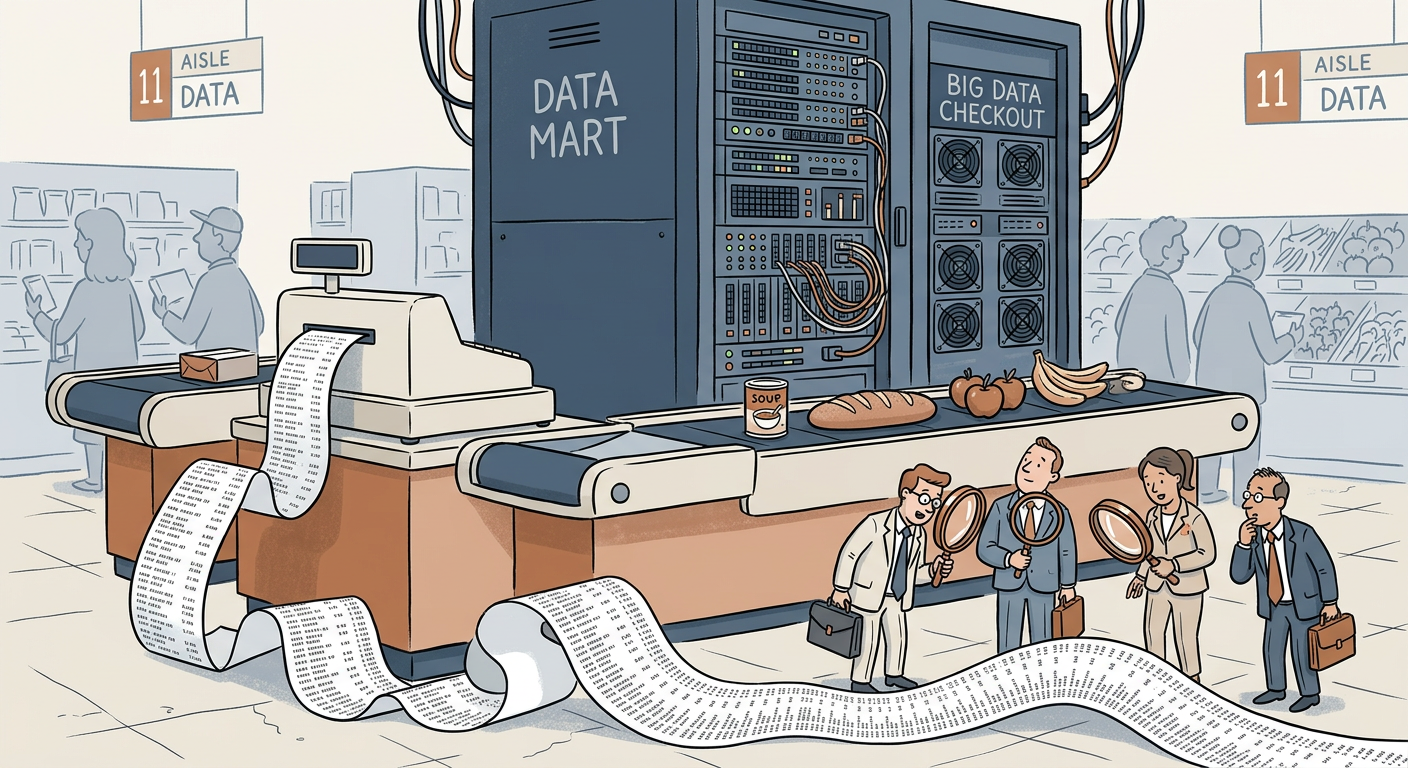
Why? Look past the headline numbers. Free cash flow fell 47%. And Dell's own operations chief, Jeff Clarke, had already told investors the company faces "an inflationary environment across memory and other components." The memory chips inside every AI server have roughly doubled in price — TrendForce pegged DRAM contract prices up 90–95% — and Dell is the world's largest buyer of the stuff that got expensive. Dell sells the bread. Somebody else sells the flour.
So follow the flour money. The memory makers are now so profitable they're building new mills: SK Hynix alone is investing $38 billion in new memory plants, per CNBC, after boosting first-half capital spending 73%. And here's the part the crowd skips. AI's memory of choice — high-bandwidth memory — is built by stacking chips a dozen high, and one flawed layer ruins the whole stack. Every layer, in every stack, in every one of those new plants, has to be inspected before the next goes on top.
The pairing: Onto Innovation (ONTO) — Buy
Onto Innovation makes the inspection and measurement systems that catch those flaws — the building inspector in a city that just approved a hundred skyscrapers. No floor gets built until the one below it passes. Business is following the capex: a record June quarter of $343 million in revenue, a backlog past $1 billion — close to a year's worth of work already ordered — and management guiding to 30%-plus revenue growth this year, with the advanced-packaging piece growing more than 50%.
The market cap is about $12.6 billion, and the stock, near $256, sits roughly a third below its 52-week high after Tuesday's selloff. It costs about 25 times next year's expected earnings — a few turns over the S&P 500's 21, for several times the growth. All eleven covering analysts rate it a Strong Buy, with an average target of $388.
The honest risks: on the profits it has actually reported over the past year, the multiple is steep — like Modine last week, the cheap number is next year's, and it has to arrive. This is a volatile aisle: the stock has more than doubled in a year, and a poorly received report from any AI bellwether can knock the whole supply chain down a shelf. And memory spending is cyclical — if DRAM prices crack, the building inspector's phone stops ringing with everyone else's.
2) The Auctioneer Got Audited
This week, the Federal Trade Commission and 22 state attorneys general sued Amazon, accusing it of "secretly and systemically overcharging" the 1.2 million businesses that buy ads on its platform — by rigging its own ad auctions, allegedly to the tune of more than $20 billion since 2019. Amazon disputes it, noting its inflation-adjusted cost per click has stayed flat. Courts will take years to sort it out. Amazon's stock barely blinked.
But think about what the lawsuit does to a narrative. Advertisers have grumbled for years that the giant platforms run the auction, sell the inventory, and grade their own homework. Now a regulator has put a dollar figure on the grumble. Every chief marketing officer in America just got a reason to ask: who's watching the auctioneer?
One company's entire pitch has been exactly that — the independent ad-buying platform that doesn't own the inventory it bids on, so it has no incentive to run up your bill.
The pairing: The Trade Desk (TTD) — Watch
The Trade Desk is the honest auction house across the street. The problem is the parking lot. The stock has collapsed 90% from its high of $141 to under $14 — its lowest since 2019 — because growth broke: last quarter's revenue grew just 3%, guidance disappointed, and Morgan Stanley cut its target from $26 to $13. A company that once traded like a story now trades like a business: about $6.5 billion — at roughly 16 times earnings, still solidly profitable on $3 billion in trailing revenue.
So why not buy the tailwind? Because for now it's a courtroom tailwind, and courtrooms move slower than ad budgets. Note the tell we always check: Wall Street's average target sits at $13.39 — below the stock. When we bought Eldorado and Federated Hermes, targets were chasing a rising price. Here they're chasing a falling one. Different animal. Our entrance: a quarter with real evidence advertisers are moving money — revenue growth back toward double digits — or one more washout that prices the business like it's shrinking. What kills it: growth actually going negative while Amazon's ad machine keeps compounding.
3) The Bond Market Overruled Us
Quietly, underneath the war headlines, the week's biggest story has been bonds. The 2-year Treasury yield hit 4.37%, its highest in 19 months. The 10-year touched 4.79%, a 20-month high. The 30-year sits near 5.3% — levels last seen in 2007. Oil above $90 is feeding inflation expectations, and Fed Governor Michael Barr said he would support rate hikes if inflation stays above the 2% target — where it has now sat for more than five years. Mortgage rates are back knocking on 7%.
Two weeks ago, we recommended M/I Homes at about $154.60. The thesis was plain: a cheap, overlooked builder leveraged to falling mortgage rates. And we named what would prove it wrong — yields going the other way. Since then: a hot inflation report, a new Fed chair promising "work to do," a war premium in every barrel of oil, and a bond market repricing for higher-for-longer.
When you've bought a ski lodge on a snow forecast and the sky turns sunny, you don't argue with the sky.
The pairing: M/I Homes (MHO) — Sell
We flagged this one on August 20th. Here's what changed: the catalyst inverted. The stock is near $146, down about 5% from our flag, and we're taking the small loss rather than waiting for a bigger one. Yes, it's still statistically cheap at about 11 times next year's estimates, and analysts still average a $170 target. But builders' earnings estimates are made of mortgage rates: buyers were already on strike — July new home sales fell 10.5%, with 9.6 months of supply — and if the Fed's next move is up, "cheap" estimates don't stay cheap. Friday's jobs report could rescue the trade with a weak number. Hoping for rescue from a single data point isn't a thesis. It's a lottery ticket.
One note of consistency: we keep Invitation Homes, our single-family landlord from last week. Seven percent mortgages push families toward renting — the same weather that soaks the builder waters the landlord.
Before You Go
A record quarter that fell 7% because the flour got expensive — and the inspector who gets paid on every new mill. A $20 billion audit of the world's biggest ad auctioneer, and the honest auction house we're watching but not yet buying. And a small loss taken on purpose, because the bond market changed the forecast and we'd rather be honest than stubborn.
Housekeeping, in one breath: Lululemon reports Thursday after the close; that's our Watch from the week-ahead edition. And Friday morning's jobs report referees our Robert Half sell.
We'll see you tomorrow.
Found this helpful? Share it with others.
Written by Behind the Markets