There were two ways to buy the future this week, and they cost very different amounts of money.
On Friday, SpaceX closed its acquisition of Cursor and paid roughly $60 billion in stock for it. Also this week, Uber announced it will put more than 2,000 autonomous vehicles on European streets and committed, as far as anyone can tell from the disclosure, approximately nothing.
Both companies think autonomy and artificial intelligence are the whole game. Only one of them is putting its balance sheet behind that view.
What Uber Actually Signed
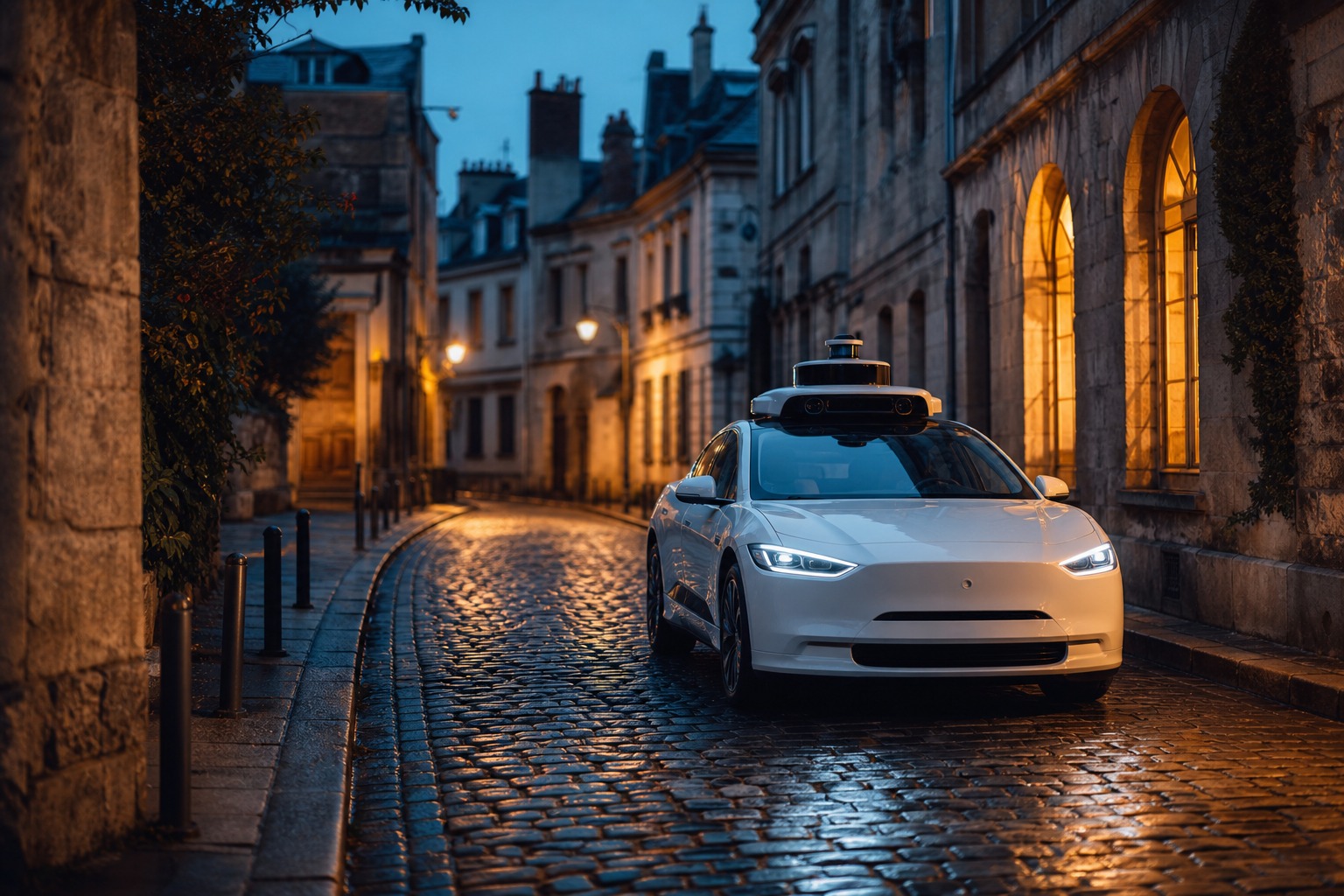
Uber and Pony.ai — the Guangzhou-based autonomous driving company listed in New York as PONY and in Hong Kong — announced an expansion of their partnership to deploy more than 2,000 Pony.ai Robotaxis across Europe. The rollout builds on the commercial service the two companies launched with Croatian mobility firm Verne in Zagreb, which was Europe's first commercial robotaxi service, and extends to four additional European cities. The agreement also includes plans to deploy in the Middle East.
The companies did not name the cities or give a timeline, saying details would be announced in phases. What they did clarify is the structure, and the structure is the story:
Pony.ai supplies the autonomous driving technology and the vehicles
Uber supplies the demand — the app, the riders, the routing, the payments
A local operator handles the fleet: maintenance, cleaning, charging, depots
In Zagreb, that local operator was Verne. Pony.ai calls it a "joint-deployment model." In plain terms, Uber is adding a fleet to its network without buying a fleet, hiring a fleet, or depreciating a fleet.
This is not a one-off. Uber has now partnered with more than 30 autonomous vehicle companies. It announced a robotaxi pilot with WeRide for Madrid earlier this year, it works with both companies in Abu Dhabi and Dubai, and its Japanese subsidiary signed a separate agreement on Thursday. Pony.ai, for its part, is running in four Chinese cities and has locked in arrangements with transportation authorities in Europe and the Middle East, including Qatar.
"This expanded agreement marks an important new phase in the partnership," said Dr. James Peng, Pony.ai's founder and CEO.
The Economics of Not Owning Things
Autonomous vehicles are one of the most capital-intensive products ever attempted. A robotaxi requires sensors, redundant compute, mapping, remote supervision, insurance, depots, chargers, cleaning crews, and regulatory approval in every jurisdiction it touches. The companies that have tried to own the whole stack have spent tens of billions of dollars to run fleets in a handful of cities.
Uber decided years ago not to be one of them. It sold its own self-driving unit in 2020. What it has instead is the thing the technology companies cannot build quickly: an existing base of riders in hundreds of cities who already have the app installed and a payment method on file.
So Pony.ai gets utilization from day one, which is the only variable that makes a robotaxi economic. Verne and its equivalents get the operating contract. Uber gets a take rate, and its capital expenditure line does not move.
The risk is symmetric with the reward. In this model Uber does not own the technology, does not control the safety record, and does not capture the margin if autonomy eventually makes the driver — Uber's largest cost — disappear entirely. Its partners could scale, integrate forward, and route their own demand. Uber is betting that distribution is the durable asset and that autonomy becomes a commodity input. Thirty-plus partnerships is the hedge: no single supplier gets leverage over the network.
The $60 Billion Version of the Same Bet
SpaceX took the opposite approach and took it to the extreme.
On Friday the company completed its merger with Anysphere, the maker of the AI coding tool Cursor. The consideration, per the filing: 389,289,254 shares of SpaceX Class A common stock, based on an implied equity value for Cursor of $60.0 billion, priced off the volume-weighted average close of SpaceX stock over the seven trading days before closing. Vested Cursor restricted stock units converted into another 1,752,426 shares, and roughly 29.1 million unvested RSUs and 44.4 million options were assumed.
The logic is vertical integration, stated plainly. Cursor's own note said the deal gives it "access to the largest fleet of GPUs in the world," which lets it build stronger models "that are also more economical to run." The process began in April with a model-training partnership between Cursor and SpaceXAI, and the company pointed to Grok 4.6, released Wednesday, as an early preview of the combination.
That is $60 billion of shareholder ownership transferred to secure a software layer that sits on top of compute the company already owns. The market has spent this month re-pricing exactly this kind of vertical AI commitment, and it has not been gentle about it.
The Actual Question
Strip away the sectors and there is one question underneath both deals: when a technology is expensive and unproven, do you buy it or do you rent it?
SpaceX bought. Its answer is that the compute, the models and the applications have to sit under one roof or the economics leak away to somebody else. That is the same instinct driving the datacenter buildout, where the biggest operators are signing multi-billion-dollar, multi-year commitments to lock capacity down before anyone else can.
Uber's stock barely reacted: shares closed Friday at $75.93, up 5 cents, in a session where the S&P 500 slipped 0.19% to 7,784.43 and the Russell 2000 set a record. The stock remains 25% below its 52-week high of $101.99, set last September.
Uber rented. Its answer is that the hard part was never the technology — it was the two-sided marketplace, and it already owns that.
Both can be right for a while. Only one of them is right at scale, and the market will not settle the question this quarter. Two of the largest growth stories in the market just got larger, and neither did it by being cautious about capital.
What Lands Next
The week ahead brings the July FOMC minutes on Wednesday, housing starts Tuesday, and the flash purchasing managers' indexes on Friday — plus the largest cluster of retail earnings of the quarter, with Home Depot Tuesday, Lowe's Wednesday, and Walmart and Target later in the week. After Friday's 0.6% drop in July retail sales and a consumer sentiment reading of 51, those reports are no longer routine.
Watch the capital-expenditure lines when they come. In a market this focused on who is spending what, the companies that can grow without spending are about to look very different from the ones that cannot.
Found this helpful? Share it with others.