Key Bullet Points:
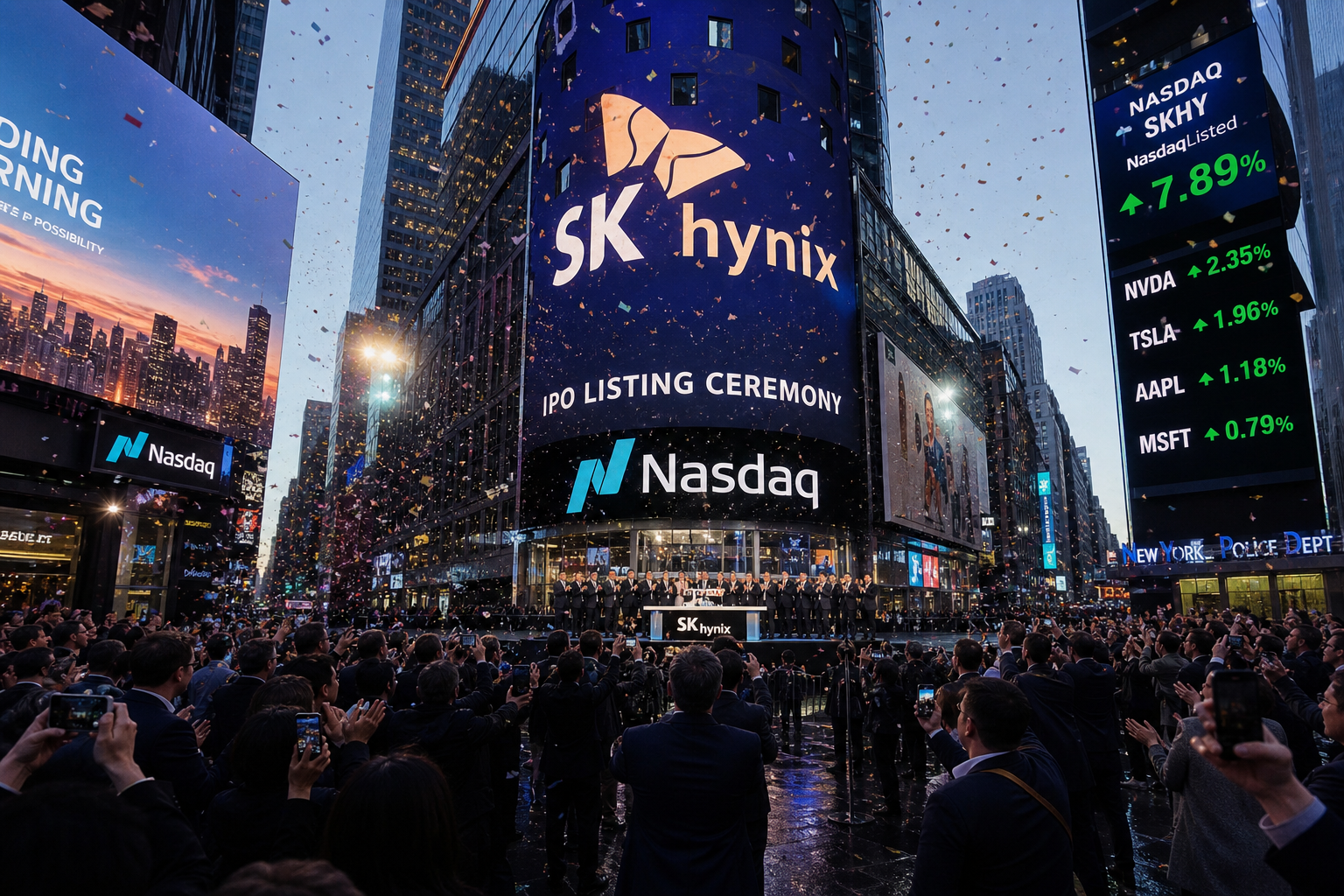
- SK Hynix, the South Korean memory chip giant that manufactures the high-bandwidth memory (HBM) chips powering Nvidia's AI data centers, debuted on the Nasdaq on Friday in a $26.5 billion offering — the largest by a foreign company in U.S. market history — with shares surging as much as 19% intraday before closing at $168.49, up 13% from the $149 offer price
- The listing instantly valued SK Hynix at roughly $1.2 trillion on an ADR-implied basis — leapfrogging Micron Technology's $1.1 trillion market cap to become the most valuable memory chipmaker on Wall Street
- Delta Air Lines reported record Q2 revenue of $19.8 billion — beating the $18.78 billion consensus by more than $1 billion and growing 19% year-over-year — but shares fell 2.2% to $86.99 after management kept full-year guidance unchanged despite absorbing the highest fuel costs in the airline's history at $2.66 per gallon
- Apple filed a federal lawsuit against OpenAI on Friday, accusing the AI company of orchestrating a "pattern of theft" by systematically recruiting Apple employees and extracting trade secrets related to consumer device hardware — escalating the AI industry's most consequential corporate rivalry
- The S&P 500 rose 0.42% to 7,575.39 — finishing just 0.6% below its all-time high and closing out its fourth winning week in the last five — while the Nasdaq climbed 0.29% to 26,282 and Meta surged 6% after Bank of America said the company may be building its AI infrastructure at a far lower cost than expected
The $26.5 Billion Opening Bell
At 9:30 a.m. Eastern on Friday morning, a South Korean chipmaker rang the Nasdaq opening bell at Times Square — and made history.
SK Hynix, the company that produces roughly half the world's supply of the high-bandwidth memory chips that sit inside every Nvidia AI server, listed 177.9 million American Depositary Receipts at $149 apiece, raising approximately $26.5 billion in what is now the largest share offering by a foreign company in U.S. market history.
The stock opened at $170. It surged as high as $177 intraday — a 19% premium to the offering price — before settling to close its debut session at $168.49, up 13%.
That closing price implies a market capitalization of roughly $1.2 trillion. To put that in perspective: SK Hynix is now worth more than Micron Technology, which closed Friday at a market cap of approximately $1.1 trillion. In a single trading day, SK Hynix leapfrogged its American rival to become the most valuable memory chipmaker on Wall Street.
Why This IPO Matters More Than You Think
This isn't just another tech IPO.
SK Hynix is the company that Nvidia depends on. Every GB300 server, every data center rack being deployed by Microsoft, Meta, Google, and Amazon right now requires high-bandwidth memory — and SK Hynix controls roughly half the global supply. When Nvidia's CEO Jensen Huang says "the age of AI" at every keynote, what he really means is the age of SK Hynix's memory chips.
The $26.5 billion raise eclipses SpaceX's $25.7 billion IPO from just four weeks ago — making it not only the biggest foreign IPO but one of the largest offerings of any kind in American market history. And unlike SpaceX, which has crashed 35% from its peak, SK Hynix debuted into immediate demand.
The permanent ticker will be SKHY when trading resumes Monday.
The AI chip boom is no longer just about GPU designers like Nvidia and AMD. The supply chain behind those chips — the memory makers, the equipment manufacturers, the foundries — is now commanding trillion-dollar valuations. Applied Materials surged 10% on Thursday. Lam Research jumped 9%. And now SK Hynix has joined the trillion-dollar club on day one.
Delta: Record Revenue, Record Fuel Bills
While SK Hynix dominated the headlines, Delta Air Lines quietly revealed something about the American economy that investors should not ignore.
The airline reported record second-quarter revenue of $19.8 billion — beating Wall Street's $18.78 billion estimate by more than $1 billion and growing 19% year-over-year. Adjusted earnings per share of $1.56 topped the $1.47 consensus. On the surface, it was a clean beat.
But the stock fell 2.2% to $86.99.
The problem is fuel. Delta absorbed the highest jet fuel costs in its history during the quarter — $2.66 per gallon, up from $2.21 a year ago — as the Iran conflict sent crude prices surging. That crushed margins: operating income fell to $1.9 billion from $2.1 billion, and net income declined 25% to $1.6 billion despite the record top line.
Management affirmed its full-year outlook but didn't raise it — a signal that Delta sees the fuel cost environment remaining hostile. And with the Strait of Hormuz now at a near standstill and oil prices posting a 5% weekly gain, the fuel headwind may only be getting worse.
Apple vs. OpenAI: The AI War Goes to Court
In one of the most consequential tech lawsuits in years, Apple filed a federal complaint on Friday accusing OpenAI of systematically stealing trade secrets.
The lawsuit alleges that OpenAI orchestrated a "pattern of theft" by recruiting Apple employees and extracting confidential information about consumer device hardware. The case centers on OpenAI's $6.5 billion acquisition of io Products — the hardware startup founded by legendary Apple designer Jony Ive — which Apple claims gave OpenAI access to proprietary knowledge about Apple's most sensitive product development.
The lawsuit names OpenAI, two former Apple employees, and io Products as defendants. Apple says it first learned of the alleged theft in February and that the scope of what was taken extends to the company's core consumer device roadmap.
This is the opening shot in what could become the defining legal battle of the AI era — pitting the world's most valuable company against the company trying to build artificial general intelligence.
The Bigger Picture
Friday's session painted a picture of a market that is selectively optimistic — rewarding AI infrastructure plays while punishing companies caught in the crossfire of geopolitics and rising costs.
The S&P 500 rose 0.42% to 7,575.39, finishing just 0.6% below its all-time high. The Nasdaq climbed 0.29% to 26,282. For the week, the S&P 500 gained 1.2% and the Nasdaq surged 1.7% — the fourth winning week in the last five.
Meta was the standout among the Magnificent Seven, jumping 6% after Bank of America said the company may be building its AI infrastructure at a significantly lower cost than Wall Street assumes. Nvidia rose roughly 2%. SpaceX, meanwhile, slid another 5% to $145.30 after China successfully landed its Long March-10B reusable rocket booster — the third country to achieve orbital booster recovery after SpaceX and Blue Origin.
Oil prices eased on Friday — Brent crude settled at $76.01 and WTI at $71.41 — as traders grew cautiously hopeful that shipping through the Strait of Hormuz might eventually resume. But the oil market still posted a 5% weekly gain, and with tanker traffic at a near standstill, the situation remains one headline away from a full-blown supply crisis.
All eyes now turn to Monday. Five of the six largest U.S. banks — JPMorgan Chase, Goldman Sachs, Bank of America, Wells Fargo, and Citigroup — report Q2 earnings within hours of each other. Their trading desks almost certainly profited from the quarter's extreme volatility. But their consumer lending books will reveal whether the American household is holding up — or cracking under the weight of $5 gas, a slowing job market, and the most uncertain geopolitical environment since 2020.
Found this helpful? Share it with others.