Morning Watchlist: Thursday Edition
A quick note from Behind the Markets
It's Thursday. And confession week on Wall Street just produced the strangest pair of verdicts we've seen in a while.
On Wednesday, a company told the world it cannot build its machines fast enough for the rest of the decade — customers are asking to place orders for 2029 and 2030 — and the stock fell. Hours earlier, America's second-biggest bank wrote a $1.2 billion check to the Treasury. And the night before that, a 2,200-store supermarket chain looked at its own shelves and admitted the prices are wrong.
Markets price a confession in minutes. The invoices that follow take years. The money is rarely in the confession — it's in who gets hired for the cleanup. Three stories this morning. Three pairings.
Let's get into it.
1) The Third-Largest Ticket in Treasury History
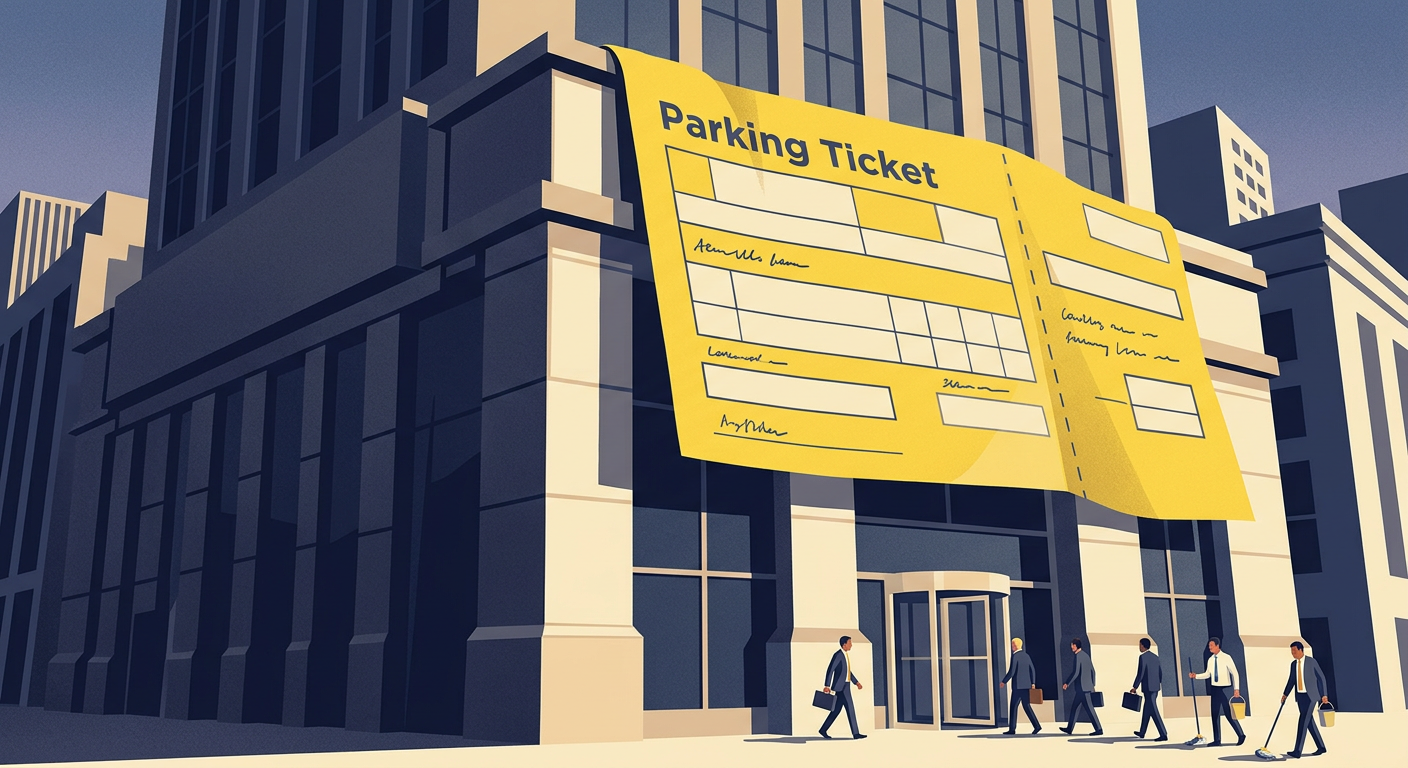
On Tuesday, the Treasury hit Bank of America with more than $1.2 billion in penalties — the third-largest in the department's history. Inside the package: the largest fine the OCC has ever written, $750 million, for an anti-money-laundering program regulators called deficient, plus an $11.6 million sanctions settlement covering 475 apparent violations touching Iran, Russia, narcotics, and terrorism programs. The bill of particulars said the bank failed to report more than $5 billion of suspicious transactions on time and outsourced much of its detection work to third parties. Treasury Secretary Scott Bessent's words: "even the biggest financial institutions are not above the law."
Wednesday morning, the fined bank reported. The fine shaved 17 cents off the quarter — 91 cents a share as printed, about $1.08 with the penalty added back, still a touch shy of estimates near $1.09 — on revenue of $30.0 billion that also fell short, and the shares slipped 3%-and-change in early Wednesday trading. Morgan Stanley, same morning: $3.03 a share against $2.93 expected, with equities trading nearly a billion dollars above forecasts — after Goldman's 72% equities haul on Tuesday, every stock-trading desk on Wall Street got paid this quarter.
But step behind the fine. One week earlier, the same regulators fined American Express $350 million for the same category of failure. On Monday we bought NICE, whose Actimize unit builds the monitoring software those orders now demand — the receipt arrived six days later, twelve times the size. Still Buy. And software is only half the cleanup. A fine is one check; what follows is a consent order — remediation programs, transaction lookbacks, independent reviews — armies of outside specialists billed by the hour, for years. Traffic school after the speeding ticket: mandatory, and nobody gets to skip a class.
The pairing: FTI Consulting (FCN) — Buy
FTI is one of the biggest names in exactly that work. Its forensic and litigation practice does financial-crime investigations and anti-money-laundering remediation, and its turnaround-and-restructuring arm — among the largest anywhere — is the other desk 5% money keeps busy (the same ice storm that feeds our September 16th Houlihan Lokey Buy). The firm has spent the fall hiring: four senior restructuring additions in the UK and a new Italy turnaround lead this month alone.
At Tuesday's close of $137.89, this $3.7 billion company sits within 7% of its 52-week low and costs about 13 times next year's expected earnings. The S&P 500: 21 times. There's no dividend — the buyback is the payout, and it's ferocious: the share count shrank 13.5% in a year. The three analysts covering it average a $175 target.
Why so cheap? Consultancies are people businesses, and a wave of senior departures from its Compass Lexecon economics arm knocked the stock down hard last year; new leadership for that unit was named just Tuesday. The risk, plainly: the assets ride the elevator down every night, and if the rainmakers keep leaving, the multiple was a warning. The kill: a genuine thaw in both of its weather systems at once — deals un-freezing while the regulators holster the pen. This week argued the opposite. FTI reports October 29th.
2) Sold Out Through 2028. The Stock Fell Anyway.
Two days after Seoul's Black Tuesday — the memory-chip massacre over a Chinese press release we covered Wednesday — the industry's one true monopolist handed in its report card.
ASML, the only company on Earth that builds the most advanced chipmaking machines, posted record results Wednesday morning: revenue up 55%, net income of roughly €5 billion — more than double a year ago — and its third guidance raise this year. Then the remarkable part. Management said planned supply for 2027 and 2028 will not meet customer demand, said it's exploring capacity beyond the 30% expansion it already announced, and said some customers want to place orders for 2029 and 2030. CEO Christophe Fouquet credited "the scale and duration of AI-related investments."
And the stock fell about 3% in early European trading. The sin: revenue, in dollars, missed estimates by four-tenths of a percent — after an 80% run in a year. At full price, 99.6% of expectations is a miss. It's the lesson we've paid tuition on all quarter, from Valero to IMAX.
Housekeeping while the aisle wobbles: Micron slipped again with the chip tape but sits well above our $925 flag — still Buy — and our equipment Watches, Lam Research and Entegris, drift toward their named entrances without printing them. TSMC's full report hits the tape around dawn this morning; you may have it before we do.
Now the step behind the headline. ASML sells the printing presses of the chip industry. Every press prints through a plate.
The pairing: Photronics (PLAB) — Watch
Photronics is the world's largest independent maker of photomasks — the quartz "plates" a lithography machine projects through. Every new chip design needs a fresh mask set before a single wafer prints, and the AI build-out is a design renaissance: Broadcom, Google, OpenAI, and half of Silicon Valley are taping out custom silicon. More blueprints, more plates, whoever's chip wins — and high-end masks just hit a record 44% of Photronics' chip revenue.
At Tuesday's close of $29.12, the $1.7 billion company trades at about 10 times trailing earnings against the S&P's 21 — and it holds $672 million of cash, over $11 a share, against almost no debt, so the market prices the business itself nearer 6 times. Three analysts, all at Strong Buy, average a $41 target.
So why Watch and not Buy? The honest flags. The forward multiple (about 14) sits above the trailing one — analysts' estimates are drifting down, the same flag we raised on Nike in September. Most of that cash, $503 million, sits inside majority-owned Asian joint ventures with minority partners attached. The display-mask side is shrinking, and buybacks went quiet this year after $97 million last year. The entrance: the December report converting that record high-end mix into a raised guide — or the buyback switching back on — or a markdown toward $25, where cash would cover 40% of the ticket. The kill: an AI-capex retrench freezing new designs (plates are paid per blueprint, not per wafer), plus the Taiwan-and-China geography that comes with the joint ventures.
3) The Supermarket Hung the "Under New Management" Sign
On Tuesday, Albertsons — 2,200-plus supermarkets under banners like Safeway, Vons, and Jewel-Osco — beat earnings estimates on flat revenue of $18.9 billion. Then it did something rarer than a beat: it withdrew its full-year outlook entirely and launched a top-to-bottom review, with "all options under consideration."
Executive chair Meg Whitman's exact words: "dramatic improvement is needed now" — faster cost cuts, better stores, and lower prices. CEO Susan Morris added that lower-income shoppers remain under pressure. Identical-store sales fell 0.8% while digital grew 11%; the turnaround plan arrives with the fourth-quarter report. The stock rose about 2% Tuesday to near $12.80 — the market applauding the diagnosis, if not yet the cure.
Read what just happened: five years into food inflation, a top-tier American grocer said out loud what the trade-down migration has been saying with its feet all year — from Dollar General to BJ's to PepsiCo's February price cuts, the shopper said no. And the markdown is already extreme. The whole company is valued at less than one month of its own sales — a roughly $6 billion price tag on $83 billion of annual revenue — at about 7 times forward earnings with a dividend yielding over 5%.
The pairing: Albertsons (ACI) — Watch
A headline-company call, because the markdown is the story — but Watch, not Buy, because this is a turnaround wearing a costume, the same rule we applied to Polaris and MGM. When a diner hangs the "Under New Management — we know, we're fixing it" sign, you don't book a table that night. You come back when the new menu is posted. The withdrawn outlook means that tidy 7-times-forward multiple rests on estimates nobody is currently standing behind. And the price war Whitman just promised must be funded by a company carrying $15.7 billion of debt — about 3.4 times its cash flow — at 5% money, against Walmart's balance sheet.
The entrance: the fourth-quarter turnaround plan with identical sales flattening, or a washout that pays for the wait. The kill: price cuts torching the 26.8% gross margin while comps stay negative — then cheap just gets cheaper.
Before You Go
That's the watchlist. A $1.2 billion fine that writes years of consulting invoices, a sold-out decade punished over four-tenths of a percent, and a supermarket's public apology we'll grade when the plan is posted. One theme, as always: the confession is priced in minutes — the cleanup pays for years.
Calendar notes, honestly kept: This morning brings producer prices and September retail sales at 8:30. Consensus has retail sales up 0.3% after August’s 1.2% jump, and PPI up 0.5% after 0.4%, with the annual PPI rate expected to ease to 5.3% from 5.4%. After a hot core CPI, a firm PPI would strengthen the hike case. A soft retail number would mostly be payback for August. Schwab and U.S. Bancorp report before the bell. Schwab is expected to earn $1.67 a share on $7.21 billion in revenue, and U.S. Bancorp $1.32 a share on $8.01 billion. Synchrony, Tuesday’s Buy, reports next Tuesday.
Found this helpful? Share it with others.
Written by Behind the Markets