Key Bullet Points:
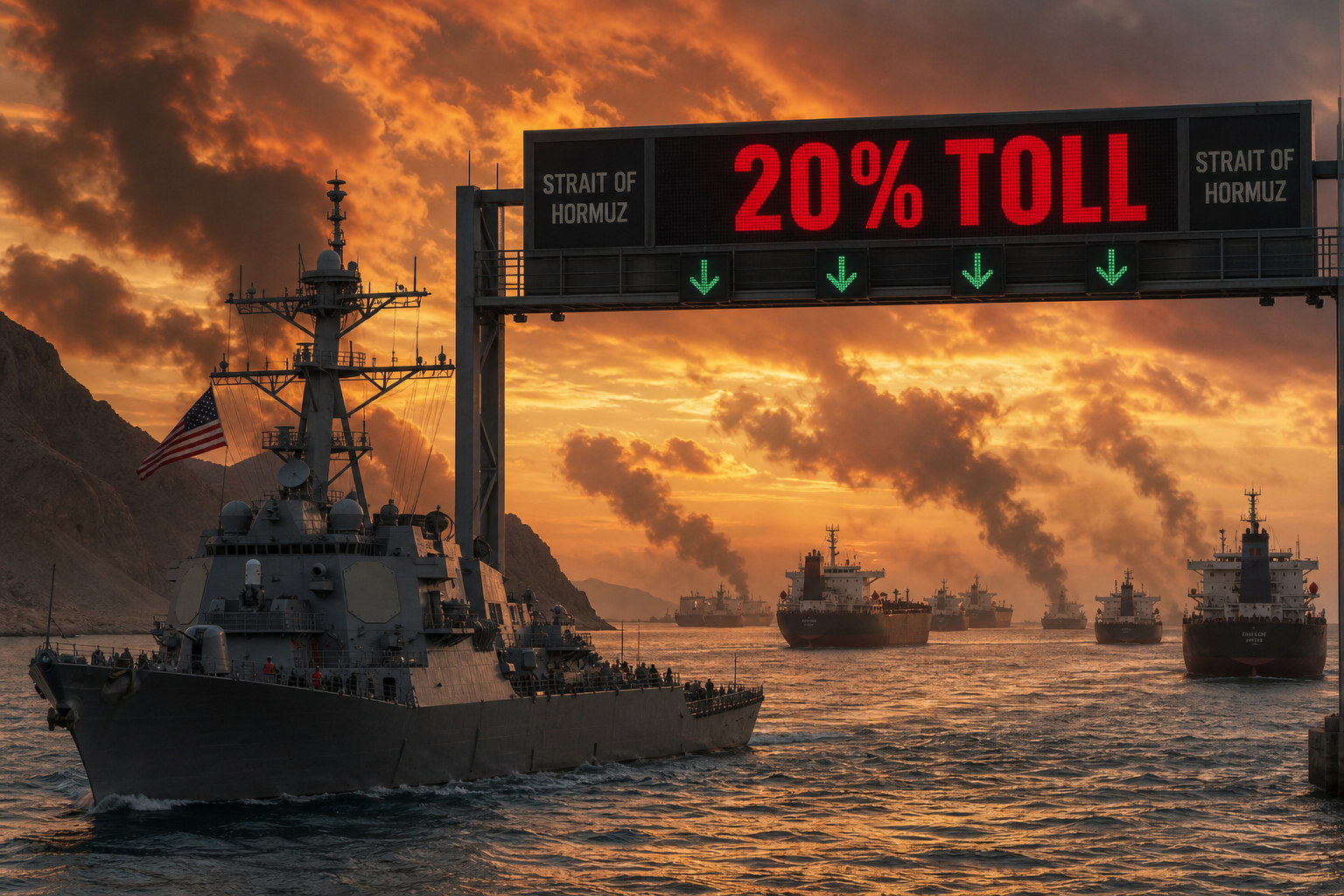
- President Trump announced Monday that the United States will "become the guardian" of the Strait of Hormuz, reimpose a full naval blockade on Iranian ships and ports, and charge a 20% toll on all eligible cargo passing through the waterway — an unprecedented move that sent Brent crude surging to nearly $80 per barrel and triggered a global equity selloff
- SK Hynix (SKHY) — the South Korean memory chip giant that raised $26.5 billion in the biggest foreign IPO in U.S. history just three days ago — crashed 7% in its first session under its permanent Nasdaq ticker, falling to $156.36, while its Seoul-listed shares plunged 15.4% in their biggest single-day drop in nearly two decades
- SpaceX (SPCX) hit a new 52-week low of $137.35, down 5.5% on the session and now 39% below its all-time high of $225.64, as the "Musk premium" continues to evaporate just five weeks after the company's $25.7 billion IPO
- South Korea's KOSPI index plunged 9%, Japan's Nikkei 225 fell nearly 2%, and the Nasdaq dropped roughly 1% as chip stocks led the U.S. decline — with Nvidia falling 3.5% to $203.65 and Western Digital sliding 7.1% — while the S&P 500 slipped 0.6% from a level that had been just 0.6% below its all-time high
- This morning at 6:45 a.m. ET, five of America's largest banks — JPMorgan Chase, Goldman Sachs, Bank of America, Wells Fargo, and Citigroup — report Q2 earnings, followed by the June CPI inflation report at 8:30 a.m., creating the most consequential pre-market data dump of 2026
Trump Turns the Strait Into a Toll Road
In a social media post that ricocheted through global markets on Monday, President Trump declared the United States will "become the guardian" of the Strait of Hormuz — and charge for the privilege.
The details were as dramatic as the announcement itself: a full naval blockade reinstated on Iranian ships and ports. A 20% toll imposed on all eligible cargo transiting the strait. And a direct message to the rest of the world — other nations would now pay the United States for securing the most important oil chokepoint on Earth.
"We should have been doing this for years and should have always gotten paid for it," Trump wrote.
The announcement came less than 48 hours after Iran's Revolutionary Guard Navy declared the strait "closed until further notice," shutting down a waterway through which roughly 21 million barrels of crude oil flow every day — approximately 20% of global supply. The IRGC said no vessel would be permitted to pass.
Trump's response effectively replaced Iran's closure with an American-controlled chokepoint. The strait is technically open again — but only if you pay.
Oil Surges, Markets Crack
The combination of Iran's closure declaration, the weekend exchange of missile and drone strikes between U.S. and Iranian forces, and Trump's toll announcement sent oil prices soaring.
Brent crude surged nearly 5% on Monday, hitting $79.55 per barrel intraday — its highest price since June 22 — before settling near $80. WTI crude climbed more than 4%, peaking at $74.66. For context, oil was at $76.01 just three days ago.
But the implications extend far beyond the energy market. A 20% toll on Strait of Hormuz cargo would raise the cost of every barrel of Middle Eastern oil, every container of goods from Asia, and every commodity that moves through the Persian Gulf. It is, in effect, a new global tax — one that would flow directly into inflation numbers, consumer prices, and corporate margins.
The equity market understood this immediately.
The Global Selloff
Asia bore the brunt of the damage. South Korea's KOSPI index plunged 9% — triggered in part by the SK Hynix selloff and the broader geopolitical panic. Japan's Nikkei 225 fell nearly 2%. European markets followed lower.
On Wall Street, the Nasdaq dropped roughly 1%, led by a sweeping chip stock selloff. Nvidia fell 3.5% to $203.65. Western Digital slid 7.1%. And SK Hynix — the company that rang the Nasdaq opening bell just three days ago after raising $26.5 billion in the biggest foreign IPO in U.S. history — crashed 7% to $156.36 in its first session under its permanent ticker SKHY.
The reversal is stunning. On Friday, SK Hynix opened at $170, surged to $177 intraday, and closed at $168.49 — up 13% from its $149 offering price. By Monday's close, it had given back more than half those gains. In Seoul, the damage was even worse: SK Hynix shares plunged 15.4%, their biggest single-day drop in nearly two decades, as investors who had piled in ahead of the Nasdaq listing rushed for the exits.
The S&P 500 fell approximately 0.6%, pulling back from a level that had been just 0.6% below its all-time high. The Dow dipped 0.2-0.4%. The market's fourth winning week in five ended, and the complacency that had characterized the rally evaporated in a single session.
SpaceX Hits Rock Bottom
Meanwhile, the stock that was supposed to be the defining IPO of the decade keeps finding new lows.
SpaceX (SPCX) fell 5.5% on Monday to $137.44, hitting a new 52-week low of $137.35. The stock is now down 39% from its all-time high of $225.64, set just four weeks ago on June 16. Since its IPO at $135 on June 12, SpaceX has round-tripped almost entirely back to its opening price.
The "Musk premium" — the valuation boost investors assigned simply because Elon Musk's name was attached — has evaporated. China's successful landing of its Long March-10B reusable rocket booster on Friday added competitive pressure. And with a lockup period eventually freeing insider shares, the selling pressure may only increase.
SpaceX has now lost approximately $120 billion in market capitalization from its peak. That is more than the entire market cap of companies like Goldman Sachs or Caterpillar — destroyed in less than a month.
The Tuesday Morning Collision
Which brings us to this morning.
Between 6:45 a.m. and 8:30 a.m. Eastern, the market will absorb more consequential data than any single morning in 2026.
Five of the six largest U.S. banks report Q2 earnings before the bell: JPMorgan Chase (EPS estimate $5.67, revenue $50.5 billion), Goldman Sachs (EPS $14.16, revenue $16.3 billion), Bank of America (EPS $1.12, revenue $30.6 billion), Wells Fargo (EPS $1.72, revenue $21.9 billion), and Citigroup (EPS $2.72, revenue $20.9 billion).
Then at 8:30 a.m., the June Consumer Price Index drops. Goldman Sachs estimates core CPI at approximately 0.17% month-over-month — below consensus. But the New York Fed's latest consumer survey showed one-year inflation expectations jumped to 3.7%, the highest since September 2023.
Here is the dilemma for markets: if CPI comes in hot, it confirms that the oil surge and geopolitical chaos are already feeding into consumer prices — and the Fed cannot cut rates. If CPI comes in cool, it may not matter, because Trump's 20% Hormuz toll is about to make everything more expensive anyway.
The banks, meanwhile, almost certainly had a monster trading quarter. SpaceX's $25.7 billion IPO, SK Hynix's $26.5 billion listing, extreme oil volatility, and wild swings in Treasuries would have generated enormous revenue for Goldman's and JPMorgan's trading desks. The question is whether their consumer lending books — credit cards, auto loans, mortgages — show cracks beneath the surface.
Five bank earnings. One CPI report. An oil crisis. A toll on global trade. All hitting within two hours of each other.
This is the morning that will define the second half of 2026.
Found this helpful? Share it with others.