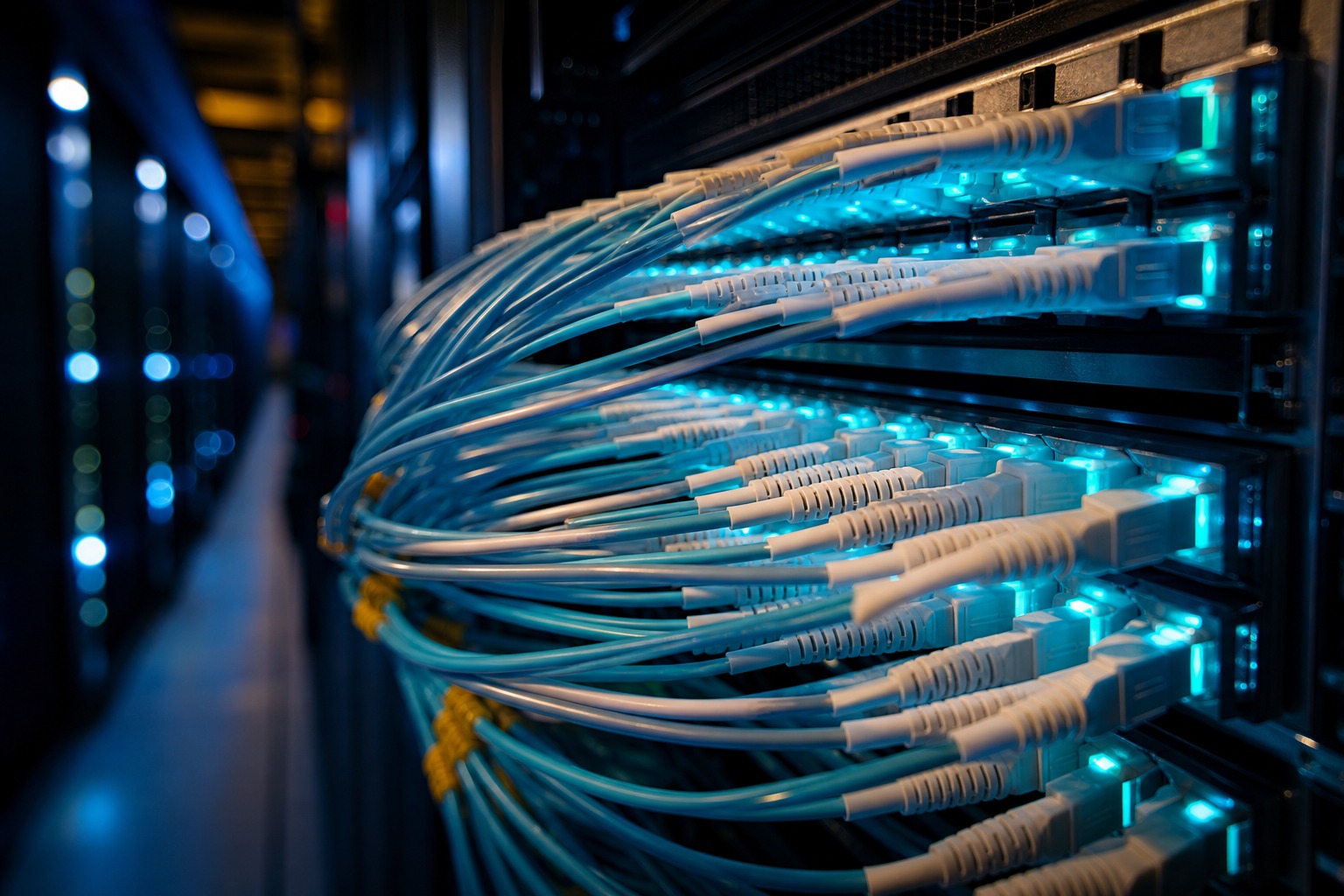
Cisco Systems has been one of the quietest big winners of 2026. The stock entered Wednesday up more than 60% on the year and about 8% in August alone, on a simple thesis: the AI buildout needs networking gear, and Cisco sells networking gear.
Wednesday afternoon the company confirmed the thesis in almost every respect. Record quarter. Record year. Guidance well above what Wall Street had modeled. Orders growing at rates the company hasn't seen in a decade.
Then Thursday it fell 8.4%.
What Cisco Actually Reported
Fiscal fourth-quarter results for the period ended July 25:
Revenue of $17.25 billion, up 18% from $14.7 billion a year ago, against a $16.82 billion consensus
Non-GAAP EPS of $1.22 versus $1.17 expected; GAAP EPS of $0.97, up 52% year-over-year
GAAP net income of $3.9 billion, up 51% from $2.6 billion
Total product orders up 35% year-over-year — and up 25% excluding hyperscalers, with double-digit growth in every geography and customer market
Networking product orders up 40%, the eighth consecutive quarter of double-digit growth
Full-year revenue of $63.3 billion, up 12%, with non-GAAP EPS of $4.33, up 14%
The AI numbers were the headline. Cisco booked $4 billion of AI infrastructure orders from hyperscalers in the fourth quarter alone, bringing the fiscal-year total to $9.3 billion. CEO Chuck Robbins said orders from four of the top hyperscalers grew in the triple digits, and that product orders from service providers and cloud customers rose 95%. Roughly 60% of those AI orders were for Cisco's Silicon One routing and switching family; the rest was optics.
Then came the guidance. For the first quarter of fiscal 2027, Cisco called for revenue of $18.0 to $18.2 billion against an LSEG consensus near $16.8 billion — roughly $1.3 billion above the Street at the midpoint. Non-GAAP EPS of $1.32 to $1.34. For the full fiscal year: revenue of $72.2 to $73.4 billion and non-GAAP EPS of $5.05 to $5.11. AI-related hyperscaler revenue, about $4 billion in fiscal 2026, is guided to $7.5 billion in fiscal 2027 — an 87% increase.
Robbins called it "a networking supercycle." On the numbers, it is hard to argue.
The Line That Broke It
Buried in the release, four rows below the revenue table:
Non-GAAP total gross margin: 66.3%, down from 68.4% a year ago
Non-GAAP product gross margin: 64.8%, down from 67.5%
Guidance for next quarter: non-GAAP gross margin of 65% to 66% — lower again
That is the whole story. Cisco is selling dramatically more hardware, and it is selling it at a worse margin. The mix that produced 35% order growth — Silicon One systems and optics sold in volume to four enormous, extremely sophisticated buyers — is structurally less profitable than the enterprise switching and software business it is displacing at the margin.
Hyperscalers do not pay list price. They buy in nine-figure blocks, they qualify second sources, and they have the engineering staff to design their own silicon if the terms get bad enough. Cisco is winning a very large amount of revenue from customers with more negotiating leverage than any it has ever had.
Cisco closed Thursday at $113.47, down $10.41, or 8.40%, from Wednesday's $123.88. It traded as low as $111.48 on roughly twice its ten-day average volume. Options markets had priced an 8.2% move going into the print, and nailed it — which is another way of saying the beat itself was never the variable.
This is now a pattern rather than an incident. SanDisk's earnings went from 29 cents a share to $39.25 and the stock fell 8%. AMD doubled data-center revenue and fell 10%. In each case the growth was real and the market chose to price the second derivative instead.
The Inflation Number Nobody Traded
The other event Thursday was the July Producer Price Index, and it was genuinely soft. Final demand prices were unchanged on the month, after falling 0.1% in June and rising 0.5% in May. Final demand goods fell 0.7%, led by a 3.1% drop in energy and a 0.9% decline in foods. Transportation and warehousing services fell 1.8%.
The S&P 500 pushed to a fresh all-time trading high on the print.
Now the rest of the table. On an unadjusted twelve-month basis, final demand prices are still up 4.7%. Prices excluding foods, energy and trade services rose 0.4% on the month — the largest such increase since May — and are also up 4.7% over twelve months. Final demand construction prices rose 2.2% in a single month.
So the monthly number was flat because crude oil retreated from its conflict-driven highs. The annual number, which is what the Fed actually has to justify to Congress, sits at more than double the target.
Futures moved anyway. The probability the Fed holds its 3.50%–3.75% range on September 16 rose to roughly 65%, from 63% a day earlier and just 46% a week ago. What barely moved is the odds of at least one more hike before year-end, which remain near 70%. The market pushed the expected timing back. It did not take the hike away. Cleveland Fed President Beth Hammack renewed her call for higher rates the same morning, and nine of nineteen FOMC participants still project at least one more increase. The AI buildout's power and equipment backlog now runs four years deep, which is not a disinflationary fact about the next two years.
What Lands Next
Applied Materials reported fiscal third-quarter results after Thursday's close and produced the same movie a second time in twenty-four hours. Revenue was a record $9.12 billion, up 25% year-over-year, against a $8.99 billion consensus. Non-GAAP EPS was a record $3.50 versus $3.40 expected, up 41%; GAAP EPS was $3.17, up 43%. GAAP operating income hit a record $3.08 billion, a 33.7% margin. And the October-quarter guide was the number that mattered: revenue of about $10.25 billion, plus or minus $500 million, with non-GAAP EPS of $4.02, plus or minus $0.20 — a step up of more than a billion dollars sequentially. Management described demand as "unprecedented."
The stock fell about 3% in after-hours trading, near $518. It is up close to 100% year-to-date, which is most of the explanation. New U.S. export restrictions will still remove $600 to $710 million of fiscal 2026 revenue, with China now roughly a quarter of sales versus about 40% in 2023.
Meanwhile the index itself had a very good day. The S&P 500 closed at a record 7,799.80, up 0.66%, with the Nasdaq up 0.91% and the Dow up 0.05%. The Philadelphia Semiconductor Index rose more than 2%. So the tape bought the sector and sold the two companies that had just proved the sector's thesis with audited numbers.
Oil is back near $88 a barrel after fresh Strait of Hormuz tension and Israeli airstrikes in Gaza, and gold closed at a more-than-two-month high. Memory pricing was already forecast to decelerate sharply from last quarter's pace, and Cisco just showed what happens when input costs and customer concentration arrive in the same quarter.
Cisco's orders are real. Its margin compression is also real. For eighteen months this market has paid up for the first fact. Thursday it decided to charge for the second.
Found this helpful? Share it with others.